The Witcher 3: Songs of the Past has officially been announced by CD Projekt, confirming that Geralt of Rivia will return in an entirely new expansion more than a decade after the original release of The Witcher 3: Wild Hunt. The expansion is scheduled to launch in 2027 for PlayStation 5, Xbox Series X|S and PC, marking one of the most unexpected AAA RPG announcements of the year after years of speculation surrounding the future of the franchise and the role of Geralt following the reveal of The Witcher 4. Industry insiders and long-time fans had anticipated new Witcher content eventually, but very few expected a full-scale third expansion arriving eleven years after the base game first transformed modern fantasy RPG storytelling, The WP Times reports.
The announcement emerged earlier than planned after leaks connected to the REDStreams showcase circulated online on 27 May 2026, forcing CD Projekt Red to formally reveal the project ahead of schedule. The expansion, officially titled The Witcher 3: Wild Hunt – Songs of the Past, is being co-developed with Fool's Theory, a Polish studio already involved in the remake of the original Witcher game. According to CD Projekt Red, players will once again control Geralt of Rivia in a completely new storyline connected to his past, although the company has deliberately avoided revealing exactly where the expansion fits within the timeline of the Witcher universe or how deeply it links to future projects currently under development.
The Witcher 3 Songs of the Past confirms Geralt’s return after 11 years
For the global gaming industry, the announcement represents something highly unusual. Major AAA role-playing games rarely receive entirely new narrative expansions more than a decade after launch, especially after studios publicly move toward sequels and new franchises. Yet The Witcher 3 remains one of the most commercially successful and critically respected RPGs ever created, selling more than 60 million copies worldwide and winning over 250 Game of the Year awards since launching in 2015.
The return of Geralt is particularly significant because CD Projekt Red previously positioned Ciri as the future lead of the franchise. Early material surrounding The Witcher 4 strongly suggested that the next generation of Witcher storytelling would move away from Geralt entirely. Songs of the Past changes that dynamic by placing the original protagonist back at the centre of a new story while the sequel continues development separately.
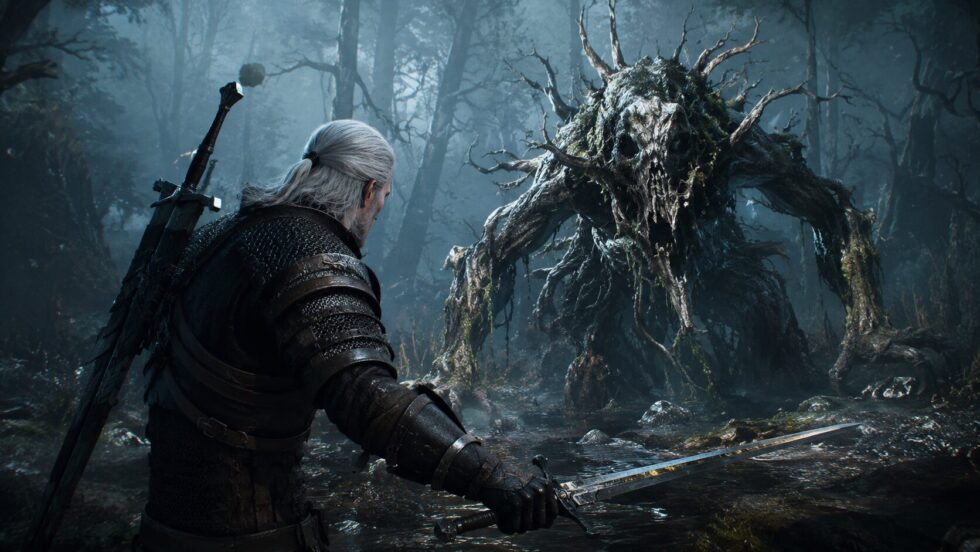
The teaser artwork shown alongside the announcement appears deliberately mysterious. Geralt is depicted in a forest environment facing an aggressive tree-like creature while wearing familiar armour associated with his later years rather than a younger version of the character. The title Songs of the Past has immediately triggered speculation among fans that the expansion may explore unfinished personal storylines, lost contracts, hidden memories or events tied directly to Geralt’s earlier life before the ending of Wild Hunt.
What makes the situation even more intriguing is timing. CD Projekt Red confirmed that additional details about the expansion will arrive in late summer 2026, suggesting development is already at a relatively advanced stage despite the secrecy surrounding the project.
Key confirmed details about Songs of the Past
| Detail | Information |
|---|---|
| Expansion title | The Witcher 3: Wild Hunt – Songs of the Past |
| Release year | 2027 |
| Platforms | PlayStation 5, Xbox Series X|S, PC |
| Main protagonist | Geralt of Rivia |
| Developer | CD Projekt Red |
| Co-developer | Fool’s Theory |
| Reveal date | 27 May 2026 |
| More information | Late summer 2026 |
The expansion announcement also reinforces the extraordinary staying power of The Witcher brand itself. Few role-playing franchises remain commercially relevant for more than a decade without completely rebooting their core structure. The Witcher 3, however, continues attracting new players thanks to Netflix adaptations, next-generation upgrades, streaming culture and the enduring popularity of fantasy storytelling globally.
Why CD Projekt Red may be extending the Witcher timeline strategically
Behind the excitement surrounding Geralt’s return lies a broader strategic question facing CD Projekt Red. The studio is currently developing multiple enormous projects simultaneously, including The Witcher 4, a planned new Witcher trilogy and a sequel to Cyberpunk 2077. Launching Songs of the Past in 2027 could serve several important business and development purposes at once.
First, it keeps the Witcher franchise commercially active while The Witcher 4 continues development. Large-scale RPG production timelines now regularly stretch beyond five years, particularly after the industry-wide shift toward Unreal Engine 5 pipelines and increasingly cinematic open-world systems. A new expansion allows CD Projekt Red to maintain momentum without forcing the next mainline sequel into an unrealistic launch schedule.
Second, the expansion creates an opportunity to reconnect older fans emotionally with Geralt before the franchise permanently transitions toward new protagonists and storytelling structures. Geralt remains one of the most recognisable gaming characters of the last twenty years, and his popularity extends far beyond traditional RPG audiences.
Third, Songs of the Past may act as a technical and creative bridge between The Witcher 3 and future titles. Because Fool’s Theory is already involved with the Witcher remake project, the collaboration potentially allows CD Projekt Red to test systems, workflows and narrative concepts relevant to future releases while simultaneously delivering premium content to existing fans.
There is also growing discussion within the industry about whether Songs of the Past indirectly signals a later-than-expected launch for The Witcher 4 itself. Many analysts now suspect that the sequel could arrive closer to 2028 rather than 2027 if CD Projekt Red intends to avoid internal competition between two major Witcher releases.
Why fans believe the expansion matters beyond nostalgia
- Geralt returns despite earlier assumptions his story was finished
- CD Projekt Red rarely revisits completed RPGs after this many years
- The expansion may bridge narrative gaps before The Witcher 4
- Songs of the Past could reveal major lore connected to Ciri
- The project suggests long-term confidence in the Witcher franchise
- The DLC may introduce technical features tied to future games
- Fans consider Witcher expansions among the best in gaming history
The reaction online was immediate after the reveal. Social media platforms, gaming forums and streaming communities rapidly filled with discussions surrounding timeline theories, possible locations and unresolved Witcher story arcs that could reappear in the expansion.
The Witcher 3 expansions already changed RPG standards before Songs of the Past
Part of the reason the announcement generated such intense global attention is the reputation attached to previous Witcher 3 expansions. Both Hearts of Stone and Blood and Wine are widely considered among the finest expansions ever released for a role-playing game.
Blood and Wine in particular became famous for functioning almost like a standalone game. Its Toussaint setting, extensive narrative depth, new mechanics and visual redesign transformed expectations regarding what downloadable expansions could achieve within AAA gaming. Many critics later compared its impact to the quality jump seen in Cyberpunk 2077: Phantom Liberty, another expansion praised heavily for cinematic storytelling and world-building.
This history now creates extremely high expectations for Songs of the Past. Fans are not expecting a minor side adventure. Instead, the community increasingly believes CD Projekt Red intends to deliver another premium narrative experience capable of standing beside full RPG releases.
The involvement of Fool’s Theory also introduces an additional layer of curiosity. The studio consists partly of developers who previously worked on Witcher-related projects and RPG systems. Their recent title, The Thaumaturge, demonstrated strong atmospheric storytelling and complex narrative structures influenced by Eastern European fantasy traditions.
Questions fans are asking after the reveal
| Question | Current status |
|---|---|
| Is Geralt the main playable character? | Yes |
| Will Ciri appear? | Unknown |
| Is the expansion canon? | Presumed yes |
| Does it connect to Witcher 4? | Not confirmed |
| Is this Geralt’s final story? | Unknown |
| Will there be a new map region? | Not confirmed |
| Is the expansion open world? | Expected but unconfirmed |
| When is gameplay reveal expected? | Late summer 2026 |
The timing of the reveal also intersects with growing competition across the fantasy RPG market. Studios globally are racing to dominate a genre currently fuelled by long-form storytelling, open-world exploration and streaming culture. Returning to Geralt allows CD Projekt Red to immediately regain global attention in a crowded release landscape increasingly dominated by sequels and live-service projects.
“Songs of the Past” may reveal hidden parts of Geralt’s history
One of the most heavily discussed elements of the announcement is the title itself. Songs of the Past strongly implies themes connected to memory, history, unfinished relationships or forgotten contracts. Witcher storytelling traditionally explores morally complex events from Geralt’s earlier life, meaning the expansion could revisit old enemies, lost allies or hidden political conflicts.
Some fans believe the title hints at bardic storytelling connected to Dandelion, while others suspect the expansion could involve fragmented timelines or supernatural visions tied to the Elder Blood mythology surrounding Ciri. CD Projekt Red has not confirmed any of these theories.
(“We’re returning players to the role of Geralt of Rivia for a brand new adventure,” CD Projekt Red announcement, Warsaw, 27 May 2026)
(“More details on Songs of the Past will be released in late summer 2026,” official company statement, Poland, 27 May 2026)
The teaser artwork itself avoids revealing direct plot information, but environmental details suggest a darker atmosphere closer to the tone of the original Witcher regions rather than the brighter fantasy setting of Blood and Wine. Analysts immediately noted the forest creature’s design resembles older Slavic horror influences that originally defined the franchise’s identity.
At the same time, industry observers are watching carefully to see whether Songs of the Past introduces gameplay mechanics that preview the technical direction of The Witcher 4. Because CD Projekt Red is rebuilding much of its future technology infrastructure, even a standalone expansion could quietly act as a testing ground for larger innovations.
What happens next for The Witcher franchise after Songs of the Past
The Witcher franchise now faces one of the most ambitious periods in its history. CD Projekt Red is simultaneously balancing nostalgia, technological transition and the expectations attached to one of gaming’s most respected RPG series.
Songs of the Past instantly changes the roadmap conversation surrounding the franchise. Instead of moving directly from The Witcher 3 toward The Witcher 4, the studio has effectively inserted a major new chapter into the timeline. That decision reflects both commercial confidence and the enduring emotional attachment players maintain toward Geralt.
For longtime fans, the expansion announcement also arrives during a broader renaissance period for fantasy entertainment globally. Major fantasy franchises across gaming, television and publishing continue expanding aggressively as audiences increasingly return to large-scale fictional universes with deep lore and interconnected storytelling.
Whether Songs of the Past becomes Geralt’s final major adventure remains unknown. CD Projekt Red has carefully avoided language suggesting permanence or closure. For now, however, the company has confirmed one thing clearly: Geralt of Rivia is not finished yet, and one of gaming’s most influential RPG worlds is preparing to reopen once again in 2027.
Read about the life of Westminster and Pimlico district, London and the world. 24/7 news with fresh and useful updates on culture, business, technology and city life: What Time Apple WWDC 2026 Starts in the UK and How to Watch the Apple Keynote Live