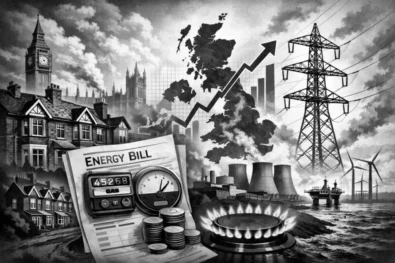
UK households are set to see energy bills fall from April 2026 after the government confirmed reforms to standing charges, a move expected to deliver immediate savings for millions of consumers.
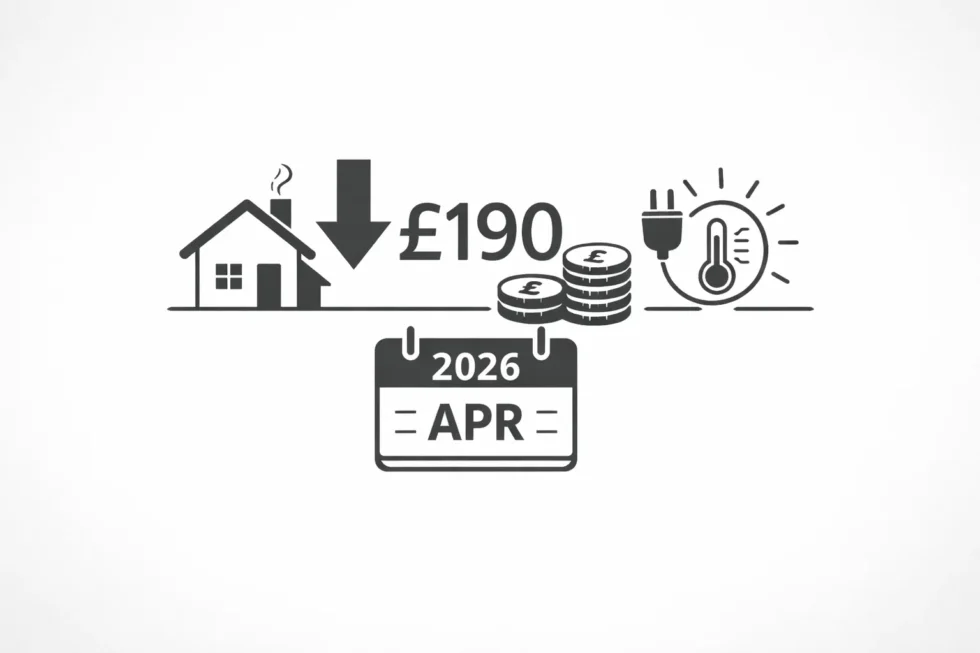
From 1 April 2026, energy suppliers will begin recovering the cost of the Warm Home Discount through electricity unit rates rather than fixed standing charges, reducing unavoidable costs for households regardless of usage. The change is forecast to cut standing charges by an average of £40 a year for a typical household and forms part of a wider package aimed at easing cost-of-living pressures, The WP Times reports, citing government documents and analysis from the Department for Energy Security and Net Zero. The adjustment comes alongside Labour’s Budget pledge to cut household energy bills by £150 annually, following the scrapping of an energy efficiency programme. Taken together, the two measures are expected to deliver average annual savings of £190 per household, according to government estimates.
The Department for Energy Security and Net Zero (DESNZ) said the reform marks a shift in how unavoidable fixed costs are distributed across energy bills, with the intention of easing pressure on lower-usage households who currently pay the same standing charge regardless of consumption. In its latest consultation document, the department highlighted that some households could benefit significantly more than the average figure. A high-usage, electrically heated household, for example, could save approximately £395 a yearonce both measures are fully applied.
DESNZ said the changes were consistent with Labour’s manifesto commitment to reduce standing charges and form part of a broader effort to improve fairness, transparency and consumer confidence in the energy market. Standing charges are fixed daily fees paid by all customers to cover network costs, metering and policy obligations, regardless of how much energy they use. Under the current Ofgem price cap, the average household pays around 55p per day for electricity and 35p per day for gas, equating to roughly £328 a year before any energy is consumed.
The system has long been criticised for disproportionately affecting low-income households, people living alone, and older residents who use relatively little energy but face the same fixed costs as higher-usage households. Consumer finance expert Martin Lewis welcomed the announcement but cautioned against overstating its immediate impact.
“It’s only a baby step, but it’s good to see movement in the right direction,” he said on social media. “The standing charge is a moral hazard. It disincentivises lower usage and keeps bills high for people who use very little energy.”
Lewis added that standing charges have become the single biggest source of complaints he receives about energy bills, particularly from pensioners and households without gas heating who still face year-round charges.
“Paying more than £300 a year simply for the facility of having energy is too much,” he said. “It penalises people who do the right thing and use less.”
The reforms follow Rachel Reeves’s Budget announcement, which framed energy affordability as a central cost-of-living issue for the new government. Reeves said the decision to scrap an existing efficiency scheme in favour of direct bill reductions would provide more immediate relief for households struggling with rising costs. Energy industry analysts say the move signals a gradual rebalancing of how energy costs are allocated, though they warn that shifting charges into unit rates could increase per-unit electricity prices for higher users. DESNZ acknowledged this trade-off but argued that the overall impact would be progressive, with households that consume less energy seeing proportionally greater benefits. Energy consumers minister Martin McCluskey said the changes were designed to address long-standing concerns about fairness in the system.
“This government is relentlessly focused on the cost of living,” he said. “We know standing charges are a major concern for many households, particularly those on low incomes. Reducing these fixed costs creates a fairer system and delivers savings for people who use less energy.”
McCluskey added that the government viewed the reform as the first step in a wider review of how energy pricing works in practice, rather than a one-off intervention. Despite the announcement, campaigners and consumer groups continue to argue that standing charges remain too high and that deeper structural reform is needed. Some have called for a social tariff or a more radical overhaul that would link fixed costs more closely to household income.
Ofgem is expected to monitor the impact of the changes over the coming year, particularly on vulnerable consumers and those in fuel poverty. Any further adjustments would require consultation with suppliers and regulators. For now, ministers have positioned the reform as a modest but meaningful shift in direction — one that reduces unavoidable costs for millions of households while signalling broader changes to come in the UK’s energy pricing framework.
Read about the life of Westminster and Pimlico district, London and the world. 24/7 news with fresh and useful updates on culture, business, technology and city life: UK Solar Energy Reaches Historic 14GW Peak in July 2025