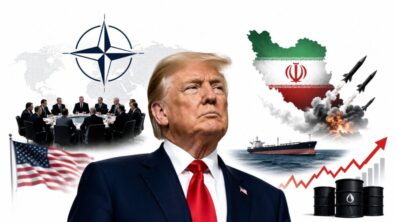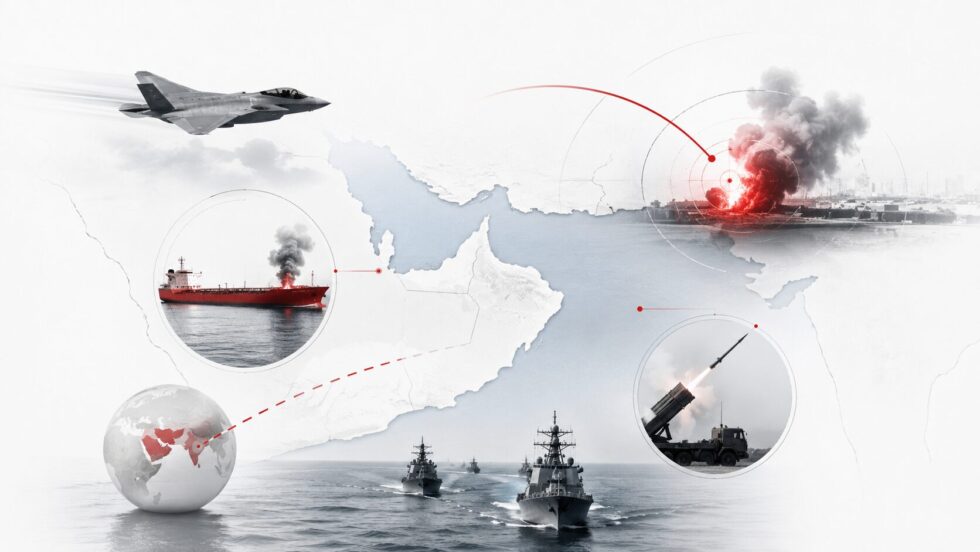
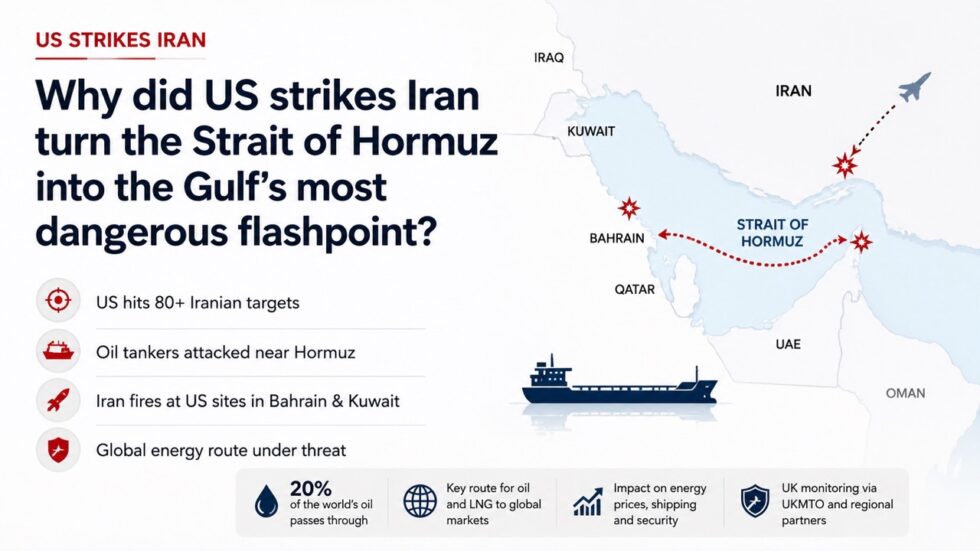
US strikes Iran became the central Gulf crisis on Wednesday, 8 July 2026, after Washington said it had hit more than 80 Iranian targets in response to attacks on three commercial vessels in the Strait of Hormuz. US Central Command said the operation targeted air defences, command-and-control equipment, coastal radar, anti-ship missile sites and more than 60 IRGC small boats, while Iran answered with missile and drone attacks on US-linked military sites in Bahrain and Kuwait, The WP Times reports.
The escalation began with oil tanker traffic through one of the world’s most sensitive energy corridors. UK Maritime Trade Operations said three tankers were attacked near the Strait of Hormuz on Tuesday, 7 July, raising the regional maritime threat level to “severe”. One vessel was reportedly hit by an unknown projectile near Oman, causing a fire in or near the engine room, while other vessels reported damage after separate incidents.
US strikes Iran after three oil tanker attacks
Washington framed the strikes as a limited military response to attacks on international commerce, not as the opening of a new campaign. CENTCOM said the aim was to degrade Iran’s ability to threaten shipping through the Strait of Hormuz, the narrow waterway between Iran, Oman and the UAE. The targets were selected around Iran’s coastal military infrastructure. According to US reporting, they included radar sites, anti-ship missile positions, command systems and IRGC vessels used near the shipping lane. Tehran rejected the strikes as a violation of the ceasefire framework and said it would respond to what it called American aggression.
Iran attacks US sites in Bahrain and Kuwait
Iran’s response came within hours of the US strikes. The Islamic Revolutionary Guard Corps said its naval and aerospace units had launched a joint missile and drone operation against American military sites in Bahrain and Kuwait, presenting the attack as retaliation for strikes on Iran’s southern coast. Bahrain activated air raid sirens and urged residents to move to safe places, while Kuwait said its air defences were responding to hostile missile and drone activity.
The IRGC claimed it had targeted the US Fifth Fleet area around Salman Port in Bahrain and Ali Al Salem Air Base in Kuwait. Those battlefield claims could not be independently verified in full, but the warnings, sirens and air-defence alerts showed the confrontation had moved beyond Iran’s borders. What began as a dispute over oil tanker security in the Strait of Hormuz had become a wider Gulf security crisis involving US bases, regional airspace and the risk of further retaliation.
What was hit in Iran
Iranian state-linked media said the US strikes hit areas around Qeshm island, Bandar Abbas and Sirik. These locations matter because they sit close to the Strait of Hormuz and Iran’s southern coastal military infrastructure.
| Location | Why it matters |
|---|---|
| Qeshm island | Strategic island near the Strait of Hormuz |
| Bandar Abbas | Major Iranian port and naval hub |
| Sirik | Coastal area facing Hormuz routes |
| IRGC small boats | US says more than 60 were struck |
| Coastal radar and missiles | US says they supported threats to shipping |
What happens next after US strikes Iran
The next phase depends on three immediate questions. First, whether Iran launches another round of missile or drone attacks on US-linked sites in the Gulf. Second, whether the US expands its target list beyond coastal assets, IRGC boats and anti-ship systems. Third, whether Gulf states can keep commercial shipping moving through the Strait of Hormuz without becoming direct targets themselves. The most dangerous part of the crisis is its geography. The confrontation began with oil tanker attacks near Hormuz, moved to US strikes on Iranian targets, and then spread to Bahrain and Kuwait through Iran’s retaliation claims. That widening map makes de-escalation harder, because each new site brings another government, another military command and another set of political pressures into the crisis.
For now, the facts point to a serious escalation: US strikes Iran after oil tanker attacks; Iran says it has fired at US sites in Bahrain and Kuwait; and the Strait of Hormuz has again become the place where energy security, military power and diplomacy collide.
Read about the life of Westminster and Pimlico district, London and the world. 24/7 news with fresh and useful updates on culture, business, technology and city life: K2 Airways Cargo 737 missing near Karachi after Sharjah flight
Sources used: BBC News, Reuters, AP, The Guardian, Al Jazeera, UKMTO, US Central Command, NATO statements.