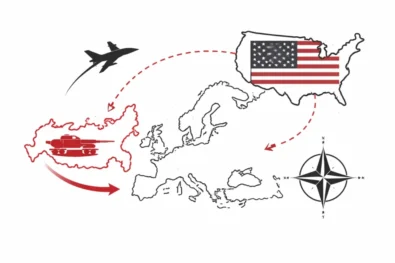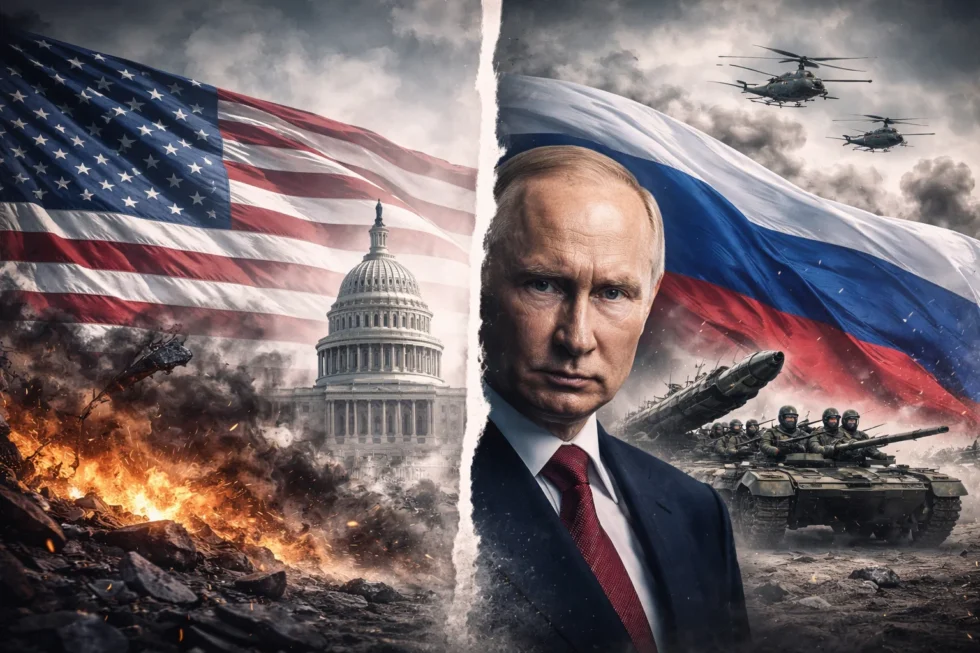
The era in which Europe could rely for decades on the United States’ security umbrella is coming to an end, while Russia may be laying the groundwork for a new war. This assessment is contained in the latest report of the Munich Security Conference, according to The WP Times. The document concludes that the second administration of Donald Trump has made clear its intention to fundamentally revise Washington’s role in European security. According to the report, the United States now expects European allies to assume primary responsibility for the defence of the continent.
This shift was publicly articulated by US Defence Secretary Pete Hegseth during a NATO contact group meeting in February 2025, where he stated that ensuring Europe’s security should become an imperative for European members of NATO.
Europe expected to take the lead on Ukraine support
According to the report, the new US security doctrine envisages European states taking on the “predominant share” of both lethal and non-lethal military assistance to Ukraine. Since January 2025, US military aid has declined sharply, while Washington has increasingly linked security guarantees to economic and trade concessions from the European Union. Analysts cited in the document warn that this represents a departure from alliance-based security towards a more transactional model, in which defence commitments are increasingly tied to broader economic interests.
Russia described as “on a war footing”
At the same time, the report argues that Russia has significantly intensified its military posture. According to the findings, Moscow has effectively placed its economy on a wartime footing, allocating approximately 40% of the federal budget to defence spending.
The authors note that Russia has not abandoned its maximalist objectives in Ukraine and may be preparing for additional conflicts beyond it. Intelligence assessments referenced in the report suggest that a regional war in the Baltic states could be possible within two years of a potential ceasefire in Ukraine. A more limited conflict against a neighbouring country could, according to these assessments, occur within as little as six months. The document also highlights an escalation of hybrid operations across Europe, including sabotage targeting energy infrastructure and repeated airspace violations over Poland and Estonia recorded in September 2025.
Trump-backed peace plan raises concern
The report identifies particular concern in European capitals over a 28-point peace plan supported by Washington and circulated in November 2025. According to the authors, the proposal largely disregarded European security interests and envisaged significant territorial concessions by Ukraine, limits on the size of its armed forces and the exclusion of NATO membership. The report concludes that the United States is increasingly positioning itself as an “arbiter” rather than a strategic ally in European security affairs.
Europe warned over strategic “grey zone”
Although European NATO members have increased defence spending by 41%, the report describes these efforts as insufficient. Instead of developing a coherent and integrated defence architecture, EU states have pursued what the authors call “industrial nationalism”, continuing to purchase US-made systems such as the F-35 fighter jet and Patriot air-defence systems in an effort to maintain Washington’s political goodwill.
The report warns that continued hesitation could leave Europe in a strategic “grey zone” between competing spheres of influence, gradually undermining its ability to independently shape its own security and political future. Earlier, Ukraine’s military intelligence chief Kyrylo Budanov stated that in the event of a cessation of hostilities in Ukraine, the Baltic states could become the next potential target of Russian aggression.
Read about the life of Westminster and Pimlico district, London and the world. 24/7 news with fresh and useful updates on culture, business, technology and city life: Andy Burnham faces complex Labour rules and by-election hurdles in potential challenge to UK PM Keir Starmer