
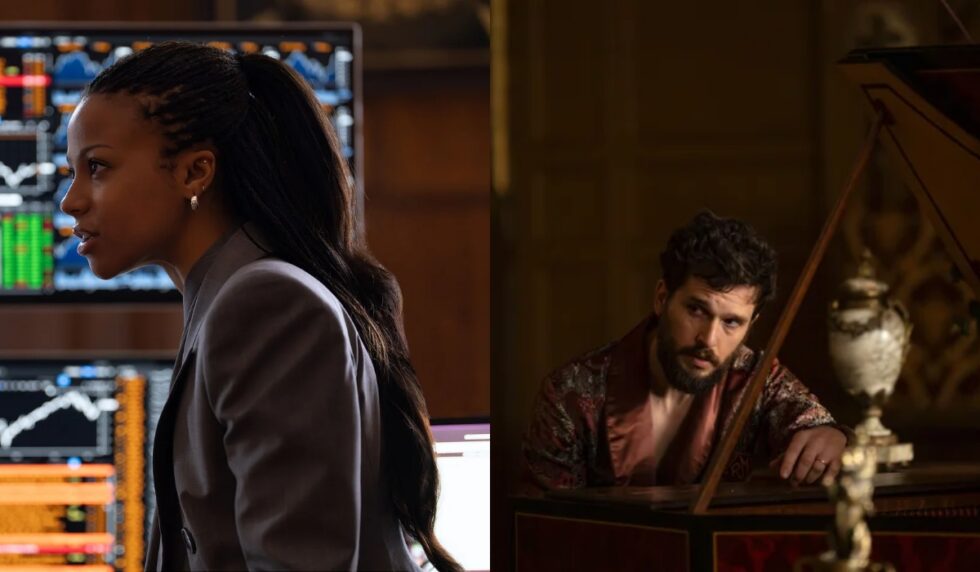
The fourth season of Industry arrives unusually early in the television year, yet already signals itself as one of the most significant drama releases of 2026, reports The WP Times with reference to theguardian. The HBO/BBC series, which follows the professional and personal implosions of young figures in high finance, moves decisively beyond its early slow-burn reputation and enters a more controlled, darker and more psychologically demanding phase.
What Industry is about and why season four matters
Industry centres on a group of graduates working within elite financial institutions, charting their careers as they rise through trading floors, hedge funds and corporate power structures. Unlike traditional workplace dramas, the series places equal weight on professional manoeuvring and private self-destruction.
Season four arrives after the show’s third season marked a clear turning point in tone and ambition. The new episodes deepen the focus on institutional power, regulatory pressure and personal accountability, while continuing to reflect real-world financial and political developments in the UK and internationally.

New cast members and returning leads
Season four expands the ensemble with several high-profile additions. Kiernan Shipka joins the cast in a role that aligns her more closely with senior power players than junior figures, while Max Minghella and Kal Penn also take on key roles within the season’s corporate and political storylines. Charlie Heaton appears as a financial journalist whose work increasingly intersects with the interests of major institutions.
They join returning leads:
- Myha’la as Harper Stern
- Marisa Abela as Yasmin
- Kit Harington as Henry
Harington’s character continues to face the fallout from the collapse of his green energy company, Lumi, while Abela’s Yasmin navigates both professional exposure and personal instability. Toheeb Jimoh also joins the series, integrating into the narrative alongside Miriam Petche.
The central financial storyline explained
At the heart of season four is Tender, a payments provider attempting to secure a banking licence. This process is complicated by its historical association with Siren, an adult-content platform operating in a regulatory grey area. As the UK government considers a new online safety bill, Tender seeks to distance itself from Siren to protect its regulatory ambitions.
This storyline unfolds across trading floors, boardrooms and informal settings, including nightlife scenes that trigger a complex chain of events. The conflict creates a prolonged strategic battle involving:
- regulatory compliance
- public perception
- political pressure
- internal power struggles
Charlie Heaton’s journalist character becomes increasingly involved in uncovering information related to Tender, conducting investigative work that carries professional risk as he races to publish before competitors.
Harper Stern’s position and internal conflicts
Harper Stern remains central to the narrative. Now running a fund specialising in short-selling, she operates under the authority of financier Otto Mostyn. Her attempts to profit from Tender are repeatedly constrained by internal controls and ideological clashes.
One exchange between Harper and her on-off mentor Eric Tao directly addresses workplace perception and race, continuing the series’ established approach of confronting sensitive dynamics without dilution:
“You ARE an angry Black woman!”
The dialogue reflects the show’s broader interest in exposing how power operates informally as well as institutionally.
Personal lives under sustained pressure
Away from financial manoeuvring, season four devotes increased attention to domestic and psychological strain. Henry and Yasmin confront the pressures of marriage alongside reputational damage linked to Lumi’s failure. Yasmin’s storyline takes on darker elements inspired by real-world cases, while questions of liability, secrecy and personal agency remain central.
Rishi, portrayed by Sagar Radia, appears in a fragile post-rehabilitation state, with the season repeatedly foreshadowing instability and potential tragedy. Themes of mortality and psychological collapse recur throughout the episodes.
Visual style, music and narrative detail
The series maintains a strong visual identity. Costume continues to function as narrative shorthand, notably during Henry’s 40th birthday celebration, where Yasmin appears dressed as Marie Antoinette. The soundtrack leans heavily toward 1980s influences, reinforcing the cyclical nature of the moral and institutional decay depicted.
Creators Mickey Down and Konrad Kay, who also direct several episodes this season, continue to draw on their backgrounds as former bankers. Their writing places emphasis not only on financial realism but also on class, sexuality, ambition and the language of power, often embedding commentary through background details and recurring musical cues.
When and where to watch Industry season four
- United Kingdom:
BBC One — premieres 12 January 2026
Episodes available on BBC iPlayer - United States:
HBO — premieres 11 January 2026 - Australia:
Binge — airing from January 2026
Episodes will roll out weekly following their respective premiere dates.
Read about the life of Westminster and Pimlico district, London and the world. 24/7 news with fresh and useful updates on culture, business, technology and city life: Why police cited Home Alone actor Daniel Stern in a California prostitution investigation.