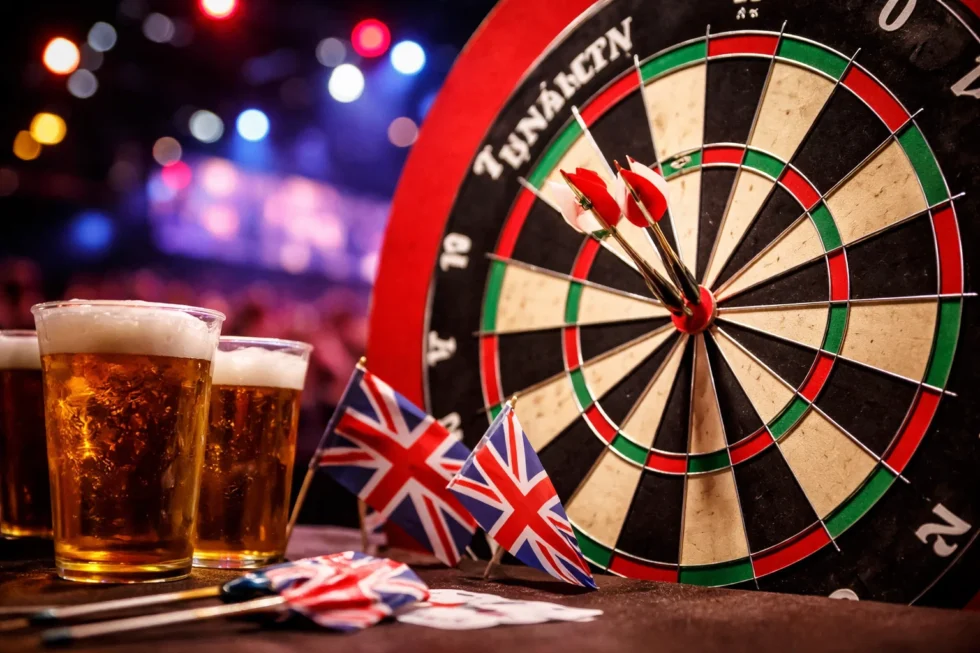
Every winter, World Darts Championship London becomes one of the most stable pillars of the British holiday calendar. While football pauses and theatres reduce schedules, Alexandra Palace darts sessions run almost daily, drawing tens of thousands of spectators in person and millions more on television. The tournament is held annually from mid-December to early January, turning North London into the global epicentre of professional darts and making Ally Pally one of the most recognisable winter sports venues in Europe.
According to the editorial framing regularly used by The WP Times, the championship is no longer treated as a niche sporting event but as a seasonal phenomenon — one that combines live entertainment, television dominance, betting markets and local London tourism into a single, predictable winter engine.
What the World Darts Championship actually is — and why it matters
Every winter, from mid-December to early January, London becomes the centre of the global darts calendar as the World Darts Championship takes over Alexandra Palace. The tournament, the most prestigious event in professional darts, carries a total prize fund running into several million pounds, with the winner earning a life-changing seven-figure payout and decisive ranking points. The editorial team of The WP Times reports that no other non-football competition in Britain delivers such consistent holiday audiences, both on television and on the ground.
The World Darts Championship is the flagship event of professional darts and the primary determinant of the global ranking hierarchy. Winning here does not simply mean lifting a trophy; it often reshapes a player’s entire career trajectory for the following season, influencing sponsorships, tour invitations and media visibility.
Unlike many championships decided over a single weekend, this darts tournament UK edition unfolds across several weeks. That extended format allows narratives to develop gradually: unknown qualifiers break through in the early rounds, established stars manage pressure under the Alexandra Palace spotlight, and favourites are tested repeatedly as formats lengthen. For broadcasters and audiences, this creates rare continuity at a time of year when live sport is otherwise fragmented — a key reason the championship has become a fixed point in Britain’s winter calendar.
Dates and structure: how the calendar really works
The tournament typically runs from around 11–18 December until 2–3 January, with matches scheduled in afternoon and evening sessions. There is no play on Christmas Eve, Christmas Day, Boxing Day and New Year’s Eve, which creates natural peaks in pub viewing and television audiences on surrounding days.
Early rounds are shorter and faster-paced, while matches lengthen significantly from the quarter-finals onward. This escalation is intentional: casual viewers can enjoy quick drama early on, while later stages reward patience, stamina and psychological resilience.
For visitors planning a London trip, this means the championship is not a single “event date” but a three-week window of activity affecting accommodation, transport and nightlife in North London.
Prize money explained: why the stakes are so high

The World Darts Championship is the richest tournament in the sport. In recent editions, the total prize fund reached £5 million, with the winner earning £1 million. Even first-round exits receive meaningful payouts, making every match financially consequential.
This prize structure explains the visible tension during finishing throws. A missed double can cost not just a set, but hundreds of thousands of pounds in lost progression. For viewers, this translates into raw, unscripted drama — a central reason why World Darts Championship London consistently outperforms other indoor sports during the holidays.
Why Alexandra Palace is essential to the brand
Alexandra Palace darts is not interchangeable with any other venue. Since becoming the permanent home of the championship in 2007/08, Ally Pally has shaped the tournament’s identity as much as the players themselves.
The vast hall creates intense acoustics, amplifying chants, pauses and reactions. Silence before a decisive double can be total — followed by an instant explosion of noise. Players frequently describe the venue as the most mentally demanding on the professional circuit.
The physical journey also matters. Fans walk uphill through Alexandra Park from Wood Green station, often in cold December weather, building anticipation long before entering the arena. This ritualised arrival reinforces the sense of occasion that television alone cannot replicate.
Rules made simple — and why they create volatility at the World Darts Championship
At the World Darts Championship London, every leg begins from 501 points, but the scoring itself is only the surface of the contest. What defines the tournament’s volatility is the requirement that each leg must be finished on a double — a narrow target occupying just a fraction of the board.
This double-out rule fundamentally changes risk management. Players can score heavily for most of the leg, yet still lose if they fail to convert at the end. Missed doubles are not abstract mistakes; they are moments where rhythm breaks, crowd noise spikes, and psychological pressure compounds — particularly inside Alexandra Palace, where silence before a finishing throw can be total.
Matches are organised into legs, which form sets, and it is the set structure that amplifies uncertainty. In early rounds, fewer sets mean that a brief lapse — or a sudden scoring surge from an outsider — can decide the match. This is why underdogs regularly advance in the opening stages of this darts tournament UK calendar.
As the tournament progresses, formats lengthen. Quarter-finals, semi-finals and the final demand sustained accuracy across extended periods, often over several hours. Here, raw scoring averages matter less than double efficiency, emotional control and recovery after missed opportunities. Players who dominate early rounds sometimes unravel late, while experienced competitors with lower averages survive by managing pressure.
The result is a structure that actively resists predictability. Early rounds favour volatility and shocks; later rounds expose mental fatigue and punish loss of focus. This balance explains why the World Darts Championship produces both fairy-tale runs and commanding title performances — often within the same edition. In short, darts at Ally Pally is not decided by how hard a player scores, but by when and how they finish. That is the engine of drama behind the championship’s winter dominance.
Famous British names — and why they shaped the World Darts Championship
British darts culture is inseparable from its leading personalities. The rise of the World Darts Championship from pub-based competition to prime-time winter television was driven not by formats or venues alone, but by players whose careers coincided with — and actively accelerated — the sport’s professionalisation.
Phil Taylor remains the defining figure of the championship’s modern era. His 16 world titles between the 1990s and 2010s established a benchmark of dominance previously unseen in darts. Taylor’s consistency under pressure, coupled with his ability to deliver decisive finishes on the biggest stage, transformed public perception of the sport. Broadcasters could build narratives around inevitability, challengers and dynasties — elements essential to sustained television success. His reign coincided directly with darts’ migration into prime-time holiday broadcasting.
Michael Smith represents the sport’s modern professional generation. Known for exceptional scoring power and high average outputs, Smith reflects the evolution of darts into a data-driven, performance-measured discipline. His visibility across broadcast, digital platforms and global tours helped position the World Darts Championship as a contemporary international product rather than a nostalgic British tradition. For sponsors, he symbolised a marketable, media-literate athlete suited to a global audience.
Gary Anderson occupies a different but equally influential role. Admired for technical purity, tempo control and longevity at the elite level, Anderson demonstrated that sustained success at Alexandra Palace requires more than raw scoring. His calm demeanour under pressure reinforced the championship’s reputation as a mental endurance test, particularly in long-format matches. For viewers, he embodied professionalism and resilience rather than spectacle alone.
Together, these figures reshaped the World Darts Championship’s identity. They allowed darts to be framed as a serious professional sport with elite standards, long-term careers and legitimate commercial value. Their presence attracted long-term sponsorship, justified growing prize funds and secured the tournament’s position as one of Britain’s most recognisable and reliable winter sporting events.
Where most people actually watch the World Darts Championship
Despite the visibility of Alexandra Palace darts, the majority of audiences experience the tournament elsewhere. Television and streaming remain dominant. The championship occupies a prime position in UK holiday sports schedules, with multiple daily sessions broadcast live. Viewers frequently follow entire days of play, treating darts as background programming during Christmas gatherings — a role traditionally occupied by seasonal films or repeats.
Inside Alexandra Palace
Watching the World Darts Championship live at Alexandra Palace remains the gold standard — but it requires planning. Tickets are released several months in advance, with evening sessions after Christmas traditionally selling out first. Prices escalate sharply as the tournament progresses, particularly for quarter-finals, semi-finals and the final, reflecting both demand and limited capacity.
The in-venue experience is intense and immersive. Crowd participation is expected, not optional. Silence before key throws can be absolute, followed by explosive reaction. For first-time visitors, this atmosphere can feel closer to live theatre than to conventional sport. Those seeking a calmer environment often prefer afternoon sessions, which tend to attract a broader age range and fewer fancy-dress crowds.
On television and streaming
For the majority of British viewers, television remains the primary way to follow the championship. UK coverage dominates holiday sports schedules, with multiple daily sessions broadcast live. The format suits extended viewing: matches run back-to-back, allowing audiences to dip in and out throughout the day.
Streaming platforms that mirror live broadcasts are especially popular during the Christmas period, when travel and family schedules limit venue attendance. Many viewers use streaming as a second screen — following early rounds at home and switching to pubs or live sessions for later stages. This hybrid viewing pattern is now typical of how the championship is consumed nationwide.
In London pubs and bars
For many Londoners, watching the World Darts Championship in a pub is not a fallback option but the default cultural experience. Areas such as Camden, Islington, Soho and North London host packed viewing nights throughout December, often aligning opening hours and staffing specifically around darts sessions.
Pubs near Alexandra Palace recreate elements of the venue atmosphere, encouraging fancy dress, group chants and communal reactions. Central London venues, particularly in Soho, attract mixed crowds of locals, tourists and office groups, making darts one of the few winter sports events that consistently fills pubs on weekday afternoons.
Importantly, pub viewing sustains momentum on non-play days such as Christmas Eve and Boxing Day, when no matches are staged but the social ritual continues. For visitors without tickets, this remains the most accessible and authentically British way to experience the tournament.
Practical advice for first-time visitors

- Arrive early: security lines and entry queues build quickly
- Dress in layers: the venue temperature fluctuates as crowds fill
- Expect noise: silence is not expected — participation is part of the culture
- Plan food nearby: Muswell Hill and Crouch End offer calmer dining options
Alexandra Park itself is popular for pre-match walks and winter skyline views.
How much tickets cost — and who actually buys them
Ticket prices for Alexandra Palace darts vary significantly depending on session and stage of the tournament:
- Early-round afternoon sessions: approximately £20–£35
- Early-round evening sessions: around £30–£45
- Quarter-finals and semi-finals: typically £60–£90
- Final: often £95–£120+, depending on seat category
Evening sessions after Christmas sell out first, often within days of release. Afternoon sessions attract a broader demographic, including families and first-time visitors, while later rounds skew toward experienced fans and corporate groups.
For many Londoners, ticket availability — rather than price — is the main barrier. This scarcity feeds demand for alternative viewing options across the city.
Why the championship continues to grow in a fragmented media age
In an era of shortened attention spans and on-demand content, the World Darts Championship London succeeds because it offers certainty. Audiences know when it happens (every December), where it happens (Alexandra Palace), and what atmosphere it delivers (participatory, loud, communal).
This reliability is commercially valuable. Broadcasters can plan schedules years in advance. Sponsors know the demographic and tone. Hospitality businesses can predict demand. For audiences, the championship becomes part of the mental calendar of Christmas — not something to discover, but something to return to.
Crucially, darts does not compete with premium cultural events by imitating them. It succeeds by being unmistakably itself. That clarity of identity is why, each winter, World Darts Championship London continues to grow — not by reinventing the format, but by reinforcing what already works.
Read about the life of Westminster and Pimlico district, London and the world. 24/7 news with fresh and useful updates on culture, business, technology and city life:World’s Best Hotels 2025: Which Luxury Properties Made the Prestigious Gold List