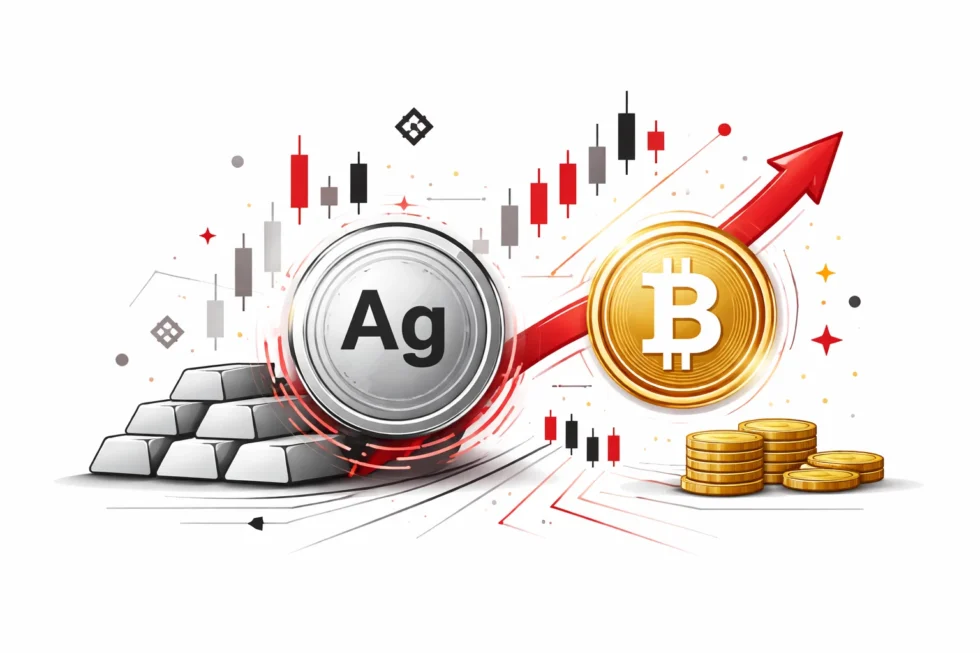
When Binance opened trading in its XAGUSDT silver perpetual contract on 7 January 2026 at 10:00 UTC, it did something no major crypto exchange had done before: it connected one of the world’s oldest monetary metals to the same 24-hour, leveraged, stablecoin-based trading system used for Bitcoin and Ethereum. The contract tracks the price of one troy ounce of silver in US dollars, but is margined and settled in USDT, trades 24 hours a day, has no expiry date, and allows leverage of up to 50 times, according to Binance Futures’ launch specifications.
This means silver — a market historically controlled by the London Bullion Market, COMEX in New York and global bullion banks — is now being priced and traded inside a crypto-native derivatives engine, alongside Bitcoin and Ethereum, using the same margin rules, liquidation systems and funding payments.
The launch came as silver was trading near $80 per ounce, up about 150% over the previous 12 months, making it one of the strongest-performing major assets in global markets at the start of 2026, as money flowed out of volatile cryptocurrencies and into precious metals.
As The WP Times, reports, Binance’s move shows how crypto exchanges are no longer just places for digital tokens — they are becoming alternative financial markets where traditional assets like gold and silver are now traded on blockchain-style infrastructure. For the first time, a global retail audience can now trade silver in exactly the same way as Bitcoin — with no opening hours, no physical delivery and no expiry dates — a structural shift that reaches far beyond Binance itself.
What is XAGUSDT in simple terms
XAGUSDT is a perpetual derivatives contract that gives traders exposure to the price of one troy ounce of silver, quoted in US dollars, but traded and settled entirely in USDT, a dollar-pegged stablecoin.
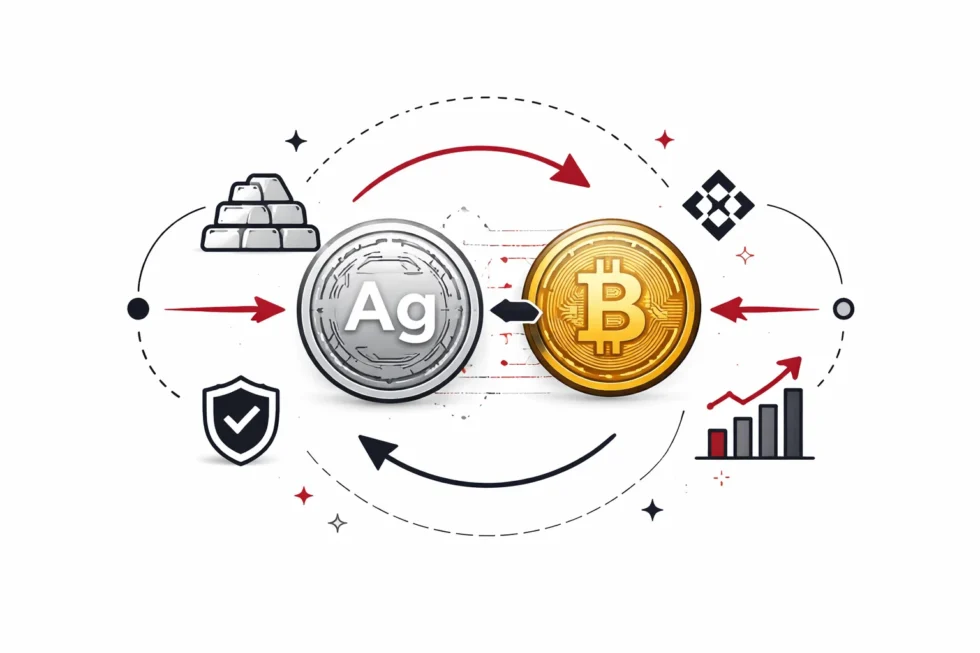
In practical terms, it allows investors to speculate on — or hedge against — movements in the global silver price without owning physical silver and without using a traditional commodities broker. Unlike standard silver futures traded on exchanges such as COMEX in New York, the Binance contract operates on a very different market model:
- it has no expiry date, meaning positions do not have to be rolled each month
- it trades 24 hours a day, including weekends, when commodity exchanges are normally closed
- it allows leverage of up to 50 times, letting traders control large positions with relatively small amounts of capital
- it uses USDT and cryptocurrencies such as Bitcoin as collateral, rather than cash held in a bank
The result is that silver is no longer confined to the rhythms of bullion markets and banking systems.
It now trades inside a crypto-style derivatives engine, governed by funding rates, margin calls and automated liquidations — the same mechanics that drive Bitcoin and Ethereum futures. In effect, one of the world’s oldest financial assets has been absorbed into the infrastructure of the digital trading economy.
Why this is a turning point in the history of trading
Silver has been traded for more than five millennia — as money in ancient empires, as a store of wealth, as jewellery, and as a critical industrial metal. Yet despite its long history, the way silver has been priced and exchanged has always been shaped by physical infrastructure: vaults, banks, clearing houses and fixed market hours. That structure is now being disrupted. For most of the modern financial era, global silver pricing has been dominated by a small number of institutions, including:
- the London Bullion Market, where wholesale silver is traded and settled
- the COMEX futures exchange in the United States, which sets much of the global benchmark price
- large bullion banks and commodity brokers, which control access, credit and clearing
Those systems depend on:
- regulated clearing houses
- bank-based settlement
- restricted trading hours
- and institutional account structures
By contrast, Binance’s silver contract operates on a crypto-native model. Anyone with a digital wallet and a trading account can now move instantly between Bitcoin, stablecoins and silver exposure, at any time of day, without going through a bullion dealer or a commodity broker.
That represents a profound shift: for the first time, the price of a real-world precious metal is being formed inside the same digital derivatives infrastructure that powers cryptocurrency markets. Silver is no longer being traded only through the plumbing of traditional finance — it is now part of the global crypto trading system.t structure.
Why silver, and why now
The timing of Binance’s move reflects a broader shift in global capital rather than a narrow product decision. Precious metals were among the strongest-performing asset classes of 2025, supported by three structural forces that have continued into 2026.
First, industrial demand rose sharply as silver became an essential input for solar panels, electronics and electric-vehicle supply chains, linking the metal directly to the global energy transition. Second, inflation and currency risk pushed investors toward assets that are not tied to government debt or central-bank balance sheets. Third, geopolitical tensions and trade fragmentation increased demand for tangible stores of value that can operate outside the financial system. By early January 2026, silver was trading close to $80 per ounce, roughly 150% higher than a year earlier, making it one of the best-performing major assets in international markets.
At the same time, large parts of the cryptocurrency sector were under pressure from tighter regulation, reduced capital inflows and heightened volatility. Trading volumes and speculative capital were increasingly migrating from digital tokens into metals. For exchanges such as Binance, that created a strategic choice: either lose that capital to traditional commodity markets, or absorb it into their own trading infrastructure. Binance chose the second path — bringing silver into the crypto trading system rather than allowing money to leave it.
How silver now trades inside a crypto market
XAGUSDT is built as a perpetual contract, meaning there is no delivery date for the metal. Instead of expiring, the price is kept in line with the global silver market through a mechanism known as funding. Every four hours, traders holding long and short positions make payments to each other depending on how the contract is trading relative to the broader market. If bullish positions dominate, long traders pay shorts; if the market is skewed to the downside, shorts pay longs.
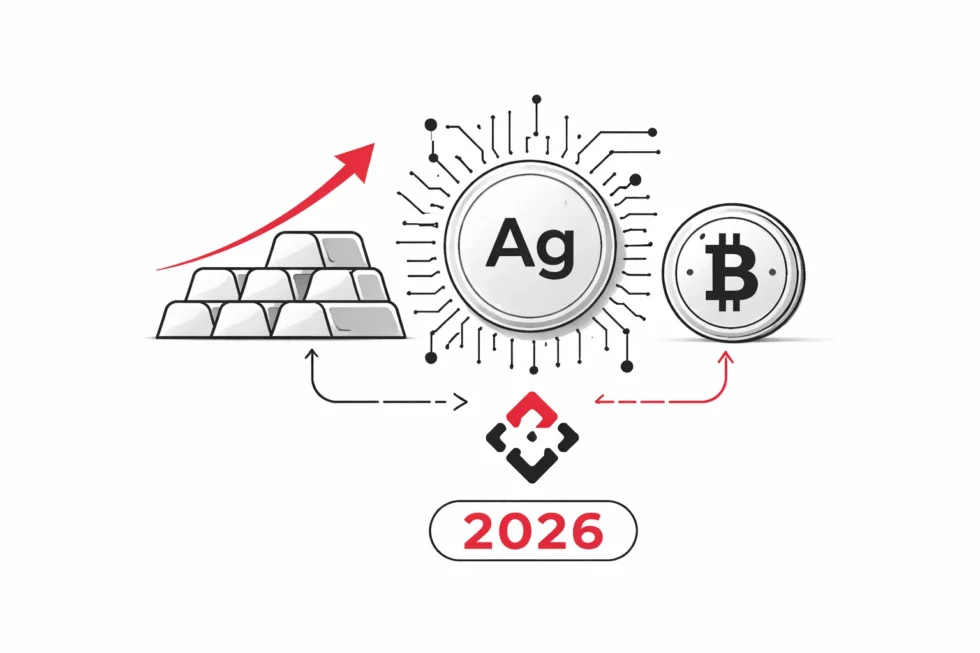
This is the same structure that underpins Bitcoin and Ethereum futures — but it is now being applied to a physical commodity. As a result, silver is no longer driven only by jewellery demand, industrial consumption or central-bank buying. It is also being shaped by:
- leveraged crypto traders
- automated liquidation engines
- and the feedback loops of perpetual derivatives markets
The regulatory framework behind the product
Binance is offering its precious-metal contracts through Nest Exchange Limited, a Binance entity regulated by the Abu Dhabi Global Market (ADGM). This is a critical element of the launch. It allows Binance to list non-crypto assets such as gold and silver within a recognised regulatory structure, rather than as informal synthetic products. It also provides a pathway for the exchange to add further traditional assets under the same framework.
XAGUSDT links silver to crypto markets on Binance. We explain how USDT settlement, perpetual futures and 24/7 trading are changing how one of the world’s oldest assets is priced in 2026.
What this signals about the future of markets
Binance’s silver contract is not, in essence, about silver. It is a test of whether real-world assets — metals today, and potentially currencies, bonds or equities in the future — can be traded inside the same always-on, digital derivatives infrastructure that now defines the crypto market. If that model continues to expand, the dividing line between traditional finance and crypto trading will become increasingly blurred. Silver, one of humanity’s oldest stores of value, has now become part of that experiment.
Read about the life of Westminster and Pimlico district, London and the world. 24/7 news with fresh and useful updates on culture, business, technology and city life: Millions in the UK leaving thousands unclaimed as cash sits idle in 0% accounts