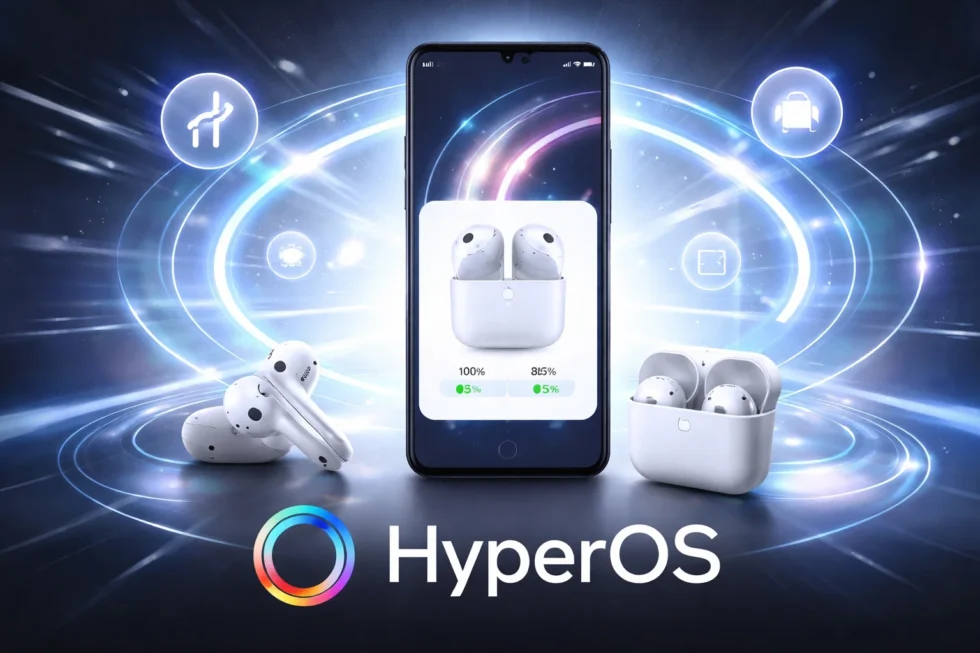
Xiaomi has introduced system-level Apple AirPods integration with the release of HyperOS 3.1, formally removing one of Android’s longest-standing usability limitations. The functionality was confirmed as part of Xiaomi’s January 2026 software update cycle and verified in recent beta and early stable builds deployed across selected flagship models.
Under HyperOS 3.1, Apple AirPods are recognised by the operating system as a managed audio device rather than a generic Bluetooth accessory. The update enables native pairing pop-up cards, real-time battery status for both earbuds and charging case, built-in Spatial Audio support on compatible AirPods models, and direct access to noise-control and connection settings at system level — features previously available almost exclusively on iPhones. Reports The WP Times, citing a Xiaomi media release.
What exactly has changed in HyperOS 3.1
Until now, using Apple AirPods on Android meant good sound but poor system awareness: no native pop-ups, limited controls and unreliable status indicators. HyperOS 3.1 flips that model. Xiaomi no longer treats AirPods as generic Bluetooth hardware; they are recognised as a system-aware audio device.
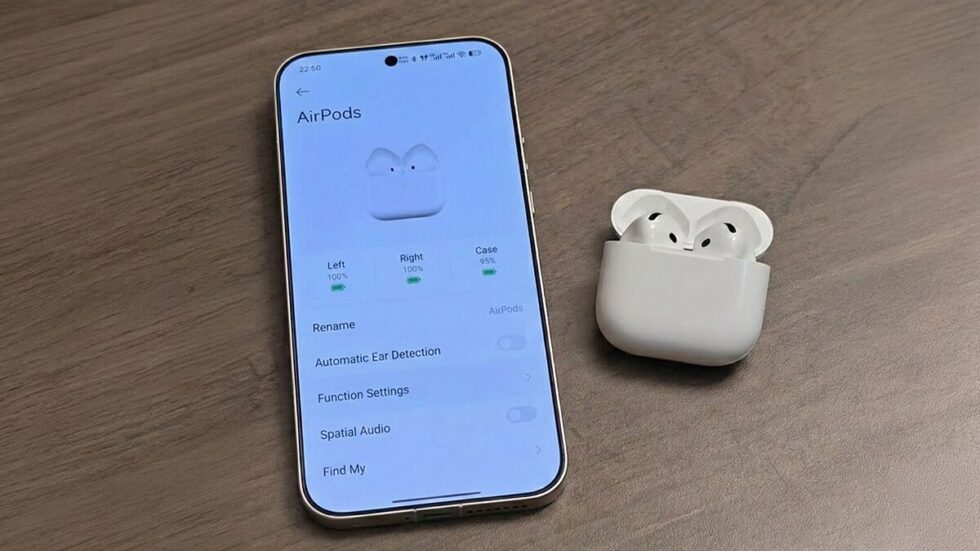
At OS level, this means tighter hooks into the notification shade, Device Center and system UI — the same places where Xiaomi manages its own wearables.
How AirPods work on Xiaomi with HyperOS 3.1
With HyperOS 3.1, Xiaomi no longer treats Apple AirPods as standard Bluetooth accessories. Instead, AirPods are recognised at operating-system level, allowing the earbuds to interact directly with system UI, audio services and device management tools. This shift enables native pairing animations, real-time battery reporting, Spatial Audio playback on supported models and centralised controls within Xiaomi’s Device Center — delivering an experience previously limited to Apple’s own ecosystem.
Native “magic” pop-up pairing
Opening the AirPods case near a Xiaomi phone running HyperOS 3.1 instantly triggers a system pop-up showing the case and individual bud battery levels. No third-party apps, no permissions juggling — it’s baked into the OS.
Spatial Audio without workarounds
Owners of AirPods Pro or AirPods Max now get full Spatial Audio support directly on Xiaomi devices. The feature works natively, without rooting or external software, delivering Apple’s 360-degree audio processing inside Android.
Device Center integration
AirPods appear in Xiaomi’s Integrated Device Center rather than being buried in Bluetooth settings. Users can switch noise-cancellation modes, manage connection priority and monitor status with a single tap.
Status bar icons and headphone display
Instead of a generic Bluetooth symbol, HyperOS shows a dedicated AirPods icon in the status bar. The UI also displays the correct AirPods model across system menus, mirroring Xiaomi’s own Buds experience.
Find-device support via Xiaomi network
Perhaps the most unexpected addition is AirPods compatibility with Xiaomi Online Search, the company’s device-finding network. If earbuds are misplaced, users can locate them using Xiaomi’s infrastructure — even without an iPhone nearby.
Feature overview at a glance
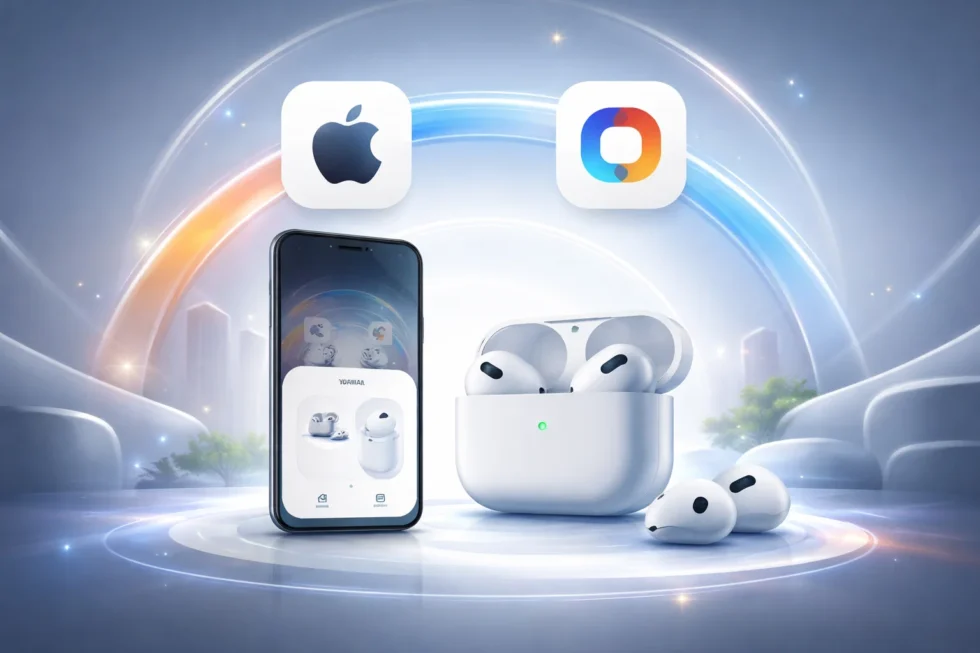
| Feature | Available in HyperOS 3.1 | Notes |
|---|---|---|
| Instant pairing pop-up | Yes | Case open triggers UI card |
| Battery level display | Yes | Case + individual buds |
| Spatial Audio | Yes | Pro & Max models supported |
| Device Center controls | Yes | Noise cancellation & priority |
| Status bar AirPods icon | Yes | Model-specific display |
| Find-device support | Yes | Via Xiaomi Online Search |
Why AirPods on Android is a big deal for UK users
The UK has one of Europe’s highest concentrations of hybrid ecosystem users — consumers who combine Android smartphones with Apple laptops, tablets and accessories. For years, AirPods’ seamless behaviour on iPhone acted as a subtle but powerful lock-in mechanism, often influencing upgrade decisions even when users preferred Android handsets.
By enabling native AirPods support on Xiaomi phones, HyperOS 3.1 directly targets this friction point. The move is particularly relevant for UK professionals, creatives and daily commuters, where AirPods are widely used for video calls, remote work and public transport. For these users, convenience — instant pairing, battery visibility and reliable audio switching — often outweighs brand loyalty.
Strategically, Xiaomi positions itself as a platform-agnostic alternative in a market increasingly shaped by mixed-device households. Rather than forcing customers into a closed ecosystem, HyperOS 3.1 aligns with real-world UK usage patterns, where flexibility, cross-platform compatibility and long device lifecycles matter more than brand purity.
Availability and rollout caveats
Native AirPods support in HyperOS 3.1 has been verified in recent beta and early stable releases and is being deployed through a staggered rollout. As with previous Xiaomi system updates, availability is expected to vary by device model, market and release channel, meaning users may see differences in timing even within the same product line.
Early reports suggest that newer flagship and upper mid-range devices are receiving the feature first, with broader compatibility likely to follow in subsequent update waves. Xiaomi has not yet published a full rollout schedule or confirmed device list, and short-term delays between announcement and delivery remain possible.
HyperOS 3.1 marks the most advanced AirPods integration ever implemented on Android, elevating Apple’s earbuds from generic Bluetooth accessories to near first-party status on Xiaomi devices. For Xiaomi, it reflects a pragmatic shift toward real-world ecosystem overlap. For users, it removes one of the final everyday friction points that has traditionally locked premium headphones to a single platform.
Read about the life of Westminster and Pimlico district, London and the world. 24/7 news with fresh and useful updates on culture, business, technology and city life: What changed in the US–TikTok deal in 2026, ByteDance’s stake cut, and why regulators are watching