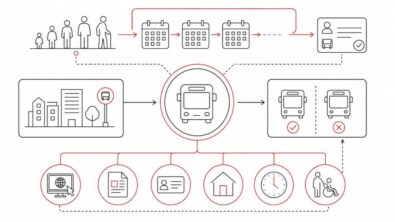
Pension Credit eligibility and payment rates have become a focal point of UK social policy as of March 4, 2026, following the Department for Work and Pensions (DWP) annual benefit uprating. This means-tested benefit, designed to support retirees on low incomes, currently provides a guaranteed minimum income of £227.10 per week for single claimants and £346.50 for couples. Recent legislative changes have further integrated Pension Credit as a mandatory "gateway" benefit for accessing Winter Fuel Payments, valued at up to £300, and free TV licenses for those over 75. Despite these incentives, DWP data indicates that approximately 850,000 eligible households have yet to apply, leaving an estimated £1.8 billion in unclaimed support. This is reported by The WP Times.
Pension Credit entitlement and financial thresholds for 2026
Pension Credit is a complex benefit divided into two distinct parts: Guarantee Credit and Savings Credit. Understanding the specific income thresholds is critical for potential claimants to determine if an application is viable. As of the current 2025/2026 tax year, the DWP has adjusted the qualifying criteria to reflect the rising cost of living and the triple-lock adjustment on the basic State Pension.
Guarantee Credit is the primary component. It tops up your weekly income if it falls below the statutory minimum. For a single person, this minimum is now set at £227.10 per week. For those in a civil partnership or marriage living together, the joint income is topped up to £346.50. It is important to note that "income" in this context includes the State Pension, private pensions, and earnings from employment, but excludes certain disability benefits like Personal Independence Payment (PIP) or Attendance Allowance.
Savings Credit, the second component, is only available to individuals who reached the State Pension age before April 6, 2016. This is designed to reward those who have a small amount of private savings or a modest second pension. For those eligible, the maximum weekly payment is £19.10 for individuals and £22.05 for couples.
Eligibility criteria: Age, residency, and capital rules
To qualify for Pension Credit, a claimant must have reached the UK State Pension age, which is currently 66 for both men and women. However, residency status and capital (savings) play a significant role in the DWP’s decision-making process.
Residency and Nationality Requirements
Claimants must reside in Great Britain (England, Scotland, or Wales). Different rules apply in Northern Ireland. Furthermore, an applicant must satisfy the "habitual residence test," meaning they must demonstrate a legal right to reside in the UK and an intention to remain. This affects UK nationals returning from abroad and foreign nationals with settled or pre-settled status.
Capital and Savings Thresholds
Unlike many other means-tested benefits, Pension Credit does not have an absolute "capital limit" of £16,000. Instead, the first £10,000 of savings or investments is completely ignored. For every £500 (or part thereof) over £10,000, the DWP assumes a "tariff income" of £1 per week. This flexibility allows individuals with modest nest eggs to still qualify for support, provided their total calculated income remains below the Guarantee Credit threshold.
| Requirement | Single Claimant | Couple (Joint) |
| Qualifying Age | 66 (State Pension Age) | Both must be 66+* |
| Weekly Income Ceiling | £227.10 | £346.50 |
| Capital Allowance | First £10,000 ignored | First £10,000 ignored |
| Tariff Income | £1 per £500 over £10k | £1 per £500 over £10k |

The "Gateway Effect": Additional benefits and passported support
The true value of Pension Credit extends far beyond the weekly cash injection. It acts as a "passport" to several other high-value forms of assistance, which are often vital for maintaining a standard of living in retirement.
Housing and Energy Support
Recipients of the Guarantee Credit component automatically qualify for full Housing Benefit (if they rent) and a 100% reduction in Council Tax (through local Council Tax Support schemes). Furthermore, under current 2026 regulations, Pension Credit is the primary requirement for receiving the annual Winter Fuel Payment. Without a successful Pension Credit claim, most pensioners no longer receive this automatic £200 to £300 payment.
Health and Social Benefits
Pension Credit claimants are entitled to:
- Free Dental Treatment: Full coverage for NHS dental check-ups and procedures.
- Vision Care: Vouchers for glasses or contact lenses and free NHS eyesight tests.
- TV License: For those aged 75 or over, Pension Credit covers the cost of the annual television license (currently £169.50).
- Warm Home Discount: An automatic £150 rebate on electricity bills during the winter months.
How to apply: Step-by-step guidance and necessary documentation
The DWP has streamlined the application process, but claimants are advised to gather specific documentation before beginning. Applications can be backdated by up to three months, provided the claimant was eligible during that period.
Steps to Submit a Claim
- Online Application: The fastest method is via the official portal at www.gov.uk/pension-credit/how-to-claim.
- Phone Application: Claimants can call the Pension Service claim line at 0800 99 1234 (Textphone: 0800 169 0133). Lines are open Monday to Friday, 8 am to 6 pm.
- Paper Application: A postal form can be requested if digital or phone options are inaccessible.
Required Information
Claimants must provide:
- National Insurance (NI) number.
- Details of all income, including any pensions from previous employers.
- Bank, building society, or Post Office account details.
- Details of any savings, investments, or property owned (excluding the primary residence).
Special circumstances: Carers and disability premiums
Certain conditions allow for an "Additional Amount" to be added to the standard Guarantee Credit. These premiums significantly increase the weekly income ceiling, meaning people with higher incomes may still qualify.
Severe Disability Addition
If a claimant receives Attendance Allowance, the highest or middle rate of the care component of Disability Living Allowance (DLA), or the daily living component of Personal Independence Payment (PIP), they may receive an extra £81.50 per week.
Carer’s Addition
If a claimant is entitled to Carer's Allowance or has a "carer element" in their Universal Credit, they may receive an extra £45.60 per week. This applies even if the Carer’s Allowance is not paid due to the "overlapping benefits" rule.

Pension Credit for "Mixed-Age" Couples: The 2019 Rule Change and its 2026 Impact
A critical area of confusion remains the treatment of "mixed-age couples"—where one partner has reached State Pension age (66) and the other has not. Following a policy shift in May 2019, most mixed-age couples can no longer make a new claim for Pension Credit. Instead, they must claim Universal Credit until both partners reach the qualifying age.
This transition is financially significant. Universal Credit rates are generally lower than Pension Credit rates, and the "capital limit" for Universal Credit is strictly £16,000, whereas Pension Credit has no upper limit. If you were already receiving Pension Credit as a mixed-age couple before the change, you are "grandfathered" in, meaning you stay on the benefit as long as your circumstances do not change.
Comparison: Pension Credit vs. Universal Credit for Couples (2026)
| Feature | Pension Credit (Couple) | Universal Credit (Couple 25+) |
| Weekly Rate | £346.50 | ~£145.00 (Standard Allowance) |
| Capital Limit | None (Tariff income applies) | £16,000 (Hard cutoff) |
| Work Search | Not required | Required for the younger partner |
Impact of Foreign Pensions and Exchange Rate Fluctuations
For the thousands of retirees living in the UK who receive a pension from abroad (e.g., from the EU, USA, or Commonwealth countries), Pension Credit calculations become more complex. The DWP calculates the value of a foreign pension based on the exchange rate at the time of the claim assessment.
If the British Pound (GBP) weakens against the Euro or Dollar, the "Sterling value" of your foreign pension increases. This can inadvertently push a claimant above the income threshold, leading to a reduction or cessation of Pension Credit. Claimants are legally obligated to report significant changes in the value of their foreign income to the Pension Service. Failure to do so can result in an "overpayment recovery" action or civil penalties.
Common Pitfalls: The "Duty to Report" and Overpayments
One of the most frequent reasons for DWP investigations in 2026 is the failure to report changes in circumstances. Pension Credit is often perceived as a "set and forget" benefit, but it is highly sensitive to household changes.
Changes that MUST be reported:
- Absence from the UK: If you leave the country for more than 4 weeks (or 8 weeks in specific medical cases), your Pension Credit usually stops.
- Hospital Stays: If you are in an NHS hospital for more than 52 weeks, your Pension Credit may be reduced, specifically the severe disability addition.
- Moving Home: A change of address can impact your Housing Benefit and Council Tax Support, which are linked to your Pension Credit claim.
- Changes in Savings: While the first £10,000 is ignored, crossing the £500 increments above this threshold must be reported to adjust the "tariff income."
The "Notional Income" Rule: Deprivation of Assets
A technical but vital aspect of Pension Credit law is the "Deprivation of Assets" rule. The DWP may refuse a claim if they believe an individual has intentionally reduced their savings to qualify for the benefit (e.g., giving a large cash gift to a grandchild shortly before applying).
In such cases, the DWP can apply "notional income"—calculating your eligibility as if you still possessed that money. However, using savings to pay off a mortgage, clear debts, or perform essential home repairs is generally considered legitimate expenditure and should not trigger this rule.
The current state of Pension Credit in 2026 underscores the necessity for proactive management by the claimant. As the UK government tightens the links between Pension Credit and other statutory supports like energy rebates, the "cost of not claiming" or "reporting incorrectly" has risen. For the retiree, staying informed about these technical boundaries is the only way to ensure that the safety net remains intact and that they do not face unexpected financial clawbacks from the DWP.
Why 850,000 households are not claiming support
Despite the financial advantages, the DWP reports that nearly one-third of eligible pensioners do not claim. Research by Age UK and Citizens Advice identifies three primary barriers: stigma, perceived complexity, and the misconception that having savings or owning a home disqualifies an individual.
Government initiatives in early 2026 have focused on "Pension Credit Awareness Weeks," urging family members to check the eligibility of elderly relatives. Independent calculators, such as those provided by entitledto.co.uk or turn2us.org.uk, offer anonymous ways to verify potential entitlement before contacting the DWP.
The current economic landscape in the UK places Pension Credit at the center of retiree financial security. As heating costs and inflation persist, this benefit has evolved from a simple income supplement into an essential prerequisite for accessing broader state support, including energy subsidies and local tax relief. For the individual pensioner, a successful claim represents not just a weekly top-up, but a comprehensive safety net that mitigates the rising costs of housing, health, and basic utilities.
Read about the life of Westminster and Pimlico district, London and the world. 24/7 news with fresh and useful updates on culture, business, technology and city life: UK Labour Shortages Explained: Who Employers Are Actively Seeking and Why It Matters