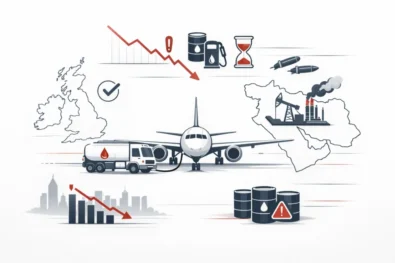
Jet2 fuel shortage concerns intensified on Friday 17 April 2026, as Jet2 issued a same-day operational warning confirming that ongoing strike action involving Spanish air traffic control provider SAERCO could delay flights to and from Lanzarote, Fuerteventura, La Palma and Jerez, directly affecting UK holiday departures at the start of the weekend travel window. The airline clarified that no confirmed fuel shortage had been declared at the affected airports, but warned passengers to expect extended onboard waiting times before departure due to restricted air traffic flow, adding that flights would still be boarded and gates closed on schedule so aircraft could depart immediately once clearance was granted, The WP Times reports.
That distinction matters. The immediate operational problem is not a confirmed lack of aviation fuel; it is an air traffic control strike affecting airport flow, slot timing and aircraft movement. In practice, that kind of disruption can still feed passenger concern around “fuel shortage” because aircraft may spend longer on the ground, rotations can tighten across the day, and delays at one airport can spread through an airline’s network, especially on busy UK-Spain leisure routes in the Easter and early-summer travel window.
Jet2 fuel shortage alert: what Jet2 has actually told passengers
Jet2’s published travel update is tightly worded and focused on disruption management rather than cancellation language. The carrier said strike action “supported by Saerco, a Spanish Air Traffic Control company” was due to commence on 17 April 2026 and “may cause delays” to flights arriving and departing Lanzarote, Fuerteventura, La Palma and Jerez. It told customers to arrive at the airport at least two hours before departure, reminded them that check-in closes 40 minutes before scheduled departure, and said passengers should be prepared for “possible longer than normal waits onboard” before take-off.
The most operationally important line in Jet2’s notice is that the airline will board flights and close gates for on-time departure even where an aircraft cannot leave immediately. That is a standard response to airspace or tower restrictions: the carrier positions the aircraft and passengers to move as soon as an ATC slot becomes available. For travellers, however, it means the disruption may be felt less as a formal cancellation and more as extended waiting, delayed pushback, slower sequencing and later arrival at destination.
Jet2 also told customers to make sure their contact details are current in Manage My Booking and said its team would contact passengers if the situation changed. That wording suggests a live operational watch rather than a one-off advisory, with the airline expecting the level of disruption to vary according to tower staffing, traffic levels and the timing of individual rotations through the affected Spanish airports.
Which Spanish airports are affected and why the strike matters
The wider Spanish disruption is larger than the four airports named in Jet2’s customer warning. Reporting on the first day of the strike says the indefinite action affects SAERCO-managed towers across 14 airports, including Lanzarote, Fuerteventura, La Palma, El Hierro, La Gomera, Jerez, Sevilla, Vigo, A Coruña, Castellón, Burgos, Huesca, Ciudad Real and Madrid-Cuatro Vientos. That matters because even if a passenger is only flying into one of Jet2’s named destinations, the airline’s wider programme can still be affected by late inbound aircraft and out-of-position crew or equipment.

The strike has been linked to a labour dispute involving controllers’ unions USCA and CCOO after failed talks over staffing, scheduling and working conditions. Spanish reporting says the dispute centres on claims of understaffing, fatigue risk, last-minute roster changes, cancelled leave and pressure on operational safety. One report said 104 workers were involved and noted that the Spanish Transport Ministry had set minimum service levels according to the type of flight being protected.
That minimum-service framework is important for readers trying to judge risk. It lowers the probability of a total shutdown at affected airports, but it does not remove the likelihood of disruption. The practical consequence is usually a day shaped by reduced flexibility and constrained throughput rather than blanket closure: aircraft may still fly, but not necessarily at the hour first shown on the booking.
What this means in practice for Jet2 passengers flying to Spain
For Jet2 customers, the most likely disruption pattern is delay rather than immediate cancellation. Travellers heading to Lanzarote, Fuerteventura, La Palma or Jerez should expect the possibility of late boarding, longer stand time before departure, delayed arrival, slower turnarounds and, in some cases, knock-on changes later in the day if an aircraft starts operating behind schedule from its first sector. That is particularly relevant on Friday and weekend leisure routes where aircraft utilisation is typically tight and recovery time can be limited.
Passengers with onward plans at destination should be especially careful with timing. The strike reporting specifically warns of missed connections, short-notice timetable changes, late aircraft rotations and longer waits. Even where Jet2 continues to operate a full programme, one delay can easily become two: first in the air traffic sequence and then at arrival, where stand allocation, crew duty time and return-slot issues may come into play.
The strongest immediate advice remains basic but important. Get to the airport early, keep phone and email details updated, monitor Jet2’s live travel information page, and build extra time into onward transfers. Travellers should also be cautious about assuming that a flight showing as scheduled earlier in the day will leave exactly on time later, because ATC-related disruption can intensify as traffic builds across an operating wave.
Passenger rights if the flight is delayed or cancelled
Even where disruption is caused by a third-party strike rather than the airline itself, carriers still owe passengers a duty of care. Travel reporting on the strike says that if a flight is delayed, airlines must provide assistance such as meals, refreshments and communication access depending on delay length and route distance. If disruption extends overnight, accommodation and transport may also be required. If a service is cancelled, passengers are entitled to a refund or rerouting option.
The harder question is compensation. Because air traffic control strikes are generally treated as extraordinary circumstances outside an airline’s direct control, compensation is less likely even where delays are long. That does not remove the airline’s obligation to inform passengers properly or to provide practical support when disruption becomes significant; it simply narrows the route to additional cash compensation.
Travellers should therefore separate three different issues: whether the flight is still operating, whether the airline must look after them during disruption, and whether they are entitled to compensation on top. In an ATC strike, the first two rights remain highly relevant even where the third is limited.
What the key statements show
Jet2’s own language is restrained and operational: “We wanted to let you know about strike action… which may cause delays to flights arriving and departing Lanzarote, Fuerteventura La Palma and Jerez” (Jet2 travel information update, 17 April 2026). The airline added: “Please be prepared for possible longer than normal waits onboard your aircraft to depart” and said gates would close on time so flights could depart “as soon as we are advised we can” (Jet2 travel information update, 17 April 2026).
External reporting is broader and blunter. One report described ATC strikes as “the most disruptive type of strike” because they can affect every airline using the selected airports rather than one carrier or handling company alone (Euro Weekly News, 17 April 2026). Spanish reporting, meanwhile, tied the dispute directly to staffing pressure, fatigue concerns and service minima imposed by government to protect essential traffic (El País, 17 April 2026).
Taken together, those statements point to the same conclusion: this is a traffic-management disruption story first, not a confirmed airport fuel-supply crisis. But for passengers searching jet2 fuel shortage, the practical experience may still look similar from the terminal seat — waiting, uncertainty, limited updates between slot changes, and an increased risk that one disrupted airport rotation will reshape the rest of the day’s schedule.
What passengers should do now if flying Jet2 to Spain
Passengers travelling with Jet2 to affected Spanish airports should adjust plans immediately to account for operational disruption linked to the ongoing air traffic control strike. The airline’s guidance points to timing discipline and real-time monitoring as critical factors in avoiding missed departures and unmanaged delays.
- Arrive early and allow margin — Jet2 requires passengers to be at the airport at least two hours before departure, with check-in closing строго за 40 минут до вылета
- Prepare for onboard delays — boarding may proceed on time, but departure can be held until ATC clearance is granted, meaning extended waiting time inside the aircraft
- Keep booking data updated — airlines will rely on registered contact details to issue disruption alerts or schedule changes
- Track live flight status — conditions may change within hours as slot availability shifts across Spanish airspace
- Retain receipts and follow airline guidance — in case of extended delays, documented expenses may be required for reimbursement under duty of care rules
This is a disruption scenario driven by airspace control constraints rather than airline scheduling failure, meaning passengers who are prepared for delays — rather than cancellations — are more likely to manage the situation without escalation.
Read about the life of Westminster and Pimlico district, London and the world. 24/7 news with fresh and useful updates on culture, business, technology and city life: How many people are affected by the 2026 London Legionnaires' outbreak