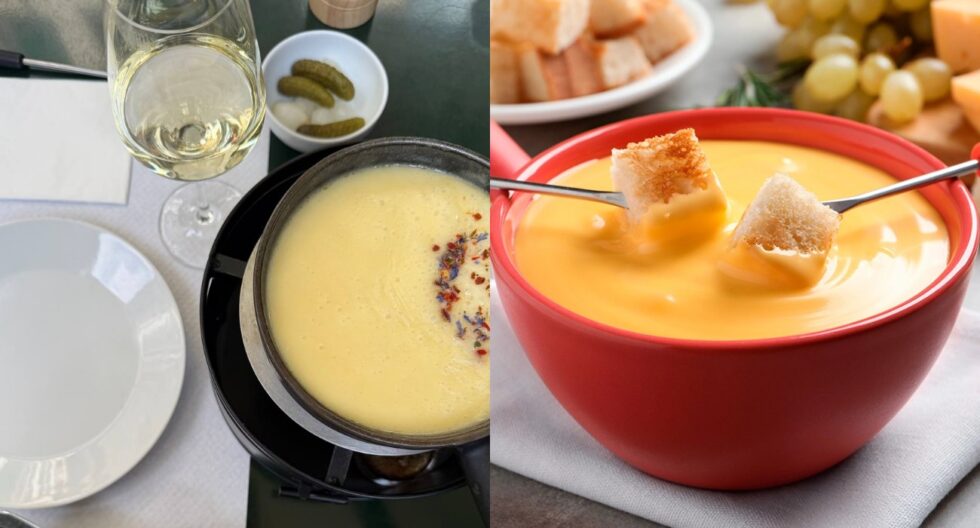
Swiss cheese fondue in 2026 is far more than a culinary relic; it is a technological and sociological phenomenon anchoring Swiss identity in the digital age. In major British hubs like London and Manchester, the dish has evolved from a seasonal winter comfort food into a year-round lifestyle experience that blends tradition with a modern consciousness of quality and provenance. For diners, the shared act of dipping into the caquelon (the traditional pot) offers a rare form of "slow food" connection, though it requires knowledge of specific etiquette to master the indulgence without the typical physical heaviness. Selecting the right balance of matured AOP cheeses, appropriate pairings, and correct table manners transforms a simple meal into an interactive ritual that fundamentally shifts the social dynamics at the table. In a world of fast-paced meals, fondue provides a valuable constant where the correct execution—from drink choice to scraping the crust—determines one's well-being after the feast, reported by The WP Times.
What is Fondue – Origins, Ingredients, and Significance
Swiss cheese fondue is a complex emulsion of melted cheese, dry white wine, and starch, kept stable through the application of controlled heat. The classic recipe, known as "Moitié-Moitié" (half-and-half), combines the bold, nutty depth of Gruyère AOP with the incomparable creaminess of Vacherin Fribourgeois AOP. This blend was not created by chance but is the result of centuries of optimisation by Swiss alpine herders who sought a way to utilise stored cheese and hardened bread during isolation.
An authentic fondue requires a fine balance of acidity, usually provided by a crisp white wine with a high tartaric acid content, which is crucial for breaking down the cheese’s protein structure. A splash of Kirsch (cherry brandy) provides more than just aroma; it acts as a solvent for fat molecules, aiding the overall emulsion. In top-tier kitchens in London and Manchester, the caquelon is meticulously rubbed with a fresh garlic clove before filling, adding a subtle but essential depth to the base.
| Ingredient / Component | Standard (Moitié-Moitié) | Function in the Dish |
| Gruyère AOP | 50% of cheese weight | Provides structure, depth, and nutty notes |
| Vacherin Fribourgeois | 50% of cheese weight | Responsible for the melt and creaminess |
| Dry White Wine | approx. 300ml per 800g cheese | Acid source for fat binding |
| Garlic | 1 clove (rubbed) | Aromatising the pot before cooking |
| Kirsch (Cherry Brandy) | 1–2 tablespoons | Flavour enhancer and traditional catalyst |
| Cornstarch | 1 teaspoon | Emulsifier to prevent oil separation |
- Regionality: While "Moitié-Moitié" is the gold standard, UK chefs often experiment with local British artisan cheeses to add a "terroir" twist.
- AOP Seal: Only cheese with the Protected Designation of Origin guarantees traditional methods and zero artificial additives.
- Bread Choice: Traditionally, crusty white bread or sourdough is used, as it provides the structural integrity needed to hold heavy cheese.
- Seasoning: A grating of fresh nutmeg and a pinch of white pepper are the silent partners that elevate the cheese’s natural profile.
Where to Eat Fondue All Year Round – London and Manchester
London and Manchester offer an impressive selection of restaurants that celebrate the fondue experience even during the warmer months, catering to the demand for authentic European soul food. In London, institutions like St. Moritz in Soho have been serving authentic Swiss blends for decades, maintaining a standard that rivals the best spots in Geneva. Meanwhile, in Manchester, the culinary scene in the Northern Quarter and Spinningfields has embraced the communal nature of the dish, often pairing it with curated wine lists. These cities have seen a rise in "Alpine-chic" venues that use high-quality imports directly from the Fribourg and Valais regions to ensure authenticity. Restaurateurs in both hubs have realised that fondue is not just a meal, but a social event that attracts both tourists seeking a classic experience and locals looking for high-quality communal dining.
Top Locations in London:
- St. Moritz (Wardour St, Soho): The legendary heart of Swiss cuisine in London, serving authentic blends since the 1970s.
- Heritage (Rupert St, West End): A modern take on Alpine dining, focusing on luxury ingredients and precision-melted AOP cheeses.
- The Cheese Bar (Various Locations): While often focusing on British cheeses, they frequently run specialised Swiss fondue nights.
- Jimmy’s Lodge (Southbank): Offers "snow globes" in winter, but maintains a strong focus on melted cheese traditions throughout their seasonal shifts.
Top Locations in Manchester:
- Albert’s Schloss (Peter St): A massive "Bier Halle" that treats fondue with the respect it deserves, offering a lively, authentic atmosphere.
- The Sparrows (Red Bank): A hidden gem focusing on Spätzle and Alpine classics, where the cheese quality is paramount.
- Manchester Christmas Markets (Seasonal): Though seasonal, these markets have established a massive year-round craving for Alpine cheese.
- Wine & Wallop (Didsbury): Often features fondue on their evening menus, perfect for a slower, neighbourhood dining experience.
When to Eat Fondue – Seasonality vs. Year-Round Consumption
Traditionally, fondue is viewed as a quintessential winter dish, as its high caloric density and warmth are ideal for cold British evenings. However, in the modern gastronomy of 2026, a trend of year-round consumption has emerged, driven by the desire for authentic experiences regardless of the weather. During the summer, many UK restaurants offer lighter variations, perhaps reducing the alcohol content or serving a higher proportion of vegetable dippers.
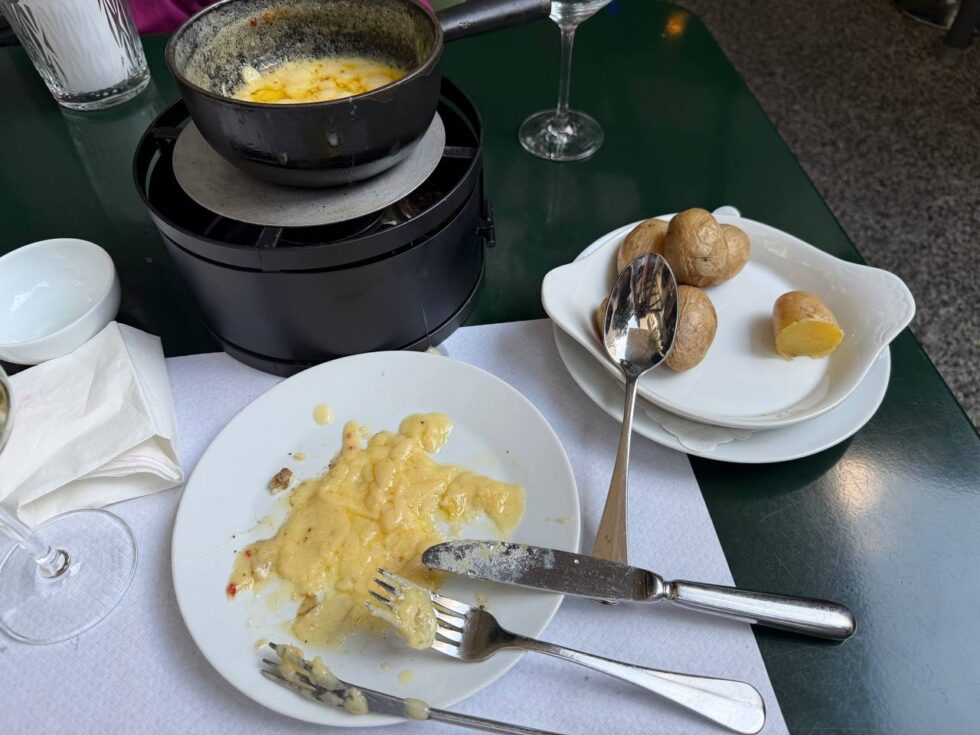
Practically speaking, visiting a fondue restaurant in the spring or summer is often more pleasant, as booking times are flexible and the ventilation in the venues is more effective. Many British diners now enjoy fondue on outdoor terraces during cool summer evenings, where the slight chill in the air makes the hot cheese feel perfectly appropriate. Year-round availability allows for the dish to be enjoyed without the typical winter rush and holiday crowds. It has become a lifestyle choice—choosing a communal cheese pot in July is a statement of appreciation for high-quality dairy and social interaction.
- Summer Fondue: Often served on terraces, paired with crisp apples or pears instead of just heavy bread.
- Event Dining: Many companies in London use fondue for summer team-building events to foster communication.
- Tourism Magnet: For international visitors to London, experiencing a classic European fondue is a must-do, regardless of the month.
- The "Cool" Factor: Contemporary diners in Manchester view fondue as a timeless classic, much like steak or pasta, that transcends seasons.
How to Eat Fondue Correctly – Rules and Etiquette
When eating fondue, there is an unwritten etiquette that determines the success of the evening and is deeply rooted in Swiss tradition. The most important rule is that the bread must be securely fastened to the fork, as losing it in the pot traditionally carries a "penalty." One should spear the bread cube so that the fork passes through the crust, ensuring a firm grip and preventing the bread from drowning in the dense cheese mass.
While dipping, you should stir the caquelon in a figure-of-eight motion to keep the emulsion stable and prevent the cheese from catching on the bottom. A common mistake is eating too quickly; fondue is a marathon that requires time and good conversation. One should allow the bread to drip briefly over the pot to regulate the temperature and keep the tablecloth clean. It is also vital not to put the fork too deep into your mouth, as the metal can be extremely hot from the burner. At the very end of the meal, the "Religieuse"—the crispy cheese crust at the bottom—awaits as a true delicacy.
- Spear Securely: The fork must be firmly embedded in the bread, preferably through the crusty side.
- Stir in an Eight: Always stir the cheese in a figure-of-eight motion to keep the consistency uniform.
- The Drip: Wait a few seconds for excess cheese to fall back, allowing the morsel to cool slightly.
- No Double-Dipping: An absolute taboo is re-dipping a piece of bread that has already been bitten.
- Patience: Do not eat the cheese too fast, or you risk overwhelming your stomach in a short period.
- Traditional Penalty: Whoever loses their bread traditionally buys the next round of drinks or sings a song.
What to Drink – Impact on Digestion
Choosing the right drink with fondue is crucial for post-meal well-being and is often underestimated by novices. The traditional recommendation is a dry white wine, such as a Chasselas or a crisp Riesling, as the acidity helps break down the cheese fats and keeps the emulsion fluid in the stomach. Alternatively, hot black tea is an excellent companion, as the heat prevents the cheese from solidifying too quickly in the digestive tract, which can cause discomfort.
Contrary to popular myths, a small sip of Kirsch during the meal is more for the aroma and tradition than a real digestive aid. You should strictly avoid ice-cold water or large amounts of carbonated soft drinks during the meal. Cold temperatures cause the melted cheese to "shock" and clump in the stomach, leading to the infamous "stone in the stomach" feeling. If you must drink water, ensure it is at room temperature and taken in small sips between bites of cheese.
| Drink | Recommendation | Reason |
| Dry White Wine | Very High | Acidity aids in the breakdown of saturated fats. |
| Black Tea | Very High | Warmth keeps the cheese supple in the stomach. |
| Herbal Tea | High | Peppermint or fennel tea soothes the gut post-meal. |
| Room Temp Water | Moderate | Acceptable for thirst, but offers no digestive help. |
| Iced Water / Cola | Very Low | Causes the cheese to clump, leading to indigestion. |
How Much Fondue Per Person – Optimal Quantities
The standard portion in professional UK restaurants is approximately 200 to 250 grams of pure cheese per person, providing a solid foundation for a satisfying evening. For those who want the meal to feel less heavy, 150 to 180 grams is often sufficient, especially if a variety of vegetable dippers are provided. Over-ordering quickly leads to satiety symptoms that can ruin the enjoyment of the latter half of the meal.
In cities like London and Manchester, many establishments allow for cheese to be re-ordered in smaller increments, which is a great strategy against food waste. When determining the optimal amount, you must account for sides like potatoes or vegetables, which are also quite filling. If several sauces or pickles are served alongside the bread, the actual requirement for cheese drops slightly. A good host ensures there is plenty of bread, but the cheese remains the undisputed star of the night.
- Standard Portion: 200g of cheese per person—ideal for most diners.
- High Hunger: 250g to 300g per person—for the true cheese enthusiast.
- Side Factor: More potatoes usually mean less bread and cheese consumption.
- Re-ordering: Most high-end spots allow for a "top-up" (e.g., 100g) to be prepared quickly.
Is Fondue Healthy – Fats, Calories, and Reality
From a nutritional perspective, cheese fondue is a calorie-dense meal rich in saturated fats and calcium, making it a "powerhouse" of energy. An average portion, including bread and wine, can contain between 800 and 1,200 calories, which is nearly half the daily requirement for an adult. However, high-quality Swiss cheese provides valuable proteins and vitamins, particularly A and B12, which are essential for the immune system.
The key to a healthy approach here is moderation and the quality of ingredients, as AOP cheeses are free from artificial additives and preservatives. The health issue usually arises from the combination of cheese with large amounts of refined white bread, which causes insulin levels to spike. To make the dish healthier, one can opt for wholemeal sourdough or use more steamed vegetables for dipping. An active walk after the meal supports digestion far more effectively than any digestive spirit.
- High Calcium: Excellent for bone health and mineral density.
- Protein Rich: Provides long-lasting satiety and essential amino acids.
- Saturated Fats: Requires conscious planning of your other meals during the day.
- Gluten: A challenge for Coeliacs (solution: swap bread for boiled potatoes).
- Sodium: Cheese is naturally high in salt; this should be noted by those with high blood pressure.
Tips for Year-Round Fondue – Enjoyment Without Heaviness
To enjoy fondue in the UK during the summer months, one should adopt a strategically "light" tactic to avoid unnecessary stomach strain. Choose restaurants with well-ventilated outdoor areas or terraces to keep the ambient temperature pleasant while eating. Replace a significant portion of the bread with fruits like apples or pears, as their acidity and crunch contrast beautifully with the rich fat of the cheese.
Furthermore, it is recommended not to eat a heavy starter, such as a creamy salad, but rather choose a light consommé or a simple green salad with vinaigrette. Another expert tip is "interval eating," where you take short breaks during the meal to sip only warm tea. This gives the body time to process satiety signals correctly and prevents overeating. In London and Manchester, more concepts are appearing where herbs like wild garlic are mixed into the cheese, which varies the flavour and aids digestion.
- Fruit as a Side: Use apples, pears, or grapes to cut through the richness.
- Vegetable Options: Blanched broccoli, cauliflower, or carrots are excellent for dipping.
- Herbal Infusions: Adding fresh herbs to the cheese makes the aroma more complex and aids metabolism.
- Clothing: Choose loose-fitting clothing, as your comfort levels may change during the feast.
- Activity: Plan at least a 20-minute walk in a local park or by the river after your meal.
The Role of Bread and Vegetable Sides
Bread in fondue is not merely a vehicle for the cheese; it is a decisive factor in the texture and taste of the entire experience. Ideally, one uses bread with a firm crust and a porous crumb so that the cheese adheres well and doesn't slip off immediately. In Britain, sourdough has become a popular choice because its inherent tanginess complements the salty cheese.
Alongside bread, potatoes (boiled in their skins) are gaining massive popularity as they are naturally gluten-free and offer a gentler form of satiety. Acidic sides like gherkins (cornichons) and pickled silverskin onions are indispensable, as their sharp acidity provides a vital flavour counterpoint to the fat-heavy cheese. In modern London fondue parlours, you might even find more exotic sides like pineapple or cherry tomatoes, which offer a fruity refreshment. A perfectly prepared basket of sides is the foundation of any successful fondue evening.
- Bread Quality: Day-old bread is often better as it is structurally firmer on the fork.
- Variety: A mix of white, rye, and sourdough provides different flavour nuances.
- Acidic Contrast: Cornichons and pickled onions refresh the palate between bites.
- Potatoes: Known in Switzerland as "Gschwellti," boiled new potatoes are the best bread alternative.
The Importance of the Caquelon and Rechaud
The caquelon, the classic pot made of stoneware, ceramic, or cast iron, is central to heat distribution and the consistency of the fondue. Because cheese is a delicate ingredient, it must not be heated too quickly or too intensely, or it will become rubbery or separate into oil and solids. A high-quality caquelon stores the heat from the burner (rechaud) evenly and releases it slowly, allowing for a gentle simmer.
The rechaud is usually powered by methylated spirits or a specific burning gel that allows for precise flame regulation. In 2026, you will find more electric rechauds in posh Manchester restaurants, which guarantee even more constant temperature control. Nonetheless, purists still swear by the open flame, as it brings the rustic atmosphere of the Swiss Alps directly to the British table. A well-maintained caquelon is often a family heirloom in Switzerland and tells its own history.
| Caquelon Material | Advantage | Disadvantage |
| Ceramic / Stoneware | Very even heat distribution. | Fragile if dropped or knocked hard. |
| Cast Iron | Extremely durable and robust. | Can lead to burning if heat isn't managed. |
| Porcelain | Elegant look, easy to clean. | Retains heat for less time than stoneware. |
The Crust at the Bottom: "La Religieuse"
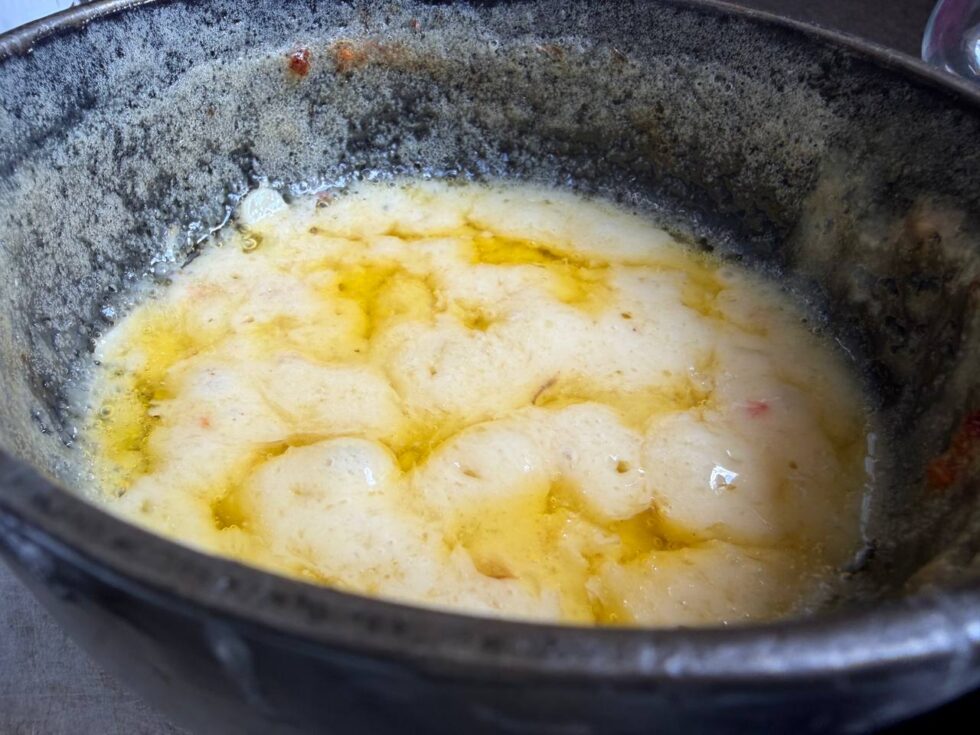
At the end of every fondue, "La Religieuse" awaits—a crispy cheese crust that forms at the bottom of the caquelon and is considered by connoisseurs to be the absolute highlight. This layer is created by the controlled browning of the cheese at a low temperature and concentrates all the flavours of the blend into one intense bite. In Swiss table culture, it is an act of politeness to carefully detach the crust with a knife and share it among the guests so that everyone can enjoy it.
The name likely derives from the crust’s resemblance to a nun’s habit, underscoring the almost "sacred" status of this moment. Anyone who takes the pot off the fire too early or lets the layer burn misses the best conclusion to the meal. In some regions, an egg is even cracked into the final remnants of the cheese to make the crust even creamier and richer. It is the culinary finale that proves you truly master the art of fondue.
- Formation: The perfect crust only forms with constant, low residual heat.
- Tools: A flat knife or a specific fondue fork helps in detaching the crust safely.
- Taste: Very intense, nutty, and slightly salty.
- Sharing: "La Religieuse" should never be eaten by one person alone.
Fondue Etiquette for the Advanced Diner
Beyond just dipping bread, there are several rules of conduct that underscore the social character of fondue and ensure harmony at the table. It is considered rude to "fish" with your fork or obstruct another diner’s fork; one waits patiently for their turn. Stirring should always cover the entire bottom of the caquelon so that the cheese maintains the same consistency everywhere and does not overheat locally.
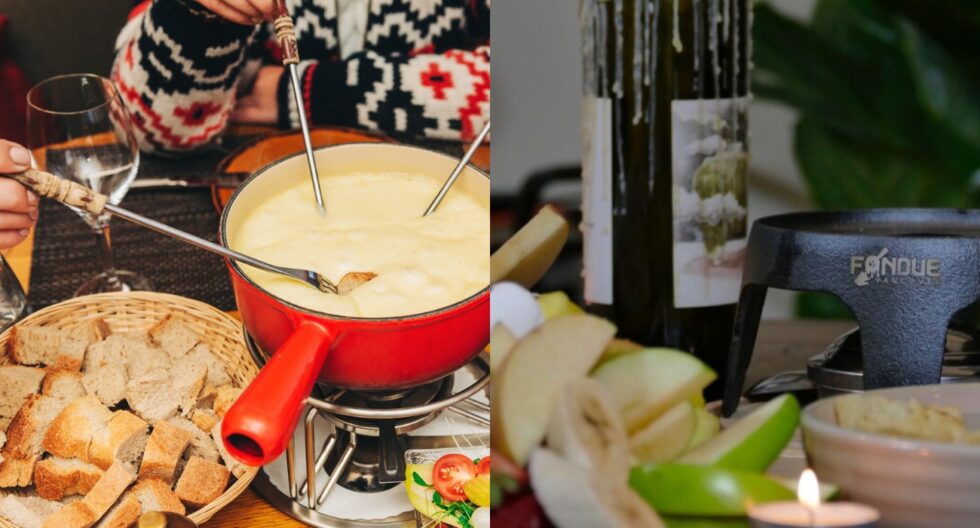
If you speak a lot during the meal, you should briefly place your fork on your own plate rather than waving it, laden with cheese, over the pot. Another aspect is the noise level; since fondue is a social dish, lively conversation is expected, but smacking your lips or loud blowing on the cheese is frowned upon. Order at the table also plays a role; bread and side dishes should always remain easily accessible to all participants. Etiquette reflects respect for the product and your fellow diners.
- Order of Play: There is no fixed sequence, but one ensures they don't block others.
- Conversation: Fondue is the ideal meal for long, deep discussions.
- Hygiene: The fork never touches your mouth directly if it is going back into the pot.
- Cleanliness: Cheese strings should be skillfully "twirled" with the fork to avoid drips.
Frequently Asked Questions
Can you drink water with fondue?
It is physically possible, but in Swiss and Alpine culture, it is absolutely not recommended. Cold water causes the melted cheese in the stomach to shock-cool and turn into a hard lump. This often causes severe stomach ache and a long-lasting feeling of heaviness. If you are not an alcohol drinker, you should definitely switch to hot black tea or herbal infusions instead.
Which cheese is best for an authentic Swiss fondue?
The classic and most widespread blend is "Moitié-Moitié." It consists of equal parts Gruyère AOP and Vacherin Fribourgeois AOP. This combination guarantees the perfect melt through the Vacherin and a bold aroma through the Gruyère. Other blends may include Appenzeller, Emmental, or Sbrinz, depending on regional preference.
Is fondue lactose-free?
Interestingly, traditional Swiss fondue is well-tolerated by most people with lactose intolerance. Due to the long ripening process of hard and semi-hard cheeses like Gruyère, the milk sugar (lactose) is almost completely broken down naturally. However, you should double-check with the restaurant that no young, lactose-rich cheeses have been added.
What happens if you lose your bread in the pot?
In Swiss tradition, this is associated with playful penalties that foster socialising. Usually, the person who lost their bread must buy the next bottle of wine or a round of spirits for everyone. In private circles, there are often more humorous tasks, such as singing a song or doing the washing up after the meal.
Why does fondue often make you feel sleepy?
This is due to the combination of very high-fat cheese and carbohydrate-rich white bread. The body must expend a lot of energy on digestion, which can lead to temporary fatigue, known as a "food coma." Additionally, the accompanying white wine has a relaxing effect on the nervous system. A short walk in the fresh air after the meal helps the metabolism get back on track.
Read about the life of Westminster and Pimlico district, London and the world. 24/7 news with fresh and useful updates on culture, business, technology and city life: Jesy Nelson car stolen: How was vital SMA hospital kit taken and what happens next in Essex theft case