
What’s on in London this weekend is once again dominated by large-scale free public events as the capital enters one of its busiest cultural weekends of early summer, with festivals, architecture programmes, open gardens, science showcases and outdoor entertainment spreading across Westminster, South Kensington, Trafalgar Square, the South Bank and dozens of neighbourhoods on Saturday 6 June 2026. Visitor numbers are expected to rise sharply through central London because multiple citywide programmes overlap during the same weekend, including the nationally recognised Open Garden Squares Weekend, the Great Exhibition Road Festival in South Kensington and the wider London Festival of Architecture programme that continues throughout June. The combination creates unusually high footfall around museums, parks, transport hubs and pedestrian zones while temperatures are forecast to remain relatively warm and dry across much of Greater London. The WP Times reports that Transport for London is also expecting heavier-than-normal weekend travel flows near Kensington, Westminster and the West End due to overlapping family events and outdoor cultural programmes.
London’s June calendar has increasingly shifted toward open-air, accessible and free-entry programming following years of strong demand for lower-cost activities amid pressure on household spending, particularly across younger audiences and families. City Hall-backed events, borough-funded festivals, museum partnerships and corporate sponsorships have helped keep many large-scale experiences free despite rising operational costs across the events sector. Across central London this weekend, visitors will find public art installations, open-air performances, science exhibitions, community food markets, architecture walks, museum late programmes and family activity zones operating simultaneously from morning until late evening. Several organisers are also advising early arrival because some free-entry areas are expected to reach capacity during peak afternoon periods. The wider effect is that London increasingly behaves like a citywide festival during early June weekends rather than a collection of isolated events.
Open Garden Squares Weekend becomes one of London’s largest free cultural attractions
One of the most significant events taking place across London on 6 June 2026 is the annual Open Garden Squares Weekend, which allows public access to gardens and green spaces that are normally closed to visitors during the rest of the year. The programme includes private squares, institutional gardens, hidden courtyards and historically protected landscapes across central London districts including Belgravia, Bloomsbury, Westminster and Kensington. Organisers say more than 200 locations are participating during the 2026 edition, making it one of the largest urban garden-access weekends in Europe.
The event has grown far beyond a niche heritage programme and now attracts photographers, tourists, architecture enthusiasts and London residents looking for quieter alternatives to commercial entertainment districts. Several locations associated with political institutions, embassies and historic residential estates are expected to generate particularly long queues throughout Saturday afternoon. Security restrictions remain in place at some venues, while others require timed entry despite remaining technically free to attend.
London’s relationship with green space has also become politically important in recent years because urban planning debates increasingly centre on density, public access and environmental resilience.
The popularity of open-garden weekends reflects growing public interest in hidden landscapes and protected urban environments that are normally inaccessible.
Gardens and spaces expected to attract the biggest crowds
| Location | Area | Why visitors are expected |
|---|---|---|
| Belgrave Square Gardens | Belgravia | Rare public access to one of London’s most exclusive squares |
| Royal College of Physicians Garden | Regent’s Park | Medicinal garden and historic collections |
| Downing Street garden areas | Westminster | Political and historic interest |
| Inner Temple Gardens | City of London | Historic legal district and riverside setting |
| Charterhouse gardens | Barbican area | Medieval architecture and quiet central location |
Visitors are being advised to wear comfortable footwear because many routes between participating gardens involve long walking distances across central London. Some organisers also recommend downloading digital maps in advance because mobile networks occasionally slow in high-density tourist zones during major weekend events.
Great Exhibition Road Festival brings free science and culture events to South Kensington
South Kensington is expected to become one of the busiest districts in London this weekend because the Great Exhibition Road Festival returns on 6-7 June 2026 with large-scale free programming focused on science, technology, arts and public innovation. The annual festival transforms Exhibition Road into a pedestrian-focused cultural corridor involving institutions including Imperial College London, the Science Museum, the Natural History Museum and the Victoria and Albert Museum.
The event has evolved into one of the capital’s most important free educational festivals because it blends academic research with accessible public experiences designed for families, students and tourists. Interactive laboratories, robotics displays, live demonstrations and public talks are expected throughout Saturday, while outdoor performance zones and food markets expand activity into the evening.
Crowd management remains a major operational issue for organisers because previous editions generated extremely heavy pedestrian congestion around South Kensington Underground station. TfL is expected to monitor station flow carefully during the busiest afternoon periods. Museum entry remains free at several participating institutions, although some temporary exhibitions continue to require paid tickets.
Major attractions expected across Exhibition Road
- Outdoor science demonstrations
- Artificial intelligence showcases
- Climate technology exhibits
- Interactive family workshops
- Public lectures and talks
- Design installations
- Museum late openings
- Live performance areas
- Street food and international cuisine zones
A spokesperson connected to the festival’s cultural programme said the weekend reflects “London’s ability to combine scientific excellence with public accessibility in ways few global cities can replicate” (Festival programme briefing, South Kensington, May 2026).
London Festival of Architecture expands across multiple boroughs
The wider London Festival of Architecture also continues throughout the weekend with free talks, walking tours, installations and neighbourhood events taking place across multiple boroughs. The 2026 edition focuses on the theme of “Belonging” and includes more than 400 separate activities during June.
Unlike highly centralised festivals, the architecture programme spreads activity across different parts of London, meaning visitors can combine local neighbourhood exploration with cultural programming. Areas including Southwark, Clerkenwell, King’s Cross and the City of London are expected to host some of the busiest Saturday events.
The architecture festival has become increasingly relevant beyond professional design audiences because housing policy, urban density and regeneration debates now dominate London political discussion. Many public talks this year focus on affordability, adaptive reuse of buildings, transport-linked development and environmental sustainability.
Architecture festivals also increasingly operate as tourism drivers. Walking tours linked to hidden infrastructure, modernist estates and industrial heritage now attract audiences far beyond traditional architecture communities.
Free architecture activities likely to trend online this weekend
| Event type | Main areas | Audience appeal |
|---|---|---|
| Guided architecture walks | South Bank, City | Tourism and photography |
| Public design talks | King’s Cross | Students and professionals |
| Urban regeneration panels | East London | Housing policy interest |
| Public installations | Central London | Social media visibility |
| Family workshops | Various boroughs | Weekend family visitors |
Several events operate on first-come-first-served admission systems rather than ticketing platforms, meaning queues are likely during the afternoon.
Trafalgar Square and the West End prepare for major summer event season
Although West End LIVE itself takes place later in June, Trafalgar Square and surrounding West End areas are already entering the capital’s peak summer event cycle. City Hall’s cultural programming around Westminster continues intensifying during early June, while outdoor rehearsals, promotional activity and temporary installations increasingly reshape pedestrian traffic around the area.
This weekend, visitors are expected to use Trafalgar Square primarily as a central access point between Covent Garden, Soho, Leicester Square and the South Bank festival zones. Street performance activity is also expected to increase significantly because warmer conditions traditionally bring higher numbers of independent entertainers and unofficial busking activity into central London.
Restaurants and hospitality operators around the West End are also preparing for a prolonged summer tourism surge linked to concerts, theatre events and international visitors arriving ahead of school holiday season. Some hospitality analysts expect June 2026 to outperform pre-pandemic visitor spending levels in several central entertainment districts.
What tourists are searching most this weekend
- Free things to do in London
- London weekend events
- London family activities
- Outdoor events London
- Free museums London
- Best parks in London
- Summer events London
- South Kensington festival
Search trends linked to London weekend activity traditionally spike sharply on Friday evenings and Saturday mornings, especially around weather forecasts and transport conditions.
Free music, outdoor screenings and riverside culture expand across the South Bank
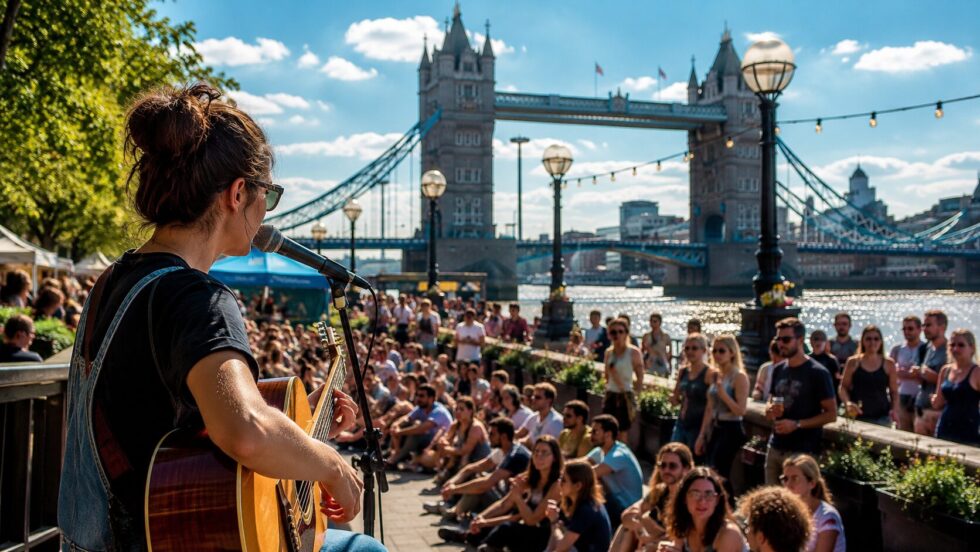
The South Bank remains one of the capital’s strongest free-entry cultural zones this weekend because outdoor entertainment programming continues expanding along the Thames during early June. Temporary food markets, riverside music performances, street art activations and open-air public spaces are expected to attract thousands throughout Saturday afternoon and evening.
While some summer headline festivals begin later in June, smaller-scale programming has already intensified around Waterloo, the National Theatre and the Southbank Centre. Public seating zones and riverfront walkways are expected to remain crowded well into the evening because sunset conditions and warmer temperatures traditionally increase nighttime pedestrian activity.
The South Bank also benefits from strong transport connectivity, allowing visitors to combine Westminster, Covent Garden and London Bridge routes within a single walking circuit. Tourism analysts increasingly describe the riverside corridor as one of London’s most economically resilient leisure zones because it combines cultural institutions with informal public-space usage.
Best times to visit the South Bank this weekend
| Time | Conditions |
|---|---|
| Morning | Lower crowd density |
| Early afternoon | Peak family traffic |
| Late afternoon | Strongest street performance activity |
| Evening | Highest food and nightlife activity |
| Late evening | Riverside photography and skyline viewing |
Public safety teams are also expected to maintain a visible presence along major pedestrian routes due to higher summer visitor volumes.
London’s free-event economy is becoming central to the city’s tourism strategy
The scale of free programming taking place across London on 6 June 2026 reflects a broader strategic shift in how the capital markets itself internationally. Following several years of economic pressure, tourism agencies and city authorities increasingly rely on free-access cultural experiences to sustain visitor numbers and public engagement. This model has become especially important for families, students and younger residents affected by rising entertainment costs.
London’s ability to stage simultaneous free festivals across multiple boroughs remains unusual compared with many European capitals because the city combines major institutional infrastructure with extensive public-space capacity. Museums, parks, squares and riverside zones collectively create a decentralised entertainment network capable of handling enormous weekend crowds without relying exclusively on paid ticketing.
According to tourism analysts, free-entry events also generate secondary spending across hospitality, transport, retail and accommodation sectors. Even visitors attending nominally free activities frequently contribute economically through dining, shopping and transport usage.
Key practical advice for visitors on 6 June 2026
- Arrive before midday for major events
- Expect crowded Tube stations in Zone 1
- Use walking routes where possible
- Carry water during afternoon heat
- Check museum capacity updates online
- Download TfL journey planners in advance
- Avoid driving into central London
- Reserve restaurants early near South Kensington and Soho
London’s early June cultural calendar has increasingly become one of the strongest periods for free public participation anywhere in Europe. What distinguishes this particular weekend is not a single headline attraction but the density of simultaneous experiences unfolding across the city at once — from hidden gardens and architecture walks to science festivals, riverside performances and open-air culture programmes that collectively transform the capital into a citywide public stage.
Read about the life of Westminster and Pimlico district, London and the world. 24/7 news with fresh and useful updates on culture, business, technology and city life: London festivals June 2026 — line-ups, dates and tickets for SXSW London, Lido and West End Live Festival season