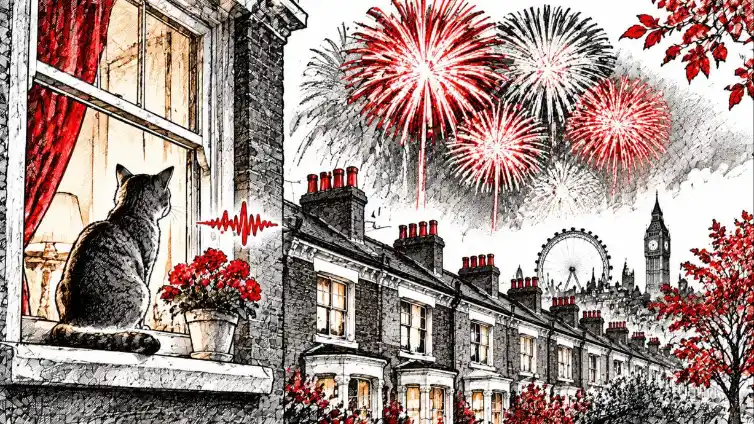
Fireworks law in the UK could change after the government's consultation on cutting the legal noise limit for consumer fireworks from 120 to 110 decibels closed on 7 October 2026, but for now the existing rules still apply, and tonight they matter more than usual: because Sunday 8 November is Diwali, fireworks may legally be set off in England and Wales until 1am rather than the normal 11pm curfew. The consultation, titled Fireworks and pyrotechnics in the UK and run by the Office for Product Safety and Standards within the Department for Business and Trade, opened on 16 July and ran for 12 weeks. It proposes lowering the noise limit for category F2 consumer fireworks to 110dB, which officials estimate would move around a third of current consumer products into professional-only sale, and asks whether the threshold should go even lower, to 100dB or 90dB. It also asks whether multi-shot products should be explicitly barred from public sale and whether the age restriction on Christmas crackers should be removed, as the Westminster newsroom of The WP Times reports.
Nothing in the proposals has legal effect yet. The government has said a total ban on consumer sales would not be "a proportionate response to the current situation", and it proposes a six-month transition if new rules are adopted, which means Bonfire Night 2026 was unaffected and New Year's Eve will follow the current law. The Department for Business and Trade must now analyse responses, decide its final position and legislate. In the meantime, the established rules are clear: it is illegal to sell F2 and F3 fireworks to anyone under 18 or for under-18s to carry them in a public place, fireworks may not be set off in the street or other public places, and the night-time curfew runs from 11pm to 7am, with later finishes only on Bonfire Night, Diwali, New Year's Eve and Chinese New Year. Breaking the rules can lead to an unlimited fine or up to six months in prison, and police can issue on-the-spot penalties. For residents in Westminster and Pimlico, where many households live close together and keep pets, the late Diwali curfew tonight and New Year's Eve in seven weeks are the dates to note.
Contents
Fireworks law in the UK: what the consultation proposed
The consultation was the most significant review of consumer fireworks rules in England and Wales for several years, following repeated petitions and debates in Parliament about noise and animal welfare.
The main proposals
| Proposal | What it would mean |
|---|---|
| Cut the F2 noise limit from 120dB to 110dB | About a third of current consumer products would become professional-only |
| Ask about 100dB or 90dB limits | Further cuts as alternative options |
| Clarify that multi-shot products are banned from public sale | Could affect cakes and barrages, according to industry critics |
| Review lower-risk F1 and P1 products | Including removing the age limit for Christmas crackers |
| Six-month transition period | No change for Bonfire Night 2026 |
What was not proposed
The government did not propose a total ban on consumer sales, a ban on rockets or a licensing scheme for buyers in England and Wales. A Westminster Hall debate on fireworks in January 2026 could not lead to a vote, and a Private Member's Bill from Sarah Owen MP has not progressed beyond first reading, according to Galactic Fireworks.
The rules that apply now
Until any new fireworks law is passed, the Fireworks Regulations 2004 and related legislation continue to govern sale and use in England and Wales.
Curfew times
| Night | Fireworks allowed until |
|---|---|
| Normal nights | 11pm |
| Bonfire Night, 5 November | midnight |
| Diwali, Sunday 8 November 2026 | 1am |
| New Year's Eve | 1am |
| Chinese New Year | 1am |
Age, sale and penalties
- It is illegal to sell category F2 and F3 fireworks to anyone under 18.
- Under-18s may not possess adult fireworks in a public place.
- Throwing fireworks in the street or other public places is an offence.
- Unlicensed retailers may sell fireworks only during set periods around Bonfire Night, New Year, Diwali and Chinese New Year.
- Breaking the rules can lead to an unlimited fine or up to six months in prison, with on-the-spot penalties also available to police.
Diwali tonight: what neighbours can expect
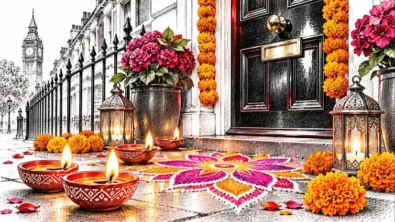
Diwali is one of the four nights of the year when the curfew is extended to 1am, and many families mark the festival with fireworks after evening prayers.
"a proportionate response to the current situation"
(Department for Business and Trade, explaining why a total ban on consumer fireworks was not proposed, as reported by Galactic Fireworks)
Being considerate
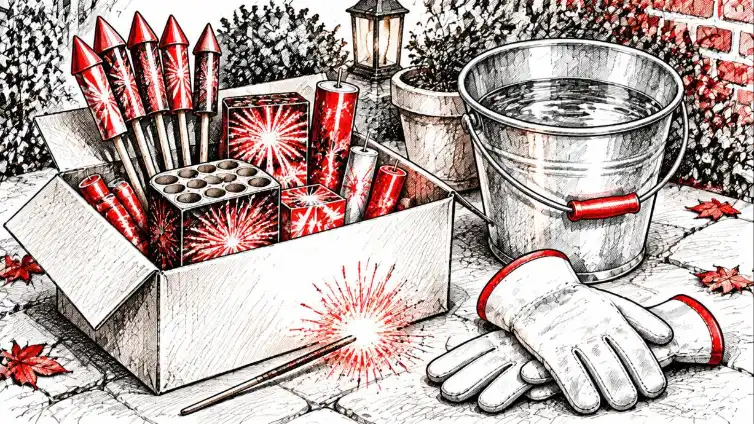
Fire services and animal charities advise those setting off fireworks to tell neighbours in advance, choose quieter products where possible and finish well before the curfew. Pet owners are advised to keep animals indoors, close curtains and provide a safe hiding place. Our guide to Diwali 2026 in London explains the festival dates and where to celebrate.
Safety basics
- Buy only fireworks marked with the UKCA or CE mark from a reputable seller.
- Read the instructions and keep a bucket of water nearby.
- Never return to a lit firework.
- Supervise children with sparklers and give them gloves.
- Keep candles and diyas away from curtains and decorations.
Fireworks in central London
Public displays are the safest way to enjoy fireworks, and space in central London for private use is limited.
Westminster and nearby
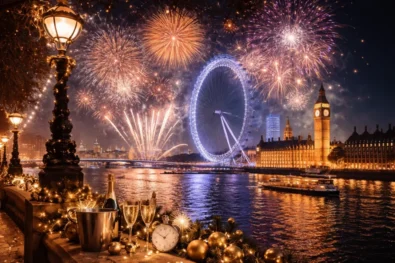
Most residential streets in Westminster and Pimlico are unsuitable for fireworks because of tight spacing between buildings and parked cars. Setting fireworks off in parks, squares or streets without permission is an offence. The capital's main public display, the Mayor of London's New Year's Eve fireworks on the Thames, is ticketed.
How to complain
Residents can report fireworks used after the curfew or in public places to the police on 101, or report persistent noise to Westminster City Council. In an emergency, call 999.
What happens next
The Department for Business and Trade will now analyse the responses to the consultation before deciding whether to change the fireworks law.
Possible timeline
| Stage | Status |
|---|---|
| Consultation opened | 16 July 2026 |
| Consultation closed | 7 October 2026 |
| Government response | not yet published |
| Legislation | would be required before any change |
| Transition | six months proposed after rules are made |
What it could mean for next year
If the 110dB limit is adopted, the loudest consumer fireworks could disappear from shops, but displays by professional operators would not be affected. Full details are available on GOV.UK.
Fireworks law: questions and answers
What time do fireworks have to stop tonight
On Diwali, Sunday 8 November 2026, fireworks may be used until 1am in England and Wales.
Is there a new fireworks law in the UK
Not yet. A consultation on lowering the noise limit to 110dB closed on 7 October 2026, and any change would require legislation.
Are fireworks being banned
No. The government said a total ban would not be a proportionate response.
How old do you have to be to buy fireworks
18 for category F2 and F3 fireworks.
What is the penalty for breaking fireworks rules
An unlimited fine or up to six months in prison, and police can issue on-the-spot fines.
Background: the long debate over fireworks
Petitions calling for tighter rules on fireworks have attracted hundreds of thousands of signatures in recent years, driven by concerns about noise, animal welfare and antisocial behaviour. Scotland introduced its own licensing and sale restrictions under the Fireworks and Pyrotechnic Articles (Scotland) Act 2022.
For more news from this weekend, read our reports on Remembrance Sunday services in London and new laws in November 2026.
Sources used: Office for Product Safety and Standards, Department for Business and Trade, Fireworks Regulations 2004, Cleo Labs, Galactic Fireworks