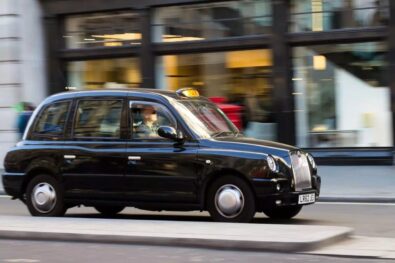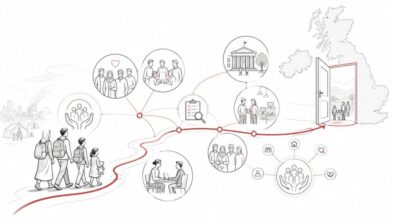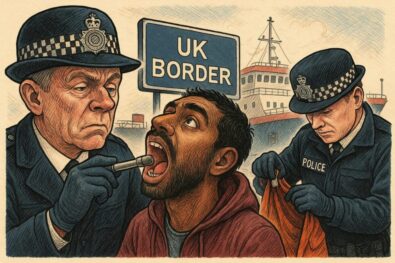
The UK government has announced an immediate ban on asylum seekers using taxis for routine medical appointments, effective starting February. This decision follows a BBC investigation that revealed significant spending on cab journeys, with some asylum seekers traveling long distances at substantial public expense. For instance, one individual reported taking a 250-mile taxi trip to a GP, which cost the Home Office £600. The BBC's findings prompted the government to launch an urgent review in September into the financial management and necessity of using taxis for transporting asylum seekers from hotels to their appointments, reports The WP Times with reference to the BBC.
The government has confirmed that the total expenditure on transport services for asylum seekers averages approximately £15.8 million per year. Earlier this year, the BBC Radio 4's File on Four program had discovered that while asylum seekers were generally issued a bus pass covering one return journey per week, taxis were utilized for other essential travel, such as necessary doctor's visits. On Friday, one taxi driver informed the BBC that his company alone was responsible for up to 15 drop-offs daily from a hotel in South East London to a nearby doctor's surgery, a distance of about two miles, costing the Home Office around £1,000 per day for those short trips.
Another taxi driver, identified as Steve, alleged that certain firms deliberately inflated mileage costs. He claimed on BBC Radio 4's Today programme on Saturday that he was sometimes dispatched to a distant town just to carry out a short local journey. He recounted an instance where he was sent from Gatwick Airport to Reading—a 110-mile (175km) round trip costing over £100—to transport an asylum seeker just 1.5 miles to a dentist. Steve added that he was sent from Gatwick to Southampton "more than once" and often drove an average of 275 miles daily, half of which was without a passenger. He also noted wasted journeys where asylum seekers simply refused to travel, suggesting the system was poorly managed and "left open to abuse."
Home Secretary Shabana Mahmood stated that the policy is changing, declaring: "I am ending the unrestricted use of taxis by asylum seekers for hospital appointments, authorising them only in the most exceptional circumstances." She affirmed her commitment to "root out waste" as the government continues its plan to close "every single asylum hotel." Mahmood attributed the high costs to expensive contracts inherited from the previous Conservative administration.
Instead of reliance on cabs, ministers intend for asylum seekers to use alternatives, primarily public transport. Exemptions to the taxi ban will be made only for individuals with physical disabilities, chronic illnesses, and pregnancy-related needs. These exceptions will require official sign-off by the Home Office under the new regulations. Ministers are currently reviewing the broader use of taxis for asylum seekers, aiming to apply the principle of "exceptional circumstances" to all such transport. While the government remains committed to ending the use of asylum hotels by the next election, with an increase in alternative accommodation like large military sites, recent figures show 36,273 people were still residing in asylum hotels, marking an increase since June. The growing cost of asylum accommodation has drawn significant criticism. The government stated it has recovered £74 million since coming to power, though the chair of the home affairs select committee indicated this was merely a starting point.
Shadow Home Secretary Chris Philp criticized the current administration, saying they "can't get a grip on the illegal immigration crisis." He argued that while costs spiral due to illegal arrivals, the government lacks the resolve for "tough decisions" like deporting all illegal arrivals and leaving the ECHR (European Convention on Human Rights), which he deems necessary to stop mounting bills. The government has also announced major overhauls, including making refugee status temporary and ending guaranteed housing support for asylum seekers.
Read about the life of Westminster and Pimlico district, London and the world. 24/7 news with fresh and useful updates on culture, business, technology and city life: Why is Russia now selling physical gold from its national reserves for the first time