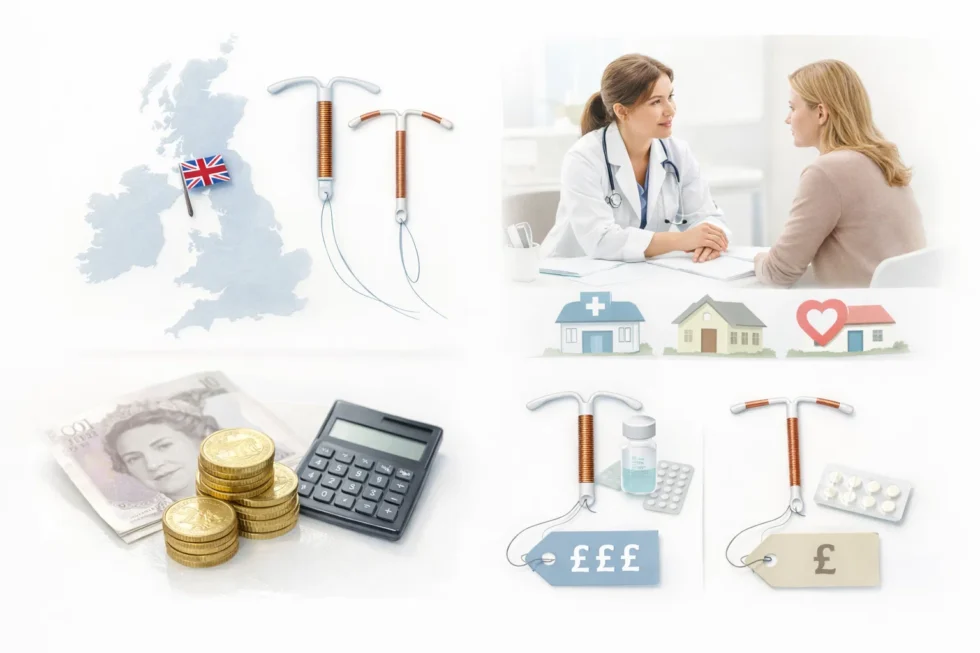
Hormonal coil in London has become one of the most searched-for and requested forms of contraception in the UK as women navigate rising living costs, delayed motherhood and growing pressure on NHS primary care and sexual health services. In Britain, contraception is no longer simply a medical choice — it has become a question of time, access and economic reality. Over the past decade, the number of women choosing long-acting reversible contraception (LARC) has risen sharply, particularly in London, where access to GP appointments and family planning clinics is increasingly constrained. At the centre of this shift sits the hormonal coil, clinically known as the intrauterine system (IUS), now firmly established as a mainstream method of birth control.
The IUS — including brands such as Mirena, Kyleena and Jaydess — is now one of the most commonly fitted hormonal IUDs in Britain, both through NHS clinics and private IUS fitting centres in London. NHS clinical guidance actively encourages its use because it is more than 99 per cent effective, reduces unplanned pregnancies and, over time, costs the public health system far less than repeated prescriptions for contraceptive pills, injections or emergency contraception, while offering women long-term, low-maintenance protection. This trend, driven by demand for reliable, long-acting birth control in London and across the UK, is reshaping the contraception market, notes the Renewz editorial desk.
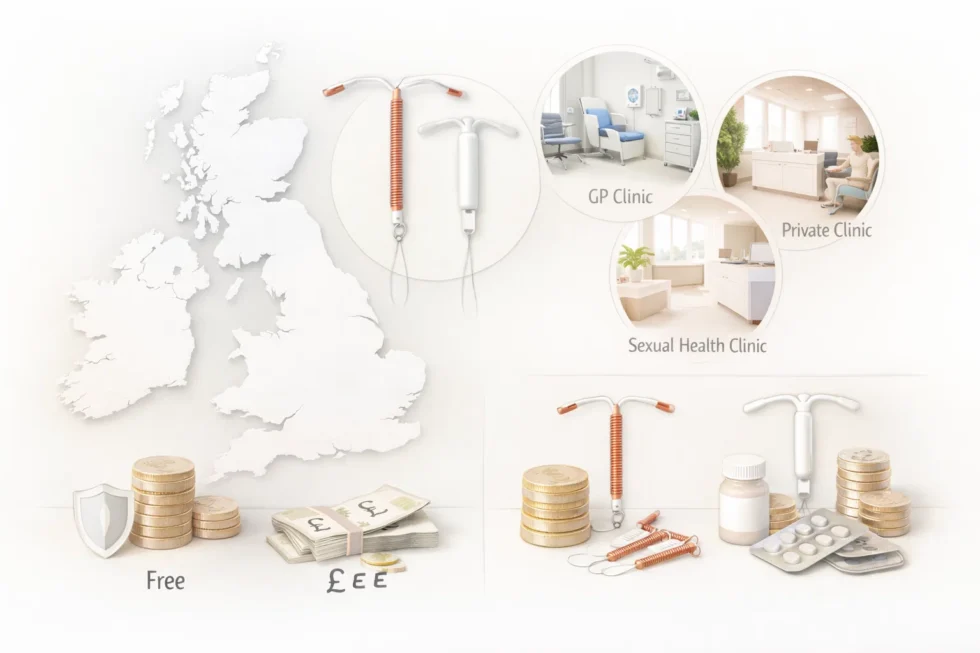
In London, this trend is even more pronounced. The capital has the country’s highest female workforce participation, the largest population of women delaying childbirth into their thirties and forties, and some of the longest waiting times for GP and sexual health appointments. The result is a city where women increasingly turn to the Mirena coil and other hormonal IUDs as a practical, long-term solution to both contraception and menstrual health.
This analysis is based on NHS service data, pricing published by private London clinics and patient access patterns observed across the capital. As reported by The WP Times editorial desk, the hormonal coil has become one of the most commercially and medically significant reproductive health services in London.
What problem does the hormonal coil solve
For many British women, modern contraception is no longer simply about avoiding pregnancy. It has become a tool for health management, financial stability and long-term life planning in a healthcare system where GP access is limited and repeat prescriptions create constant friction. In cities such as London, where time pressure and career mobility are high, women increasingly seek contraceptive solutions that are both medically reliable and logistically simple.
In practical terms, this means balancing several key needs:
- controlling heavy or painful periods, a major reason why Mirena and other hormonal IUDs are widely prescribed
- stabilising hormone levels compared with daily oral contraceptives
- avoiding monthly prescriptions, pharmacy visits and GP appointments, which can be difficult to secure on the NHS
- preserving future fertility, with no long-term delay after removal
The hormonal coil (IUS) addresses all of these at once. Once fitted, a Mirena or Kyleena coil provides five to eight years of continuous contraception, with effectiveness above 99 per cent. For many users, menstrual bleeding becomes lighter or stops entirely, reducing anaemia, pain and lost workdays. At the same time, fertility typically returns within weeks of removal, making it suitable for women planning pregnancy later in life.
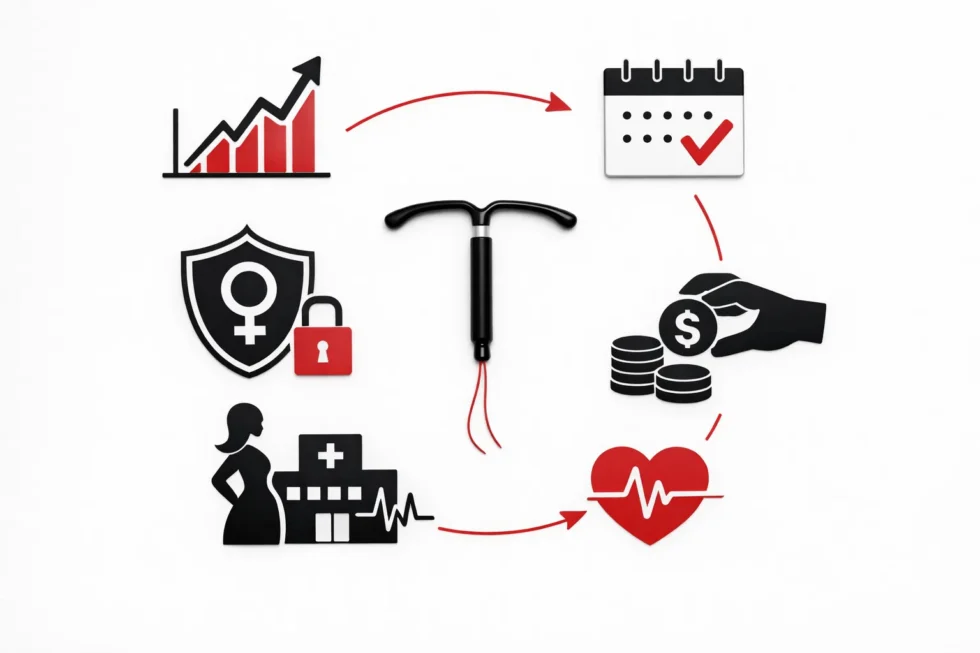
In an economy where childcare costs are rising, housing is expensive and motherhood is increasingly delayed into the thirties and forties, the IUS has become the default option for women who want long-term, low-maintenance birth control without compromising their future ability to conceive.
Is IUS available in the UK
Yes. The intrauterine system (IUS) is widely available across the United Kingdom through both the NHS and the private healthcare sector. Devices such as Mirena, Kyleena and Jaydess are fully licensed, regulated and routinely fitted by trained clinicians in sexual health clinics, GP surgeries and specialist gynaecology centres.
The NHS actively promotes hormonal coils as a first-line contraceptive option because they are among the safest and most reliable methods of birth control available, with effectiveness above 99 per cent. From a health-economics perspective, the IUS also reduces long-term healthcare costs by lowering rates of unplanned pregnancy and eliminating the need for repeat prescriptions, pharmacy visits and emergency contraception.
Benefits, limitations and risks of the hormonal coil
The hormonal coil is widely promoted as one of the most effective forms of contraception available, but it is not a universal solution for every woman. Understanding both its advantages and its limitations is central to making an informed choice.
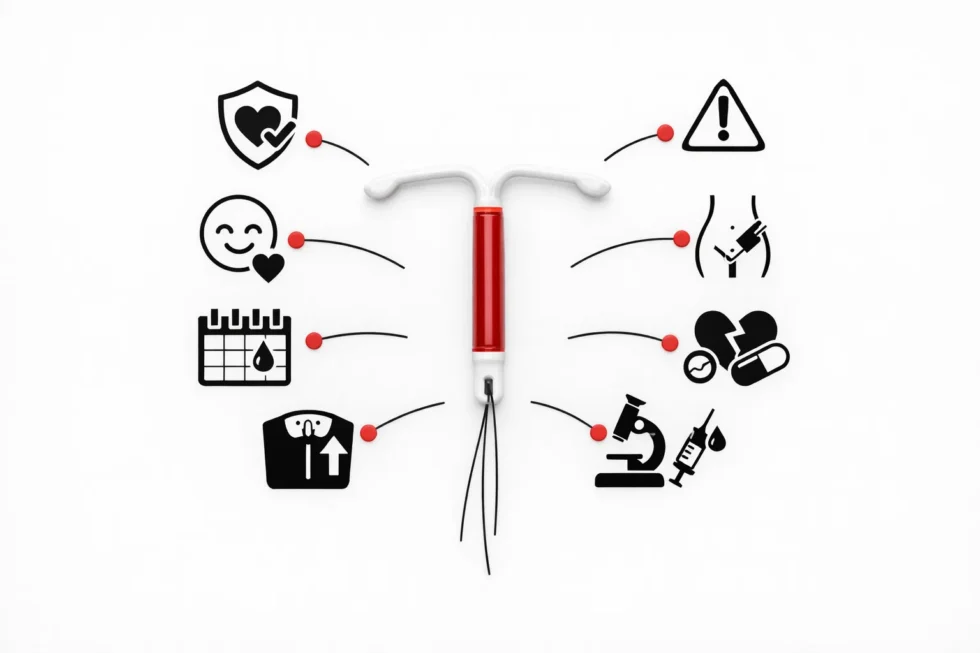
From a clinical perspective, the main benefits are clear. A hormonal IUS provides more than 99 per cent protection against pregnancy and does so continuously for several years without requiring daily action. For many women, it also reduces heavy menstrual bleeding and pain, which is why Mirena is frequently prescribed not only for contraception but for conditions such as menorrhagia and endometriosis. Because the hormone is released locally inside the uterus rather than through the bloodstream, systemic side effects are generally lower than with oral contraceptives.
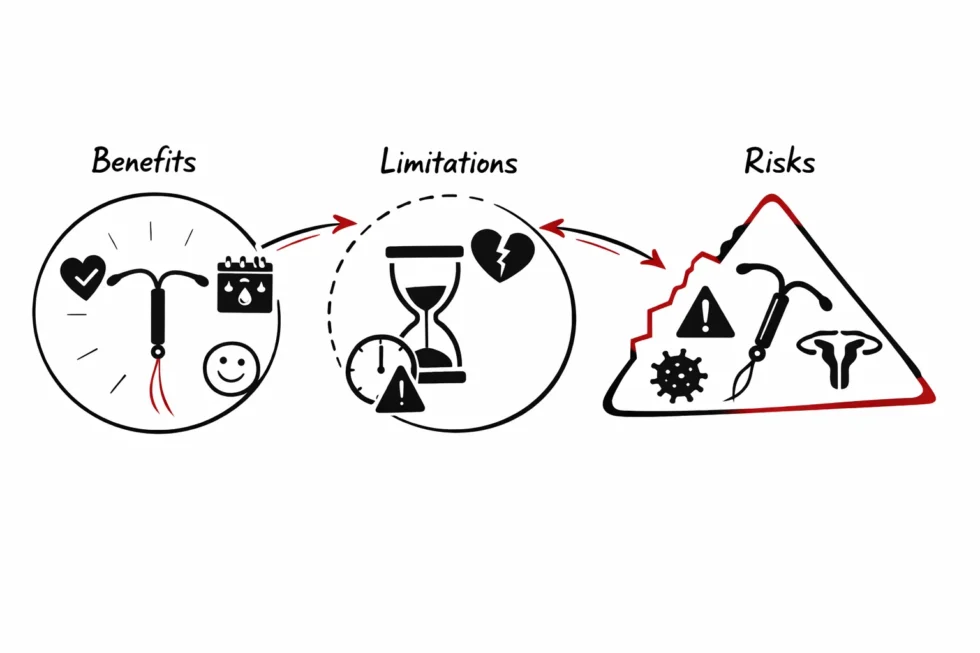
However, there are also limitations and risks. In the first months after insertion, many women experience irregular bleeding, spotting and cramping, which can be disruptive. Some report bloating, breast tenderness, acne or mood changes, particularly during the adjustment period. Although serious complications are rare, they can include expulsion of the device, infection in the weeks after fitting, or, in very rare cases, perforation of the uterine wall during insertion.
The hormonal coil also does not protect against sexually transmitted infections, so condoms may still be needed depending on a person’s circumstances.
For most women, these risks are outweighed by the long-term convenience and reliability of the IUS, but UK clinical guidance stresses the importance of individual consultation to ensure the method is appropriate for each patient’s health, reproductive plans and medical history.
How much does an IUD cost in the UK
This is where the UK — and especially the London market — becomes sharply divided. Through the NHS, a hormonal IUD (IUS) such as Mirena, Kyleena or Jaydess is completely free, including the device itself, the fitting procedure and any necessary follow-up. In theory, every woman in Britain is entitled to this service. In practice, however, capacity is limited, particularly in central and inner London, where sexual health clinics face high demand and long waiting lists.
In the private healthcare sector, pricing reflects speed, availability and convenience rather than medical difference. The same Mirena or Kyleena coil used by the NHS is fitted by private clinics, but women pay to avoid delays and secure flexible appointment times, often within days rather than weeks.
| Service | Typical London price |
|---|---|
| Hormonal coil fitting (private GP) | £350–£450 |
| Consultant gynaecologist fitting | £500–£700 |
| Mirena removal and replacement | £600–£850 |
These fees include the device, consultation and insertion. For many London professionals, the choice to pay £400 for a same-week appointment rather than wait weeks through the NHS is a rational financial decision.
Where can I get a coil in London
London offers two main routes for having a hormonal coil (IUS) fitted: free NHS sexual health services and a fast-growing private clinic sector that caters to women who need rapid access and flexible appointment times.
NHS sexual health clinics
These clinics provide Mirena, Kyleena and Jaydess free of charge, including consultation, insertion and follow-up.
Jefferiss Wing Sexual Health Clinic
Area: Paddington and Bayswater, West Central London
Address: Winsland Street, London W2 1DL
Typical hours: Weekdays, with late evening clinics on selected days
Google rating: approximately 4.2
Jefferiss Wing is one of the largest NHS contraception centres in West London and forms part of the Imperial NHS Trust. It provides long-acting reversible contraception, including hormonal coils, to patients from across central and west London. The clinic is frequently used by women working in nearby commercial and residential districts.
10 Hammersmith Broadway
Area: Hammersmith, West London
Address: 10 Hammersmith Broadway, London W6 7AL
Typical hours: Monday to Friday with extended afternoon and early evening sessions
Google rating: approximately 4.2
This is one of West London’s main NHS sexual health hubs. It offers a full range of contraception services, including assessment and fitting of hormonal coils, and is a major referral centre for patients in Hammersmith, Fulham and surrounding boroughs.
Archway Sexual Health Centre
Area: Archway, North London
Address: 681–689 Holloway Road, London N19 5SE
Typical hours: Monday, Tuesday and Thursday 08:30–19:00, Wednesday until early afternoon, Friday until mid-afternoon
Google rating: approximately 3.4
Archway serves large parts of North London, including Camden, Islington and Haringey. It provides free NHS contraception, including hormonal IUS fitting, and is part of the Central and North West London NHS Trust network.
Waldron Sexual Health Clinic
Area: Lewisham and Greenwich, South-East London
Address: Waldron Health Centre, Amersham Vale, London SE8 4BD
Typical hours: Monday to Friday during standard clinic hours
Google rating: approximately 4.2
Waldron is one of the busiest NHS sexual health clinics in south-east London. It provides Mirena and other hormonal coil services as part of its long-acting contraception programme and is widely used by women in Lewisham, Deptford and Greenwich.
All NHS clinics provide hormonal coils free of charge, but waiting times depend on borough, staffing levels and appointment availability.
Private hormonal coil clinics
Private clinics use the same devices as the NHS but offer faster booking, more flexible appointment times and, in many cases, ultrasound-guided insertion.
Clarewell Clinics
Area: Marylebone and Regent’s Park, Central London
Address: 9 Ivor Place, London NW1 6BY
Typical hours: Monday to Friday 09:00–18:00, with shorter weekend sessions
Google rating: approximately 4.9
Clarewell is one of London’s best-known private sexual health clinics. It specialises in contraception and reproductive health and is widely used by professionals and international patients. The clinic offers Mirena, Kyleena and Jaydess fitting, with consultation and imaging included in its standard package.
Typical price: around £450 for hormonal coil fitting.
London Gynaecology – Moorgate
Area: City of London
Address: 15 Austin Friars, London EC2N 2HE
Typical hours: Weekdays during standard office hours
Google rating: approximately 4.8
London Gynaecology provides consultant-led women’s health care for patients working in the City and surrounding districts. Its services include hormonal coil fitting, replacement and menopause-related care.
Typical price: £500 to £650 depending on consultation level.
Harley Street Health Centre
Area: Marylebone, Harley Street medical district
Address: 13 Queen Anne Street, London W1G 9JH
Typical hours: Extended weekday hours with some Saturday appointments
Google rating: approximately 4.8
Harley Street Health Centre is a large private GP and specialist practice offering hormonal coil fitting alongside a broad range of women’s health services. It is known for fast appointment availability and longer consultation times.
Typical price: £350 to £600 depending on the service package.
Large private GP and women’s health hub. Typical cost: £350–£600.
Why private Mirena services are booming
London’s market for hormonal coil fitting has expanded rapidly over the past decade because it sits at the intersection of high incomes, limited healthcare capacity and intense time pressure. While NHS sexual health clinics provide Mirena and other IUS devices free of charge, access is increasingly constrained by appointment backlogs, triage systems and staff shortages, particularly in central and inner London.
For women working in finance, law, media, aviation and other mobile professions, waiting several weeks for a contraception appointment can be impractical. Many also need flexibility around travel, childcare and irregular working hours. As a result, private Mirena and IUS clinics have become a rational alternative, not a luxury, allowing women to book online, attend appointments outside standard NHS clinic times and receive same-week treatment.

Private providers now account for a growing share of London’s hormonal coil fittings, especially in districts such as Marylebone, Harley Street and the City, where corporate and internationally mobile populations are concentrated. Prices typically range from £350 to £650, but for many patients this cost is offset by reduced time off work, fewer follow-up visits and the ability to secure care on a predictable schedule.
The hormonal coil is therefore no longer just a medical device. It has become a strategic tool for managing fertility, health and professional life. In a city where time often carries a higher economic value than money, the IUS has emerged as London’s most practical and commercially significant form of contraception.
Read about the life of Westminster and Pimlico district, London and the world. 24/7 news with fresh and useful updates on culture, business, technology and city life: Luxury gyms in London: why are the best clubs concentrated in SW1 and Westminster in 2026