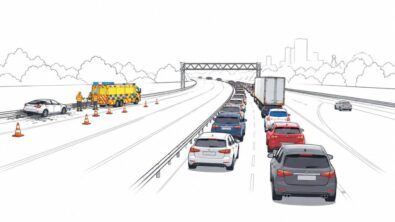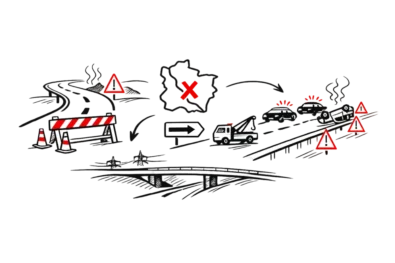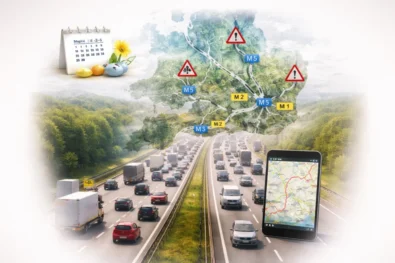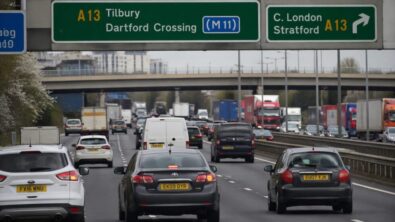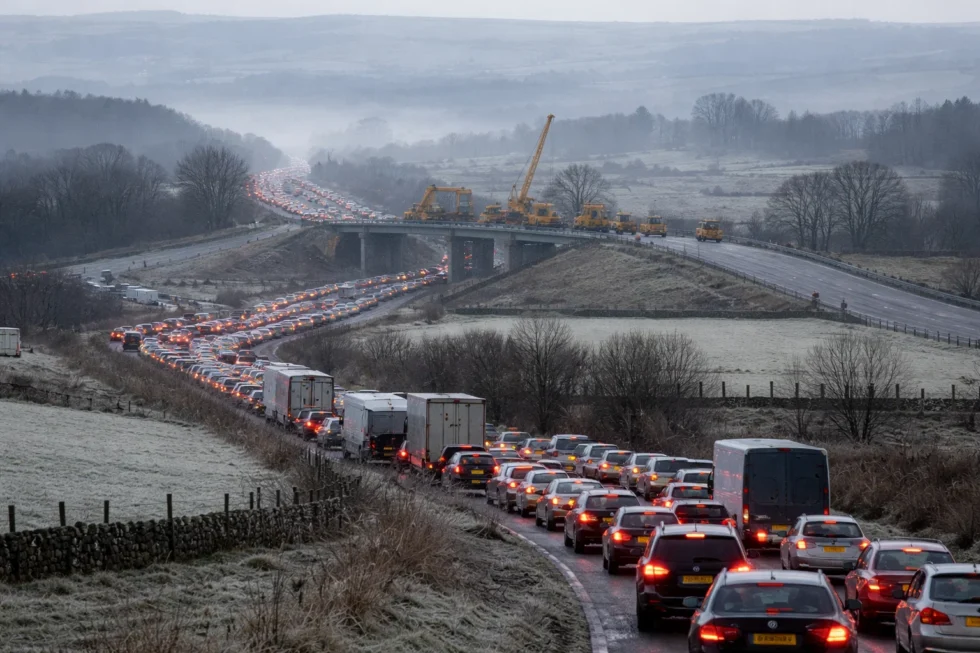
Drivers across Cumbria faced widespread disruption on Friday 9 January 2026 after a major closure of the M6 between Junction 39 at Shap and Junction 40 near Penrith forced tens of thousands of vehicles off the motorway and onto rural roads never designed to cope with heavy traffic. What was planned as a tightly managed diversion rapidly turned into gridlock as sat-navs and frustrated drivers overwhelmed country lanes across the Eden Valley and nearby villages, creating safety risks, long delays and near-continuous queues. As The WP Times reports, citing National Highways and Cumbria Police on 9 January 2026, the shutdown is part of the final phase of the Clifton Bridge replacement programme.
The works are among the largest motorway engineering projects currently taking place in northern England. The ageing Clifton Bridge, which carries the M6 over a key local route, was demolished last weekend, and during this closure a newly built replacement structure is due to be lifted into position. For drivers, however, the engineering ambition has translated into something far more immediate: long diversions, disrupted journeys and an involuntary tour of some of Cumbria’s narrowest roads.
M6 closure 9 January 2026 — what drivers are facing
| Category | What it means in practice |
|---|---|
| Closed motorway | M6 shut between J39 Shap and J40 Penrith in both directions |
| Reason | Clifton Bridge replacement – old bridge removed, new span being installed |
| Official diversion | A6 and A66 are the only roads built to take motorway traffic |
| Village roads | Kings Meaburn, Appleby, Eden Valley restricted to permit holders |
| What actually happened | Sat-navs sent thousands of vehicles through villages |
| Traffic volume | Country lanes saw hundreds of cars per hour |
| Police action | 44 fines issued for ignoring diversions |
| Rail disruption | West Coast Main Line partly replaced by buses |
| Main risk | Single-track lanes, livestock, blocked emergency access |
What happened on the M6 between Shap and Penrith
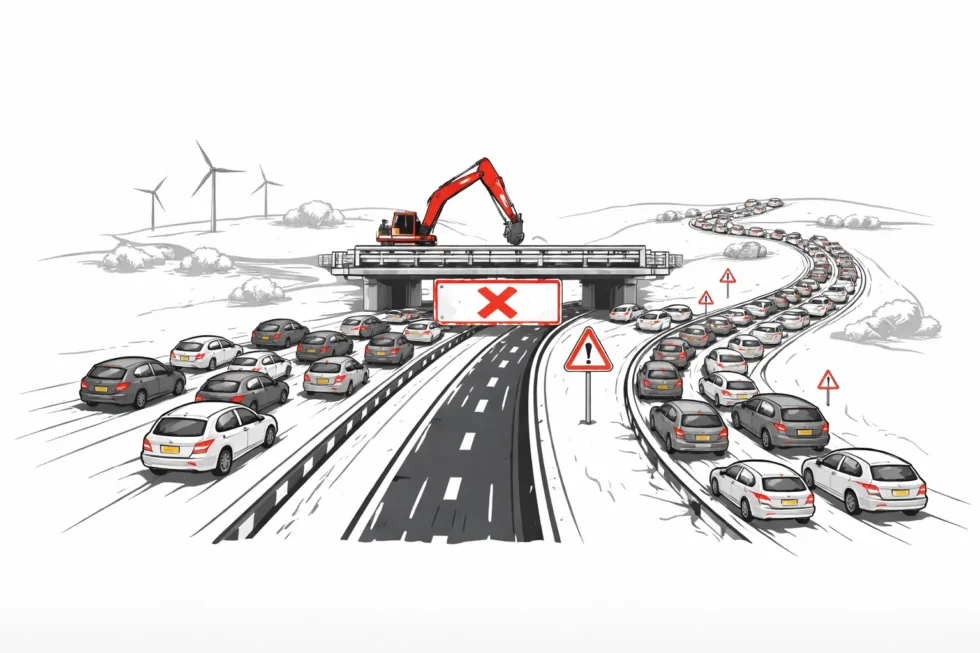
The closure affects both northbound and southbound traffic between Junction 39 (Shap) and Junction 40 (Penrith), cutting one of the most important motorway links between north-west England and southern Scotland. The official diversion routes — via the A6 and the A66 — were clearly signed and are the only roads in the area designed to handle sustained, high-volume traffic.

To prevent villages being overwhelmed, National Highways and Cumbria Police introduced a permit-only system on several rural back roads, particularly around Kings Meaburn, Appleby and parts of the Eden Valley. Only residents, farmers and authorised vehicles were meant to be allowed through.
In reality, the system quickly broke down. Local farmer Caroline Fancott-Beynon, who lives near Kings Meaburn, said she counted 130 vehicles in just ten minutes passing her farmhouse on Saturday afternoon. What should have been quiet country lanes became constant streams of cars, vans and lorries following sat-nav shortcuts rather than the official diversions.
Traffic did not stop at night. Residents reported steady flows at 2am and 2.30am, a level of disturbance rarely seen in these rural communities.
Why the diversion plan failed
From a driver’s point of view, the problem was predictable. When the M6 closes, navigation apps immediately search for the fastest alternative, and that often means routing traffic through small roads rather than along longer A-road diversions.
Without physical barriers or enough officers to block every junction, the permit-only rules became impossible to enforce. Cumbria Police later confirmed 44 fines were issued during the previous closure weekend, but across a patchwork of lanes and farm roads, stopping every vehicle was never realistic. National Highways admitted improvements were needed. Programme delivery manager Steve Mason said more staff, temporary road prohibitions and closer coordination with police and Westmorland and Furness Council would be in place for the final closure, particularly around Kings Meaburn.
Impact on local communities
For residents, the disruption was more than an inconvenience. Farmers were unable to move livestock safely, driveways and field entrances were blocked, and narrow lanes with no passing places suddenly carried two-way flows more typical of a motorway slip road. Emergency access was also at risk, with some villages effectively boxed in by traffic.
Rail disruption added to the pressure
The motorway closure coincided with disruption on the West Coast Main Line. Trains between Oxenholme and Carlisle were replaced by buses, while a limited shuttle ran between Preston and Carlisle via the Settle–Carlisle line. With rail travel less reliable, more people were forced onto the roads.
Read about the life of Westminster and Pimlico district, London and the world. 24/7 news with fresh and useful updates on culture, business, technology and city life: January 2026 Horoscope: Which Zodiac Signs Will Experience a Major Career Breakthrough