
From 2 February 2026, Pornhub will restrict access for UK users, allowing entry only to existing account holders and effectively blocking new visitors from viewing its content. The decision follows tighter enforcement of age-verification requirements under the Online Safety Act, which obliges pornographic websites operating in the UK to introduce robust age-assurance systems designed to prevent access by under-18s.
Pornhub’s parent company, Aylo, said the measures had led to a 77% drop in UK traffic since age checks were introduced in mid-2025, arguing — according to data reviewed by The WP Times — that the legislation has failed to meet its core objective of protecting minors, instead diverting users towards unregulated offshore platforms, VPN workarounds and higher-risk websites. The UK regulator Ofcom has rejected that assessment, insisting that platforms must either comply with the law’s age-assurance requirements or block access to UK users altogether.
What exactly will change for UK users from 2 February
From next week, access to Pornhub in the UK will be divided into two categories:

- Existing registered users
Users who already created a Pornhub account before 2 February will retain access, subject to existing age-verification requirements. - New or unregistered users
Anyone attempting to visit the site without a prior account will encounter a complete access block, described by Aylo as a “wall” rather than a verification prompt.
The same restrictions will apply to other Aylo-owned platforms, including YouPorn and Redtube, extending the impact across a significant share of the UK adult-content market.
Why Pornhub says the Online Safety Act has failed
Aylo, the owner of Pornhub, says its criticism of the UK’s Online Safety Act is based on measurable enforcement outcomes rather than political intent. According to internal traffic data reviewed by Renews, the company argues that the legislation has produced significant displacement effects without delivering its stated goal of protecting minors. Aylo highlights three core trends observed since age-verification rules came into force in mid-2025:
- UK traffic to Pornhub fell by 77%, a drop the company attributes directly to mandatory age checks rather than a decline in demand.
- User behaviour shifted towards unregulated and offshore porn sites, which operate outside UK jurisdiction and are not subject to Ofcom oversight.
- VPN usage surged immediately after age checks were introduced, allowing users to bypass UK-based restrictions and weakening location-dependent enforcement.
Alex Kekesi, Aylo’s head of community and brand, said the company initially complied with the legislation because it believed the regulator could “enforce compliance in a meaningful way across the market”. Six months later, she said, Aylo’s data suggests the opposite effect: regulated platforms have absorbed the compliance burden, while less responsible operators have continued to attract traffic with little friction. The company argues that this dynamic has fragmented the online safety landscape, concentrating risk on smaller, darker corners of the internet rather than reducing overall exposure to explicit material.
The regulator’s position: comply or block
The UK communications regulator Ofcom has firmly rejected claims that the Online Safety Act has failed, insisting that its legal obligations are both clear and enforceable. Under the Act, pornographic services operating in the UK face a binary choice:

- Implement highly effective age-assurance measures to prevent under-18s from accessing explicit content; or
- Block access to UK users entirely.
Ofcom has stressed that the legislation does not restrict adults from viewing legal content, nor does it compel companies to withdraw from the UK market. Instead, the regulator argues that platforms remain free to operate provided they meet statutory child-protection standards.
According to Ofcom, the widespread adoption of age-verification tools across thousands of adult websites since mid-2025 demonstrates that the regulatory framework is functioning as intended. The regulator says its role is to enforce the law as passed by Parliament, not to redesign policy in response to individual companies’ commercial or technical objections.
How the Online Safety Act affects porn sites in practice
Under the Online Safety Act, pornographic platforms accessible in the UK are legally required to prevent under-18s from accessing explicit material by using what the legislation defines as “highly effective” age-assurance measures. The obligation applies regardless of where the service is based, provided it targets or is accessible to UK users. In practice, regulators consider the following methods acceptable when properly implemented:
- Government-issued ID checks, either directly or via certified third-party providers
- Credit or debit card verification, based on the assumption that cards are issued only to adults
- Third-party digital age-verification services, including biometric and database-driven checks
Ofcom has emphasised that platforms retain flexibility in how they comply, provided the chosen method demonstrably prevents children from gaining access. What the Act does not require, however, is device-level age controls — such as operating-system restrictions enforced by smartphone manufacturers or internet-enabled devices. This is a central point of contention for Aylo, which argues that placing responsibility solely on individual websites creates enforcement gaps, incentivises VPN use and disadvantages regulated platforms compared with offshore operators.
Regulators counter that while device-level solutions are not prohibited, they fall outside the scope of the current law, which places responsibility firmly on service providers rather than hardware or operating-system companies.
Key arguments for device-level age controls
Aylo and its owner, Ethical Capital Partners, argue that responsibility for preventing children from accessing pornographic content should sit primarily with major technology companies and device manufacturers, rather than being enforced site by site. According to the company, device-level age controls would offer several structural advantages:
- Centralised enforcement across all websites, including regulated and unregulated platforms, reducing loopholes created by jurisdictional boundaries
- Stronger privacy protections, as users would not need to repeatedly upload personal documents to individual adult sites
- Fewer incentives to use VPNs, since restrictions would apply at the operating-system or device level rather than being tied to geographic location
Aylo argues that the current model places the compliance burden on a limited number of large, regulated platforms while allowing offshore or less responsible operators to continue attracting traffic with minimal oversight.
However, cyber-security and online safety experts caution that device-level controls are not a standalone solution. They warn that determined users can still exploit technical workarounds and that effective child protection requires layered safeguards, combining device settings, platform-level age checks, parental controls and regulatory enforcement. From the regulator’s perspective, while device-level approaches are not prohibited, they remain outside the scope of the current legal framework, which assigns responsibility directly to content providers rather than hardware or operating-system companies.re necessary to meaningfully protect minors.
VPN use has become the most visible enforcement loophole in the UK’s age-verification
Virtual Private Networks (VPNs) have emerged as one of the most significant obstacles to enforcing age-verification rules under the UK’s online safety regime, according to regulators and cyber-security specialists. Several trends have become clear since age checks were introduced:
- VPN downloads in the UK spiked sharply in the weeks following the rollout of mandatory age verification, indicating widespread use as a circumvention tool.
- VPNs mask a user’s real location, allowing UK-based users to appear as though they are browsing from jurisdictions where the Online Safety Act does not apply.
- As a result, location-based enforcement becomes unreliable, weakening the effectiveness of site-level blocking and age checks.
In response, peers in the House of Lords have backed amendments to the Children’s Wellbeing and Schools Bill that would seek to restrict the provision of VPN services to children. However, legal and technical experts say enforcement would be highly complex, particularly given the legitimate uses of VPNs for privacy, security and remote work.

Cyber-security specialists warn that banning or limiting VPNs alone would not solve the problem. VPN technology is widely embedded in mainstream operating systems and corporate networks, and blanket restrictions could raise serious privacy, civil liberties and compliance concerns. The emerging consensus among experts is that VPNs illustrate the limits of any single control mechanism. Effective child protection online, they argue, requires layered safeguards — combining platform-level age checks, parental controls, device settings and regulatory oversight — rather than reliance on geographic or technical barriers alone.
Pornhub and UK market data at a glance
| Category | Detail |
|---|---|
| UK policy start date | July 2025 |
| Traffic change after age checks | –77% |
| Access restriction begins | 2 February 2026 |
| Platforms affected | Pornhub, YouPorn, Redtube |
| UK regulator | Ofcom |
| Largest UK porn site | Pornhub (Similarweb) |
Why this matters beyond adult websites
The dispute underscores wider fault lines in UK tech regulation that extend far beyond the adult-content sector. At the heart of the debate are three unresolved tensions:
- Regulatory reach vs global platforms, as UK authorities seek to apply domestic rules to services operating across borders.
- Child safety vs user privacy, with age-verification systems requiring the collection of sensitive personal data from adult users.
- National laws vs a borderless internet, where tools such as VPNs continue to undermine country-specific enforcement.
The outcome also sets an important precedent for other high-risk online industries, including gambling, live streaming and social media. Where compliance costs rise and enforcement remains uncertain, companies may increasingly choose to restrict access, segment markets or withdraw altogether, rather than adapt their global systems to national regulation. For regulators, the case illustrates the growing challenge of balancing effective online safety with commercial viabilityin a digital economy that does not stop at national borders.
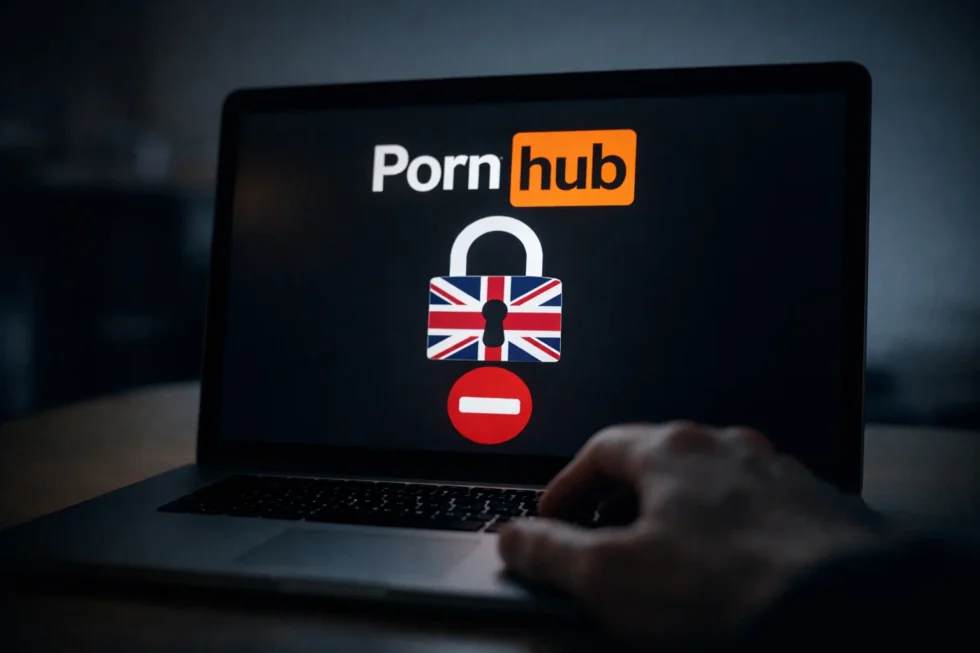
Ofcom has said it will continue discussions with Aylo, but enforcement of the Online Safety Act will proceed as planned, with no indication that age-verification requirements will be delayed or softened. From February, UK users are expected to face reduced access to major regulated adult platforms, while smaller and less regulated websites may see increased traffic as users seek alternatives operating outside UK jurisdiction.
At the same time, pressure is likely to increase on major technology companies including Apple, Google and Microsoft to develop device-level age controls, even though such measures are not required under current law. The UK government has reiterated that the legislation is designed to protect children while allowing adults to continue accessing legal content, placing responsibility firmly on service providers rather than requiring platforms to exit the UK market.
Read about the life of Westminster and Pimlico district, London and the world. 24/7 news with fresh and useful updates on culture, business, technology and city life: What does TfL’s Oyster system operator change mean for passengers — and what do London travellers need to know