14 February 2026 — Richard Moth, newly installed as Archbishop of Westminster, used his first official address to deliver an unusually frank assessment of the Catholic Church’s moral failings, placing the protection of vulnerable people and the treatment of refugees at the centre of his leadership priorities.
This is reported by The WP Times, citing statements delivered during the installation Mass in London.
Speaking at his formal installation before a congregation of around 2,000 at Westminster Cathedral, the new Archbishop acknowledged that the Church has, at times, failed those most in need of care — particularly survivors of abuse. Rather than adopting a celebratory or purely symbolic tone, Moth framed institutional honesty as a prerequisite for restoring trust, arguing that recognition of failure must be followed by sustained listening, learning and concrete safeguards.
In remarks widely interpreted as signalling a shift in pastoral emphasis, Moth said the Church’s evangelical mission remains “fragile” and is “adversely impacted by failures in love, power and self-control”. Observers present at the ceremony described the address as a deliberate departure from defensive rhetoric, marking what senior clerics privately characterise as a recalibration towards accountability, transparency and outward engagement in a society increasingly sceptical of religious authority. The installation and accompanying statements were issued through the Archdiocese of Westminster and covered by the Press Association, forming part of the official appointment process following Moth’s nomination by the Holy See in December.
.
A leadership change at a sensitive moment
Moth becomes the 12th Archbishop of Westminster following his appointment by Pope Leo XIV in December. The role places him at the head of approximately four million Catholics across England and Wales, making it one of the most influential positions in British religious life.
He succeeds Cardinal Vincent Nichols, who stepped down after 16 years in the post. While Nichols’ tenure was marked by institutional stability, it also coincided with heightened scrutiny of safeguarding failures and declining church attendance. Moth’s early emphasis on accountability suggests a deliberate attempt to respond to that context rather than bypass it. Speaking warmly of his predecessor, Moth remarked that Nichols was moving on to “slightly more restful pastures”, signalling continuity of respect even as priorities shift.

Background shaped by migration and service
Born in Zambia and raised partly in Kent, Moth’s personal history reflects the realities of movement and cultural transition that now dominate political debate in the UK. Before arriving in Westminster, he served as Bishop of Arundel and Brighton and previously as Bishop of the Forces, working closely with military chaplaincy and pastoral care in high-pressure environments. Those roles appear to have shaped his leadership style. Colleagues often describe him as attentive to lived experience rather than abstract doctrine, a quality that was evident in his installation address. Instead of theological abstraction, he focused on concrete moral responsibilities: safeguarding, hospitality and dignity. This background also explains why migration has become a recurring theme in his public comments.
Clear stance on refugees and political language
In interviews given around the time of his installation, Moth addressed the UK’s handling of asylum seekers with notable clarity. He criticised the long-term housing of refugees in hotels, arguing that such arrangements are neither humane nor sustainable. Rather than framing the issue ideologically, he called for practical debate about better alternatives.
He also challenged the tone of recent remarks by Sir Jim Ratcliffe, co-owner of Manchester United, describing the language used in migration debates as “deeply unfortunate”. While affirming the legitimacy of public discussion, Moth drew a clear line between policy disagreement and rhetoric that risks dehumanising those involved. This willingness to enter politically charged conversations, while maintaining a pastoral frame, sets him apart from predecessors who often avoided direct engagement.
Confronting abuse and institutional failure
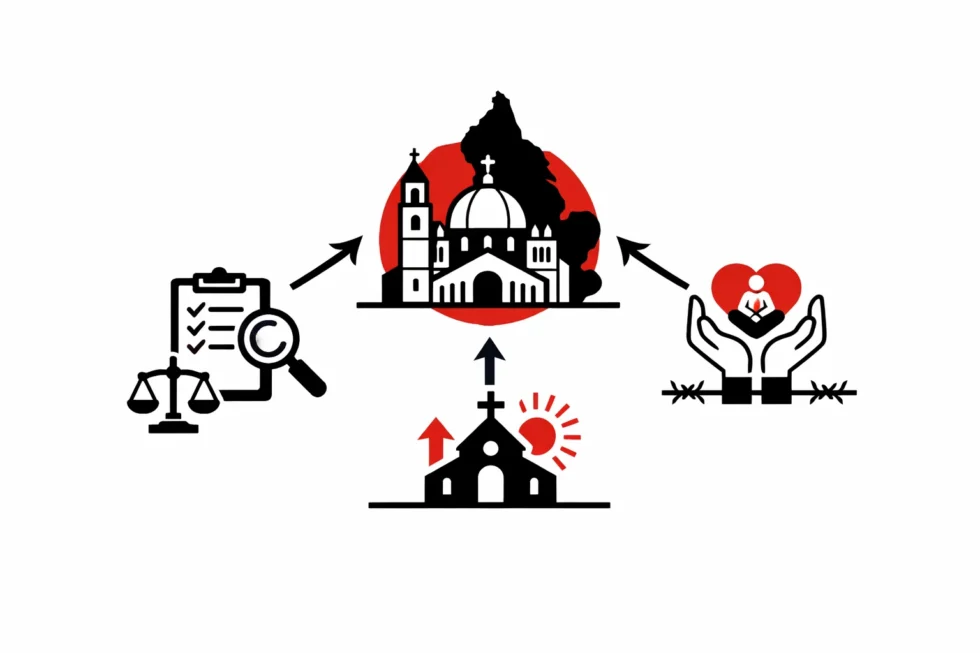
Perhaps the most striking part of Moth’s installation address was his unambiguous reference to abuse within the Church. He spoke of being “most aware” of occasions when the Church, or its representatives, had failed — “most especially when the vulnerable have been abused”. Rather than treating safeguarding as a closed chapter, he described it as an ongoing moral obligation. Listening to survivors, learning from their experiences and embedding safeguards into everyday parish life were presented as prerequisites for any credible evangelisation. By stating that the Church’s missionary work is “fragile and adversely impacted by our failures in love, power and self-control”, Moth implicitly linked moral authority to institutional humility — a connection many critics argue has long been missing.
Ecumenical support and unity
Among the senior figures attending the installation was Dame Sarah Mullally, who praised Moth’s concern for human dignity and emphasised unity across Christian traditions. Her presence underscored the ecumenical dimension of the moment, highlighting cooperation rather than competition between churches. Mullally spoke of unity not as compromise but as enrichment, arguing that traditions are strengthened when they walk together “in charity, honesty and truth”. That message aligned closely with Moth’s own emphasis on rebuilding trust through openness.
Signs of cautious optimism after Covid
Despite his frank assessment of failure, Moth also offered a note of optimism. In recent comments to Catholic media, he pointed to increased adult baptisms and renewed interest among young adults exploring faith. Attendance figures, while not yet back to pre-pandemic levels, are slowly recovering. For Moth, this represents an opportunity rather than a guarantee. Growth, he suggested, will depend on credibility: whether the Church can demonstrate that it has learned from past mistakes and is willing to place the vulnerable at the centre of its mission. This balance between realism and hope may define his early years in office.
A different model of authority
What emerges from Moth’s first major public appearance is a leadership style grounded less in hierarchy and more in moral accountability. By foregrounding failure, vulnerability and social responsibility, he appears intent on redefining what authority looks like in a modern religious institution. For a Church navigating declining trust, political polarisation and cultural change, that approach carries both risk and potential. Whether it translates into lasting reform will depend not on words alone, but on sustained action at parish and diocesan level. For now, Richard Moth’s arrival in Westminster signals a shift in tone — one that acknowledges past harm while insisting that renewal remains possible if honesty comes first.
Read about the life of Westminster and Pimlico district, London and the world. 24/7 news with fresh and useful updates on culture, business, technology and city life: How to vote in Westminster London local elections 2026: deadlines and voter ID rules – full guide UK