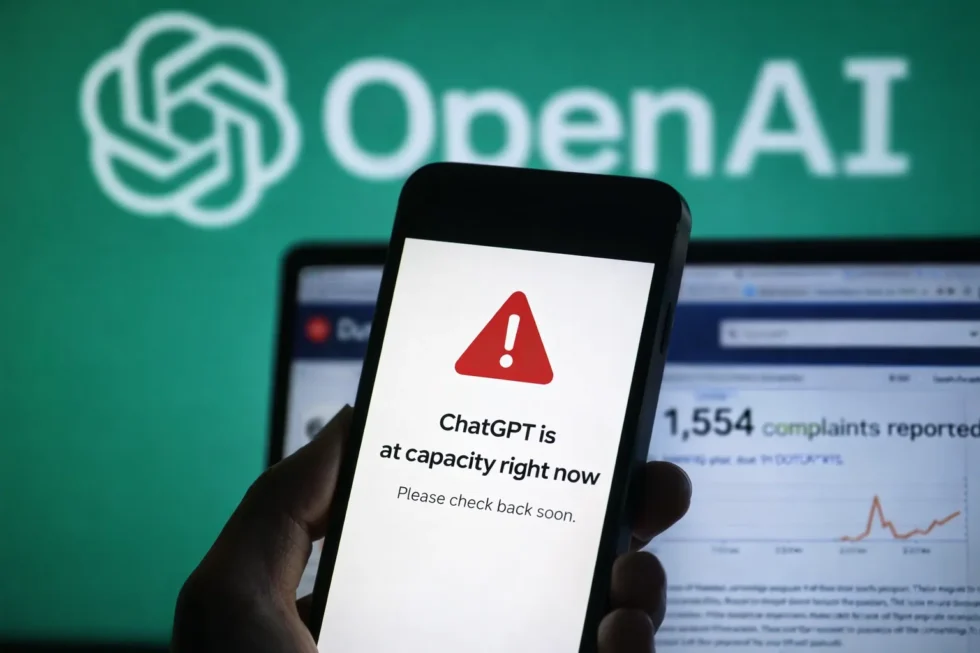
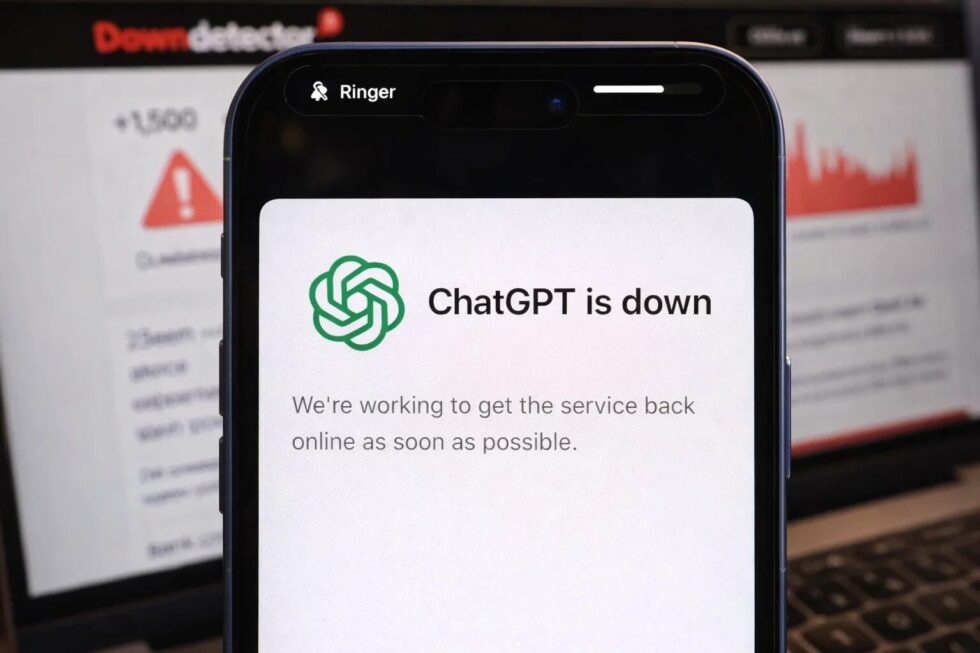
ChatGPT down reports escalated rapidly on April 20, 2026, as users across multiple regions began reporting widespread access failures affecting the web platform, mobile application, and Codex tools. The disruption started with isolated loading errors but quickly expanded into a broader service instability affecting core functionality. Users reported inability to log in, load conversations, or generate responses, indicating a multi-layer system issue rather than a single feature fault. Monitoring platforms registered a sharp spike in complaints within minutes, confirming a fast-developing global outage pattern. The situation intensified as searches for is chatgpt down, chatgpt down, and chatgpt is down surged simultaneously across multiple regions, reflecting widespread service dependency, reports The WP Times.
The outage is currently classified as degraded performance rather than a complete shutdown, meaning partial functionality remains available for some users while others face full access denial. Early indicators suggest instability across authentication, conversation rendering, and API routing layers, which explains inconsistent behavior across devices and regions.
Impact overview:
- Web access failures dominate reports
- Login authentication disruptions increasing
- Codex tool instability reported globally
- Mobile app performance interruptions
Sharp spike in user reports and Downdetector activity
User reports surged dramatically within a short timeframe, signaling a sudden system degradation rather than a gradual performance decline. Tracking platforms recorded an increase from under 1,000 complaints to well over 1,500 in minutes, with subsequent spikes reaching significantly higher global totals. This rapid escalation suggests cascading backend failures affecting multiple services at once. Users described repeated errors, including frozen chats, failed responses, and login loops, with inconsistent recovery attempts across sessions.
The breakdown of reports shows a clear dominance of web-based issues, while app and login-related problems form smaller but consistent segments. This distribution suggests uneven failure across service layers rather than a complete infrastructure collapse.
Downdetector breakdown:
| Issue type | Share |
|---|---|
| Web access errors | ~86% |
| App failures | ~8% |
| Login issues | ~3–7% |
The data indicates that browser-based infrastructure is the most heavily impacted component during the outage.
Regional differences in ChatGPT down impact
The outage has shown uneven impact across different regions, with significantly higher complaint volumes in some areas compared to others. In the United Kingdom, monitoring systems recorded peaks exceeding several thousand reports, while United States figures remained lower but still substantial. These differences may be linked to regional server routing, infrastructure load balancing, or time-zone-based usage concentration.
Users in affected regions reported different symptoms depending on their connection path, including full service denial, partial access, or intermittent response failures. In some cases, Codex remained functional while ChatGPT conversations failed, further supporting the idea of segmented system disruption rather than a single global shutdown.
Regional snapshot:
- UK: peak reports above 7,000–8,000
- US: around 1,700–1,900 reports
- Other regions: fluctuating mid-level spikes
These patterns suggest infrastructure strain is not evenly distributed across global clusters.
OpenAI status confirms degraded performance on ChatGPT and Codex
OpenAI’s official status page confirmed that both ChatGPT and Codex are currently experiencing service issues described as degraded performance. The update indicates users may encounter difficulties loading conversations, accessing features, or using business-related tools following system changes or upgrades. Engineers have initiated mitigation procedures and are actively monitoring recovery progress across affected systems.
The platform has not yet confirmed a full resolution timeline, but partial recovery has been observed in certain regions. The issue appears to involve multiple backend components, requiring staged restoration rather than a single fix.
Status summary:
- ChatGPT and Codex both affected
- Degraded performance confirmed
- Mitigation measures deployed
- Recovery monitoring ongoing
Inconsistent access and varying error messages reported
One of the most notable aspects of this outage is its inconsistency, with users experiencing different levels of disruption depending on location and session routing. Some users can access ChatGPT but encounter errors when loading conversations, while others are completely blocked at login. This variability indicates partial system degradation rather than a total platform failure.
Users have reported multiple recurring error messages, including failed loading states and authentication loops. In several cases, sessions appear to load but fail during response generation, suggesting backend instability in processing layers.
Common errors reported:
- “Something seems to have gone wrong”
- “Unable to load ChatGPT”
- Login authentication loops
- Blank or frozen chat interface
Live monitoring observations and platform feedback
Live monitoring commentary suggests that the outage is fragmented, with different levels of severity depending on region and service endpoint. Some users retain partial access while others experience complete failure, reinforcing the complexity of the disruption. Observers note that the issue affects multiple system layers simultaneously, including Codex and core ChatGPT functionality.
“The issues appear inconsistent across regions, with some users reporting full functionality while others face complete access failure.”
These statements underline that the outage is not isolated but distributed across several infrastructure components.
Possible technical causes behind ChatGPT outage
While no official root cause has been confirmed, the observed failure pattern suggests several possible technical explanations. The sudden spike in reports points to either a backend overload event or an unstable deployment rollout affecting multiple services. Authentication and routing inconsistencies further indicate potential issues in API gateway or identity verification systems.
Another plausible scenario is a partial update conflict across microservices, which can cause uneven system behavior depending on server allocation and user session routing.
Possible causes:
- Backend traffic overload
- Deployment or update instability
- API routing failures
- Authentication service disruption
At present, mitigation efforts are ongoing, with partial restoration visible in selected regions. However, the system remains unstable, and users continue to report intermittent access issues. OpenAI engineers are actively monitoring recovery metrics while gradually restoring full functionality across services.
The outage is expected to resolve in stages due to its distributed nature across multiple infrastructure layers. Until full stabilization is achieved, users may continue experiencing inconsistent performance across ChatGPT and Codex systems.
Read about the life of Westminster and Pimlico district, London and the world. 24/7 news with fresh and useful updates on culture, business, technology and city life: What is the EU Digital Identity Wallet and how will it work across Europe by 2026