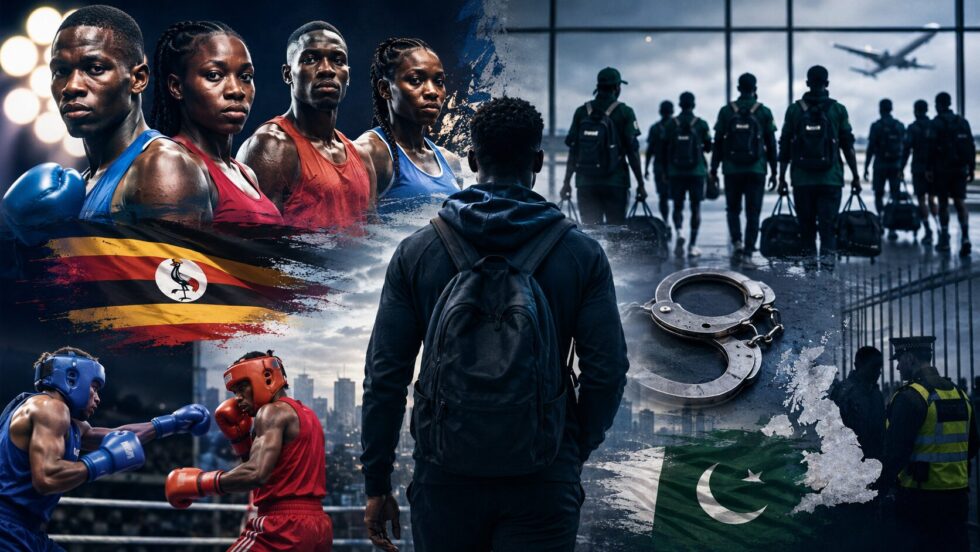
Commonwealth Games athletes unaccounted for after Glasgow 2026 include four members of Uganda’s boxing squad and Pakistani boxer Qudratullah, according to reports received by Police Scotland after the competition ended on Sunday, 2 August. The Ugandan athletes did not travel home with their delegation on Tuesday, while Qudratullah was reportedly absent from his Glasgow hotel shortly before Pakistan’s team was due to depart, The WP Times reports.
Police Scotland has not described the athletes as missing persons or confirmed that any crime has taken place. Officers said they had received reports that “several athletes” were unaccounted for and were making inquiries to establish the circumstances, with early contact taking place between the force and the Home Office. Reports that some of the Ugandan boxers intend to seek asylum have come from Ugandan media and have not been independently confirmed by British authorities.
Which Commonwealth Games athletes are unaccounted for after Glasgow 2026
Five boxers were publicly identified in reports available on Tuesday evening: four athletes representing Uganda and one member of Pakistan’s delegation. All had competed at the streamlined Glasgow 2026 Commonwealth Games, which brought almost 3,000 athletes from 74 nations and territories to Scotland. The Ugandan athletes were named as:
- Nuhu Batte
- Angel Katushabe
- Ibrahim Khemis
- Emily Nakalema
The fifth athlete is Qudratullah, who represented Pakistan in boxing.
STV News reported that the four Ugandan competitors failed to join their teammates for the scheduled journey home. Qudratullah was said to have last been seen in his hotel room approximately six hours before Pakistan’s contingent was due to assemble and depart. His passport and return ticket reportedly remained with the team manager.
The expression “unaccounted for” is significant. It means the teams or responsible officials could not confirm the athletes’ locations at that stage. It does not necessarily mean that they were in immediate danger, had committed an offence or were unlawfully present in Britain.
Police Scotland said:
“Police Scotland has received reports of several athletes who are unaccounted for. Enquiries are ongoing to assess the circumstances, and early engagement is taking place with the Home Office.”
— Police Scotland spokesperson, 4 August 2026
No arrests, injuries or criminal allegations connected directly to the five athletes had been announced by Police Scotland at the time of publication. The force also had not disclosed whether formal missing-person investigations had been opened in every case.
What happened to the four Ugandan boxers after the Commonwealth Games?
Ugandan sports outlet NBS Sport reported that Batte, Katushabe, Khemis and Nakalema did not present themselves for the team’s return journey on Tuesday, 4 August. The rest of Uganda’s delegation subsequently left Scotland.
NBS said it had spoken to one of the four athletes on condition of anonymity. According to that account, the group intended to seek asylum and hoped to continue boxing in a country offering stronger training facilities and better professional opportunities. The athlete reportedly asked people in Uganda not to condemn their decision.
That claim remains a media report rather than an official statement from the athletes, their legal representatives, Police Scotland or the Home Office. A person’s intention to seek asylum also does not establish whether an application has been submitted, whether it is considered valid or whether permission to remain will ultimately be granted. Uganda entered six boxers at the Games. Reports indicate that the four unaccounted competitors had already been eliminated from their respective events: Katushabe, Batte and Nakalema reached the quarter-finals, while Khemis was knocked out during the preliminary stage. The remaining members of the boxing squad returned with the wider delegation.
A Team Uganda representative told BBC Scotland News that the delegation had no comment to make. Uganda’s Ministry of Education and Sports was reported to be examining the circumstances and preparing a response.
What is known about the Ugandan athletes
| Athlete | Country | Sport | Reported position |
|---|---|---|---|
| Nuhu Batte | Uganda | Boxing | Did not return with the delegation |
| Angel Katushabe | Uganda | Boxing | Did not return with the delegation |
| Ibrahim Khemis | Uganda | Boxing | Did not return with the delegation |
| Emily Nakalema | Uganda | Boxing | Did not return with the delegation |
Several reports have used slightly different spellings for Khemis’s surname, including “Kemis”. Until an official list is published by the relevant authorities, readers should be aware of that variation.
The four cases attracted immediate attention because similar situations have followed previous international competitions. However, each person’s circumstances must be established individually. Past cases involving other athletes do not provide evidence of the intentions, immigration status or conduct of the Glasgow 2026 competitors.
Why is Pakistani boxer Qudratullah also reported missing
Pakistani boxer Qudratullah was reported absent from the team hotel as the country’s 36-member Commonwealth Games contingent prepared to leave Glasgow. A source described as close to the Pakistan Olympic Association told the Press Trust of India that the athlete had disappeared after competing in his weight category. The source said his passport remained with the team manager, an arrangement that had also reportedly existed in previous cases involving Pakistani boxers abroad.
Pakistani reports said officials visited Qudratullah’s room but could not locate him. His teammates subsequently travelled home without him. Unlike the reported anonymous account involving the Ugandan boxers, there was no confirmed public statement from Qudratullah explaining his whereabouts or intentions. It therefore cannot be assumed that he plans to seek asylum or that his case has the same circumstances as those involving the Ugandan athletes.
Pakistan completed the Games with one medal, a bronze won by female boxer Fatima Zehra. The team’s sporting performance is separate from the inquiry into Qudratullah’s location, but the disappearance is likely to increase scrutiny of travel supervision within the Pakistan Boxing Federation.
Two Pakistani boxers, Suleman Baloch and Nazeerullah Khan, failed to return with their delegation after the Birmingham 2022 Commonwealth Games. In 2024, boxer Zohaib Rasheed also disappeared during an Olympic qualifying competition in Italy and was accused by team officials of taking money and possessions belonging to a colleague. Those earlier incidents are part of the federation’s recent administrative context, but do not establish what happened in Glasgow.
What have Glasgow 2026 organisers said about departing athletes?
Glasgow 2026 organisers said they were working with Police Scotland, Border Force and UK Visas and Immigration as competitors and support staff left the city.
The Games used hotel-based accommodation hubs rather than constructing a traditional athletes’ village. Competitors were expected to leave in accordance with the event’s length-of-stay arrangements, with Games accommodation generally ending two nights after an athlete’s sport had finished.
Glasgow 2026 spokeswoman Sophie Ashcroft said:
“Over the last two weeks, we have welcomed 3,000 athletes from 74 nations and territories of the Commonwealth to Glasgow. As athletes and support staff leave the city, we continue to work closely with wider partners — including Police Scotland, Border Force and UK Visas & Immigration — to ensure a safe and secure conclusion to the Games.”
Chief executive Phil Batty similarly said organisers had worked closely with security and immigration agencies to ensure that people arrived and departed in accordance with the relevant regulations.
The organisers’ responsibility includes coordinating accommodation, accreditation and departure information. Immigration enforcement and asylum decisions, however, fall under the authority of the UK Government rather than the organising committee.
Glasgow 2026 officially ended on Sunday after 11 days of competition. The Games featured a reduced programme of 10 sports at four principal venue locations, with six Para sports integrated into the schedule. Almost 3,000 athletes participated, representing 74 Commonwealth nations and territories.
Can Commonwealth Games athletes legally seek asylum in Britain?
Any person physically present in the United Kingdom may attempt to make an asylum claim, but lodging a claim does not guarantee permission to remain. The Home Office must examine whether the person has a well-founded fear of persecution and whether the facts meet the legal requirements for refugee protection or another form of leave. Wanting better sporting facilities, higher earnings or improved career prospects would not, by itself, normally establish a right to asylum. An applicant would need to provide evidence relevant to the legal tests applied to their individual circumstances.
The Home Office does not generally comment on individual immigration cases. British authorities have said that enhanced checks are conducted around major international events and that officials work with event sponsors and participating organisations to reduce the risk of immigration abuse.
There is also an important distinction between an athlete who has left team accommodation but still holds valid immigration permission and someone who remains after that permission has expired. A competitor does not automatically become an immigration offender simply by separating from a delegation or missing a group flight. The immediate questions for authorities are therefore practical and factual:
- Where is each athlete?
- Is each person safe?
- Has an asylum or other immigration application been submitted?
- What permission does each athlete currently hold?
- Were team officials properly informed?
- Is there any evidence of coercion, exploitation or criminal activity?
Until those questions are answered, describing the cases as confirmed defections, asylum claims or immigration offences would go beyond the available evidence.
Have athletes disappeared after previous Commonwealth Games
Athletes and officials have failed to return home following several earlier editions of the Commonwealth Games.
After Glasgow hosted the competition in 2014, Ugandan rugby sevens players Benon Kizza and Philip Pariyo left their delegation. They later claimed asylum and played rugby in Cardiff. Pariyo was subsequently convicted in an unrelated criminal case years later; that conviction should not be presented as representative of athletes seeking asylum or of the current Glasgow cases. The 2018 Gold Coast Games in Australia produced a larger number of cases involving competitors from several countries who remained after their authorised stays or applied for protection. Athletes were also reported unaccounted for after Manchester 2002, Melbourne 2006 and Birmingham 2022.
These previous incidents explain why departure arrangements are monitored closely at major competitions, particularly where large numbers of athletes arrive under coordinated accreditation and visa systems. However, comparisons require caution. Some athletes who initially appear to be missing contact their teams later. Others submit asylum applications, change travel arrangements or remain lawfully for a limited period. A smaller number may overstay or disappear from official contact entirely.
The present Glasgow inquiry is therefore not resolved simply because similar incidents occurred in the past.
What happens next in the Commonwealth Games athletes inquiry
Police Scotland’s first task is to assess the reports and establish the whereabouts and welfare of those involved. Officers may contact team officials, hotels, event organisers, transport providers and immigration authorities as part of that work. The Home Office can examine entry conditions, visa records and any application made by an athlete. Border Force and UK Visas and Immigration may also review the information supplied by the relevant sporting delegations. Ugandan and Pakistani sporting authorities are expected to conduct their own inquiries into when the athletes were last seen, who was responsible for their travel arrangements and whether officials received any communication before departure. Further clarification will be needed on several points:
- Whether all five athletes remain in Scotland
- Whether any have contacted lawyers or immigration officials
- Whether formal asylum applications have been made
- Whether their visas remain valid
- Whether their families have been informed
- Whether police consider any athlete to be at risk
- Whether team supervision procedures were followed
The known facts remain limited. Five boxers have been publicly identified as unaccounted for, the rest of their delegations have left Scotland, and Police Scotland is working with the Home Office to establish the circumstances.
Reports about possible asylum plans relate specifically to an anonymous account attributed to one Ugandan boxer. No equivalent explanation has been confirmed for Qudratullah, and British authorities have not announced the outcome of any immigration application. The investigation begins as Glasgow turns from celebrating a competition credited with stabilising the Commonwealth Games to handling the practical and legal consequences of thousands of international competitors leaving the city. Until the athletes are located or communicate formally with the authorities, their safety, intentions and immigration positions cannot be stated with certainty.
Materials used: Police Scotland, Glasgow 2026, STV News, BBC Scotland News, NBS Sport, Press Trust of India, Rediff, Pakistan Olympic Association reports, Team Uganda reports.
Read about the life of Westminster and Pimlico district, London and the world. 24/7 news with fresh and useful updates on culture, business, technology and city life: What is known about the August England bus pass change and who will have to wait longer to qualify