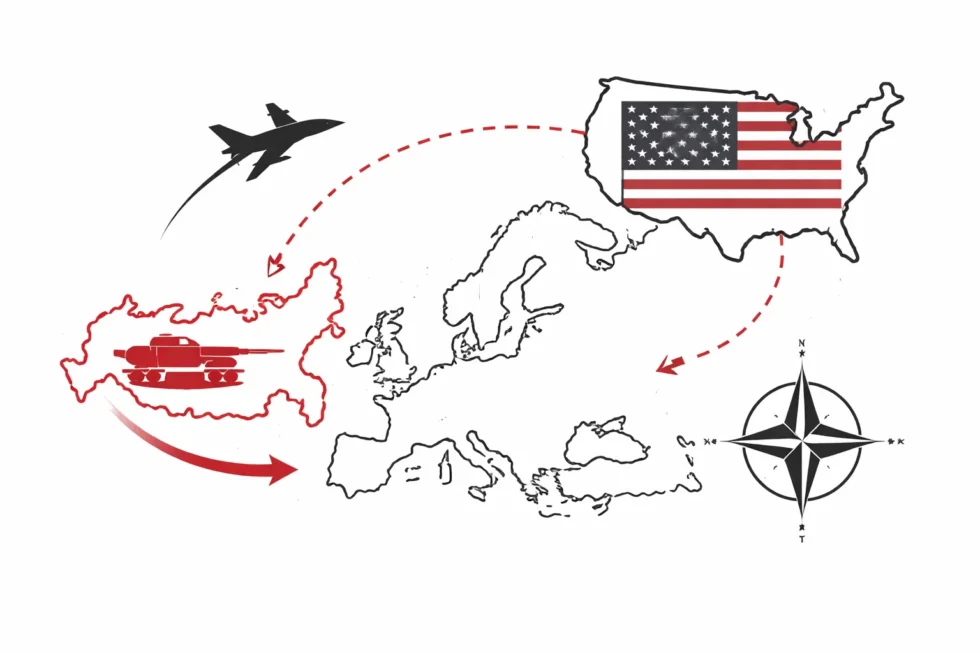
Europe would struggle to deter Russia without the United States, despite being able to manufacture modern weapons, because it remains critically dependent on Washington for intelligence, logistics and command-and-control capabilities. That assessment was shared by diplomats and military analysts speaking to Politico, as reported by The WP Times.
European countries possess a strong industrial base capable of producing tanks, aircraft, missiles and artillery. However, analysts stress that these platforms rely heavily on US-provided intelligence, satellite data, communications infrastructure and logistical coordination. Without American support in these areas, effective deterrence of Russia would be extremely difficult.
The issue has been addressed publicly by NATO Secretary General Mark Rutte, who has openly mocked the idea that Europe could defend itself without the United States. He has argued that the continent currently lacks the strategic capabilities required to operate independently at scale.
The cost of replacing US capabilities
According to Rutte, replacing American strategic assets would require defence spending increases of up to 10% of GDP — roughly double NATO’s current benchmark. Analysts at the International Institute for Strategic Studies estimate that full strategic separation could cost close to $1 trillion and take decades to complete. EU Defence Commissioner Andrius Kubilius has said that Europe must be prepared to eventually replace US strategic capabilities with its own. At the same time, experts acknowledge that such a transition would be both financially and politically challenging.
Where Europe already has alternatives
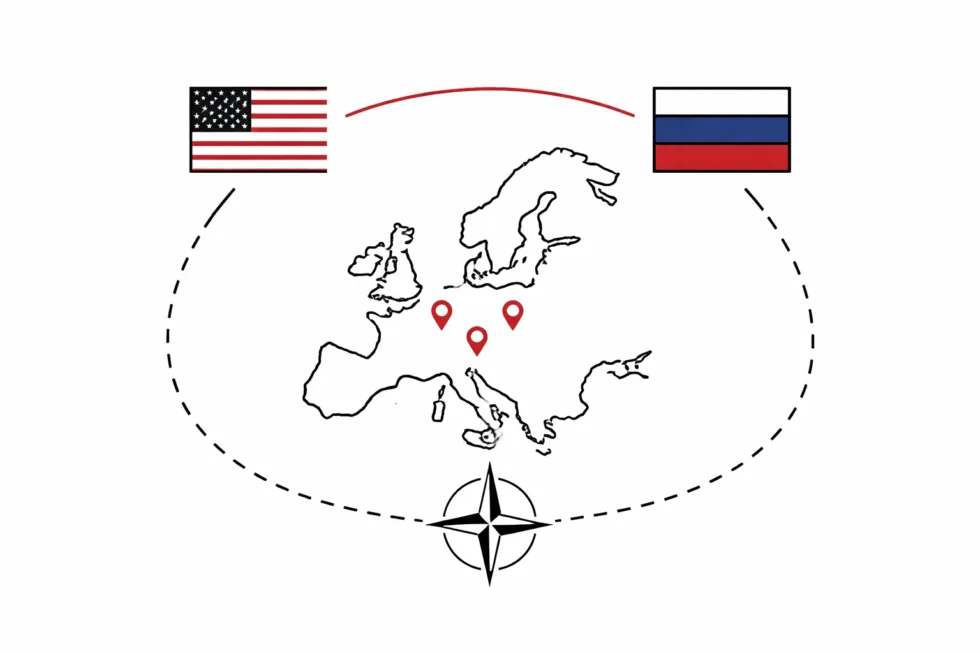
In some areas, European alternatives exist. NATO members are exploring replacements for US-led AWACS aircraft, including the European-built Saab GlobalEye. In air defence, the Franco-Italian SAMP-T system operates alongside the US-made Patriot and is already in use in Ukraine. Europe also fields its own heavy transport aircraft, notably the Airbus A400M. However, significant gaps remain. The United States operates around 450 aerial refuelling aircraft, compared with roughly 156 across Europe, limiting Europe’s ability to sustain long-range operations independently.
Intelligence and space remain the weakest link
Europe’s most serious vulnerability lies in intelligence and space-based capabilities. European militaries continue to rely heavily on US satellite data and surveillance systems. Following a temporary suspension of intelligence sharing between the US and Ukraine, Kyiv and its partners intensified the search for alternatives. Ukraine has increasingly relied on data from the Finnish company ICEYE, while French President Emmanuel Macron has stated that France now provides around two-thirds of Ukraine’s intelligence support. At the EU level, work is under way on the IRIS² satellite system, intended as a European alternative to Starlink, although it is not expected to become operational before 2030.
Political fragmentation complicates defence policy
Analysts also point to political fragmentation within the EU as a major obstacle. Defence decisions often require unanimity, slowing response times and limiting coordination. Experts argue that Europe’s main problem is not a lack of resources, but the absence of effective strategic coordination.
As doubts grow about the long-term reliability of the US as a security partner, Europe’s debate over strategic autonomy has intensified. Washington has repeatedly urged European NATO members to take greater responsibility for their own defence, including calls during Donald Trump’s presidency to raise defence spending to 5% of GDP.
Despite these ambitions, officials in Brussels privately acknowledge that, in the event of a major conflict today, Europe would not be able to cope without American support. At the same time, NATO insists that the alliance remains strong enough to deter and defeat any aggressor — provided transatlantic unity is maintained.
Read about the life of Westminster and Pimlico district, London and the world. 24/7 news with fresh and useful updates on culture, business, technology and city life: Why is the UK deploying warships and jets to the Arctic after Starmer’s NATO warning