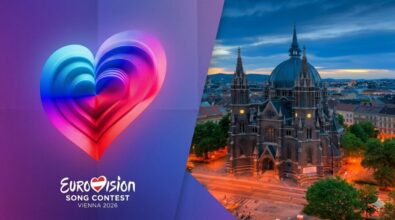
Eurovision 2026 officially opens in Vienna this week as the Austrian capital prepares to host the 70th edition of Europe’s biggest live television music event at the Wiener Stadthalle on 12, 14 and 16 May, bringing together 35 countries during one of the most politically sensitive periods in the contest’s modern history, The WP Times reports. What was originally intended to become a celebratory anniversary edition has instead evolved into a heavily scrutinised international event shaped by broadcaster withdrawals, security concerns, fierce debate over Israel’s participation and growing questions about Eurovision’s future identity inside an increasingly polarised Europe.
For Austria, the return of Eurovision to Vienna represents a major cultural and broadcasting moment. For the European Broadcasting Union, however, Eurovision 2026 also represents a high-stakes test of credibility, neutrality and organisational control at a time when the competition faces criticism from both participating broadcasters and parts of its own fan community.
Vienna returns as Eurovision host city for the third time
Austria secured hosting rights after JJ won Eurovision 2025 in Basel with Wasted Love, giving Vienna the opportunity to stage the contest once again after previous editions in 1967 and 2015.
The Austrian broadcaster ORF selected the Wiener Stadthalle as the official venue because of its production capacity, international transport access, tourism infrastructure and existing experience handling major entertainment broadcasts. The arena has since undergone extensive technical preparation including stage redesigns, upgraded media facilities, audience flow systems and expanded backstage infrastructure for delegations and international broadcasters. Vienna authorities approved significant financial support for Eurovision 2026 as part of a wider strategy to strengthen tourism, international visibility and cultural branding. Local businesses, hotels, airlines and hospitality operators are also expected to benefit from one of the largest visitor influxes of the year.
| Eurovision 2026 overview | Details |
|---|---|
| Host city | Vienna |
| Venue | Wiener Stadthalle |
| Grand Final | 16 May 2026 |
| Semi-finals | 12 and 14 May |
| Participating countries | 35 |
| Host broadcaster | ORF |
| Organiser | European Broadcasting Union |
| Returning countries | Bulgaria, Moldova, Romania |
| Boycotting countries | Spain, Ireland, Iceland, Netherlands, Slovenia |
Why Eurovision 2026 has become so controversial
The dominant political issue surrounding Eurovision 2026 remains the withdrawal of five participating broadcasters over Israel’s inclusion in the contest.
Spain, Ireland, Iceland, Slovenia and the Netherlands chose not to participate after internal political and broadcasting debates surrounding Eurovision’s neutrality rules and the ongoing conflict in Gaza. Their decisions created one of the largest coordinated Eurovision withdrawals in decades and transformed the anniversary edition into a broader debate about culture, broadcasting ethics and international representation. The European Broadcasting Union defended Israel’s participation and repeatedly stated that Eurovision remains a non-political competition. Critics argue that Eurovision has become increasingly impossible to separate from wider geopolitical realities, especially after repeated controversies during recent editions. The result is a contest operating under unusual tension before a single competitive performance has even reached the live stage.
Security across Vienna has intensified ahead of Eurovision week
Security planning surrounding Eurovision 2026 is considerably heavier than in many previous editions. According to Reuters, Austrian authorities and Vienna police prepared large-scale security measures before the live shows, including expanded surveillance zones, stricter venue screening procedures and reinforced coordination around public events linked to Eurovision week.
The Wiener Stadthalle, fan zones and central gathering points around Vienna are expected to operate under enhanced monitoring throughout the event period. Austrian officials have not announced a specific direct threat but acknowledge the contest’s heightened political sensitivity. The security atmosphere reflects Eurovision’s growing scale as an international media event that now extends far beyond entertainment. Delegations, broadcasters and organisers increasingly operate in an environment where political symbolism, protests and online activism influence the competition almost as strongly as the music itself.
The Turquoise Carpet officially launches Eurovision week
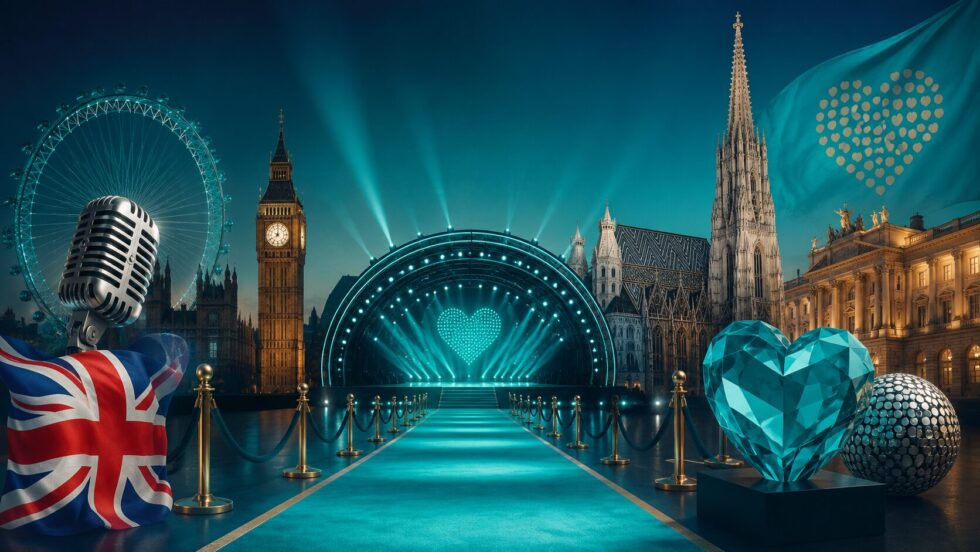
The first major public Eurovision event takes place on Sunday, 10 May, with the Turquoise Carpet ceremony beginning at 17:00 CEST. All 35 delegations are expected to appear together publicly for the only time before the Grand Final. The ceremony will run from the Burgtheater towards Vienna City Hall and is expected to attract tens of thousands of spectators.
The event combines celebrity-style presentation, national branding and live orchestral performance. Austria’s Eurovision winner JJ is scheduled to perform together with the ORF Radio Symphony Orchestra as part of the opening celebrations. For Eurovision organisers, the Turquoise Carpet is no longer simply a red-carpet tradition. It has become a globally distributed digital media event where delegations shape public narratives before rehearsals even begin.
Eurovision 2026 artists and songs reflect a darker European mood
This year’s Eurovision line-up is noticeably heavier in tone than many recent editions. Several entries focus on emotional collapse, anxiety, burnout, loneliness, technological alienation, cultural identity and survival during crisis. Even many dance-oriented songs contain darker undertones beneath their visual spectacle.
| Country | Artist | Song | Theme |
|---|---|---|---|
| Austria | Cosmó | Tanzschein | Club culture and identity |
| United Kingdom | Look Mum No Computer | Ein, Zwei, Drei | Office burnout and escapism |
| Ukraine | Leléka | Ridnym | Emotional survival during war |
| Finland | Linda Lampenius & Pete Parkkonen | Liekinheitin | Destructive passion |
| Greece | Akylas | Ferto | Economic struggle and ambition |
| Romania | Alexandra Căpitănescu | Choke Me | Emotional suffocation |
| Lithuania | Lion Ceccah | Sólo Quiero Más | Artificial intelligence and alienation |
| San Marino | Senhit & Boy George | Superstar | Nostalgic disco-pop |
France, Finland and Australia emerge as early favourites
Among bookmakers and Eurovision fan communities, France, Finland and Australia are currently attracting particularly strong momentum.
French entrant Monroe has become one of the season’s breakout figures thanks to Regarde!, a dramatic blend of operatic vocals, electronic production and orchestral intensity. At only 17 years old, Monroe also becomes the youngest participant in Eurovision 2026. Finland’s Liekinheitin by Linda Lampenius and Pete Parkkonen has developed a strong following because of its theatrical structure and explosive staging potential. Eurovision analysts repeatedly describe the performance as one of the year’s most visually adaptable entries. Australia, meanwhile, enters the contest with one of its strongest vocal packages in years through Delta Goodrem and her cinematic power ballad Eclipse.
Ukraine’s Leléka brings one of the contest’s most emotional performances
Ukraine’s entry by Leléka is already generating strong emotional reactions before rehearsals have fully begun. The song Ridnym avoids direct political messaging while still carrying obvious emotional resonance connected to loss, endurance and psychological survival during wartime conditions. Singer Viktoria Leléka described the track as focusing on the human instinct to continue living even during moments of complete hopelessness.
Unlike many Eurovision performances built around rapid visual effects and heavy pyrotechnics, Ukraine’s concept is expected to rely on restraint, atmosphere and vocal precision. The song’s extended vocal climax has already become one of the most discussed technical moments of Eurovision 2026.
The UK entry divides Eurovision fans again
The United Kingdom once again arrives at Eurovision with an intentionally unconventional performance.
Look Mum No Computer blends aggressive synth production, indie-rock influences and absurdist humour into a song centred on office exhaustion and escape from repetitive corporate culture.
The German-language chorus immediately triggered divided reactions online. Some Eurovision fans praised the UK for originality and risk-taking, while others questioned whether the performance would translate effectively across jury audiences. The entry nevertheless stands out in a field where memorability often matters as much as technical perfection.
Boy George returns to Eurovision headlines
One of Eurovision 2026’s biggest media moments comes through Boy George appearing alongside Senhit for San Marino. Their disco-inspired entry Superstar deliberately embraces retro Eurovision energy rather than modern streaming-era production trends. The collaboration instantly increased international attention around San Marino’s participation and reinforced Eurovision’s continuing ability to attract globally recognised performers.
San Marino has increasingly relied on internationally visible collaborations in recent years as part of its Eurovision strategy, and Boy George’s involvement represents one of its biggest bookings so far.
Eurovision’s future is increasingly being questioned
Beyond the music itself, Eurovision 2026 also exposes deeper questions about the contest’s long-term direction. Broadcasters continue debating the limits of neutrality, political messaging and participation criteria. Fan communities remain deeply divided over whether Eurovision can realistically function as an apolitical entertainment format during periods of major geopolitical conflict.
At the same time, Eurovision’s commercial value continues expanding. The competition remains one of the largest live entertainment broadcasts in the world, combining television audiences, digital streaming, tourism, sponsorship and international cultural branding at extraordinary scale. For the European Broadcasting Union, Eurovision therefore represents both a cultural institution and a globally marketable entertainment property.
Vienna prepares for one of Europe’s biggest television events
Despite the tensions, Eurovision still transforms its host city into a continent-wide cultural stage.
Vienna is preparing for packed hotels, crowded public transport, international media activity, fan gatherings and large-scale nightlife events across the city during Eurovision week. Organisers expect visitors from more than 70 countries throughout the competition period.
The Austrian capital also benefits symbolically from hosting Eurovision during its 70th anniversary year. The city’s classical music heritage, international image and central European identity fit naturally into Eurovision’s attempt to present itself as both historic and modern simultaneously. For one week, Vienna effectively becomes Europe’s entertainment capital.
What happens next at Eurovision 2026
Following the Turquoise Carpet ceremony in Vienna on 10 May, Eurovision 2026 now moves into its most intense production phase, with full arena rehearsals, camera run-throughs, technical staging tests, press conferences and live jury preparations taking over the Wiener Stadthalle before millions of viewers across Europe tune in for the semi-finals. Delegations, broadcasters and production teams are expected to spend the next several days refining lighting, choreography, pyrotechnics, live vocals and television camera sequences ahead of the first competitive broadcast.
The First Semi-final takes place on Tuesday, 12 May, followed by the Second Semi-final on Thursday, 14 May, before the Grand Final on Saturday, 16 May, when professional juries and public televotes from participating countries and international audiences will determine the winner of Eurovision 2026. Organisers also expect major global streaming audiences through BBC, ORF and the official Eurovision YouTube channel.
| Eurovision 2026 next schedule | Event |
|---|---|
| 10 May | Turquoise Carpet and opening ceremony |
| 11 May | Final rehearsals and press previews |
| 12 May | First Semi-final |
| 14 May | Second Semi-final |
| 16 May | Grand Final |
| Venue | Wiener Stadthalle, Vienna |
Whether Eurovision 2026 is ultimately remembered for its music, political tensions, broadcaster boycott, security atmosphere or cultural symbolism remains uncertain. What already appears clear, however, is that the contest’s 70th anniversary arrives during one of the most emotionally and politically fragile moments Europe has experienced in recent years, transforming Eurovision from a purely entertainment spectacle into a wider reflection of the continent’s divisions, anxieties and shifting identity. And this week in Vienna, all of those pressures, emotions and expectations will unfold live under the lights of one of the world’s most closely watched entertainment stages.
Where to watch Eurovision 2026 in London
Viewers across London will be able to watch Eurovision 2026 live through television broadcasts, streaming platforms, cinemas, bars and official fan events throughout the week. The semi-finals take place on Tuesday, 12 May, and Thursday, 14 May, with the Grand Final broadcast live on Saturday, 16 May from the Wiener Stadthalle in Vienna.
In the United Kingdom, Eurovision 2026 is expected to air live on BBC television channels and through BBC iPlayer, while international streams will also be available through the official Eurovision Song Contest YouTube channel. The Turquoise Carpet opening ceremony on 10 May from 17:00 CEST will also be streamed online.
Several large Eurovision screenings and fan gatherings are expected across London, particularly in areas including Soho, Vauxhall, Camden and Dalston, where bars and LGBTQ+ venues traditionally host Eurovision watch parties with live commentary, themed performances and public voting events.
| Eurovision 2026 London viewing guide | Details |
|---|---|
| First Semi-final | 12 May 2026 |
| Second Semi-final | 14 May 2026 |
| Grand Final | 16 May 2026 |
| Main UK broadcaster | BBC |
| Streaming | BBC iPlayer / Eurovision YouTube |
| Turquoise Carpet | 10 May, live from Vienna |
| Main venue | Wiener Stadthalle, Vienna |
| London fan zones | Soho, Vauxhall, Camden, Dalston |
Popular London venues that regularly organise Eurovision screenings include The Royal Vauxhall Tavern, Dalston Superstore and large cinema-style watch events that are usually announced closer to the Grand Final weekend. Many venues also expect themed DJ sets, costume competitions and late-night Eurovision afterparties following the final results announcement.
Read about the life of Westminster and Pimlico district, London and the world. 24/7 news with fresh and useful updates on culture, business, technology and city life: London Underground strike May 2026: what is happening, when and why