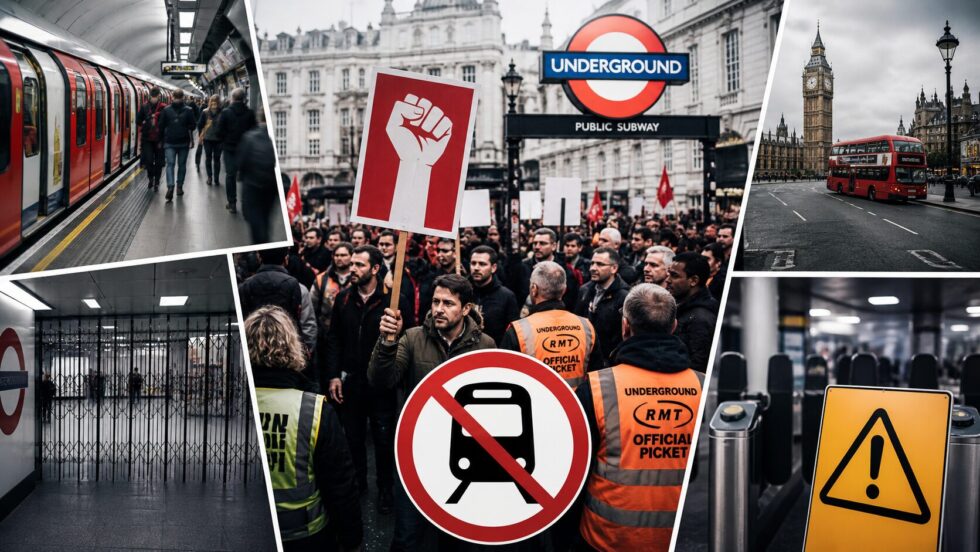
London Underground strike May 2026 will hit commuters across the capital between Tuesday 6 May and Thursday 8 May 2026, with the most severe disruption expected during full-day walkouts on 7 May, when multiple lines will operate at sharply reduced capacity and some central sections may temporarily close. The strike, driven by disputes over staffing levels, rosters and long-term operational restructuring, is expected to impact key commuter corridors into the City, Canary Wharf and the West End, with overcrowding risks at major interchanges and delays cascading across the wider transport network, The WP Times reports.
Transport for London (TfL) has confirmed that disruption will begin from the evening before the strike and continue into the morning after, meaning travel impact spans roughly 48–72 hours, not just the official strike window. Commuters are being warned to expect slower journeys, station crowd control measures and pressure on alternative transport, including buses, roads and National Rail services.
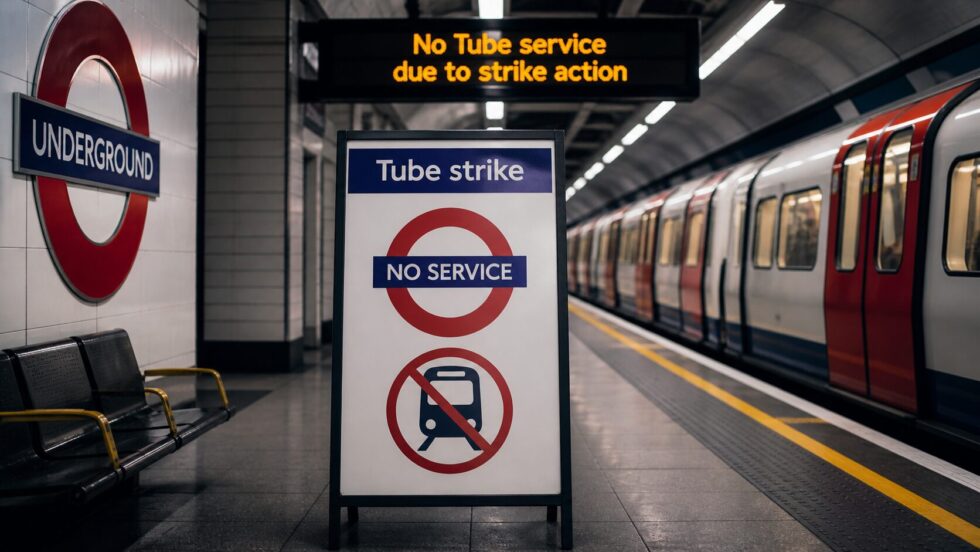
Which London Underground lines are affected and how services will run
TfL has not confirmed a complete shutdown of any single line, but multiple Underground routes are expected to operate with limited service, delayed intervals and potential partial closures depending on staff availability. Historically, strike participation tends to vary across depots, meaning disruption can be uneven across the network. Expected impact by line:
- Central line – Severe delays and reduced frequency, especially during peak hours
- Northern line – Split service likely, with disruptions on key commuter branches
- Piccadilly line – Airport connections may face delays and reduced trains
- Jubilee line – Intermittent service, particularly affecting Canary Wharf routes
- Victoria line – Reduced frequency despite automated operation due to staffing needs
- District and Circle lines – Partial suspensions and slower services expected
Additional disruption is likely at major interchange stations where reduced staffing affects operations such as crowd control, platform management and train dispatch. Key stations expected to be busiest:
- King’s Cross St Pancras
- Oxford Circus
- Victoria
- London Bridge
- Liverpool Street
Commuters using these hubs should expect longer queues, controlled entry systems and possible temporary closures during overcrowding periods.
Strike dates and timeline: when disruption will be at its peak
The strike action is expected to take place across multiple days in May 2026, with the most severe disruption typically occurring during full 24-hour walkouts and the following morning recovery period.
Indicative disruption timeline
| Date | Expected impact | Notes |
|---|---|---|
| Strike Day 1 | Major disruption | Reduced services across most lines |
| Strike Day 2 | Continued disruption | Some recovery on outer branches |
| Following morning | Residual delays | Late starts and timetable gaps |
| Evening after strike | Gradual recovery | Near-normal service resumes |
TfL has emphasised that even when strikes end, the network requires several hours to stabilise due to train positioning, staffing logistics and safety checks.
TfL travel advice: how London commuters should plan journeys
Transport authorities are urging passengers to plan ahead and consider alternative transport options, particularly during peak commuting periods. The impact is expected to be most severe between 07:00–10:00 and 16:00–19:00. TfL recommended actions:
- Check live updates before travel using TfL tools
- Allow at least 30–60 minutes extra journey time
- Avoid central London interchanges where possible
- Travel outside peak hours if flexible
- Consider alternative modes such as buses, cycling or rail
Bus services are expected to be significantly busier than usual, and road congestion across London is likely to increase as commuters shift away from the Underground. Cycling routes and walking options for shorter distances are being actively encouraged, particularly within central zones where distances between major stations are manageable.
Alternative routes and transport options during the Tube strike: what actually works in London
London Underground strike May 2026 will force a large share of commuters onto alternative transport, but capacity across London’s network is finite and unevenly distributed. The most reliable options will depend on distance, direction of travel and proximity to central London, with east–west routes generally better served than north–south corridors. In practice, the Elizabeth line and National Rail will absorb long-distance demand, while buses and walking will dominate in Zones 1–2, creating pressure on key streets and interchanges. Commuters should not rely on a single route. The most effective strategy during the Tube strike is to plan primary and secondary journeys, factoring in walking segments between stations and avoiding overloaded hubs such as Oxford Circus, Victoria and London Bridge where crowd control measures may limit access.
Detailed breakdown of alternatives:
- London buses (TfL Bus network)
The most accessible fallback, covering all boroughs, but also the most vulnerable to overcrowding. Routes replacing major Underground corridors (e.g. Central line parallels along Oxford Street, A40, A11) will be significantly slower, especially between 07:30–09:30 and 16:30–18:30. Expect dwell times at stops to increase due to passenger volume. - National Rail services
Critical for commuters travelling from outer London and commuter belts (e.g. Croydon, Watford, Romford, Ilford). Trains into London Bridge, Liverpool Street, Paddington and Waterloo will run but at higher occupancy. This is often the fastest option for Zone 4–6 travellers entering central London. - London Overground & Elizabeth line
Among the most stable options during Underground strikes.- Elizabeth line provides high-capacity east–west travel (Reading – Paddington – Liverpool Street – Abbey Wood)
- Overground offers orbital routes, avoiding Zone 1 bottlenecks
However, both will experience peak crowding at interchange stations such as Whitechapel, Stratford and Highbury & Islington.
- Cycling (Santander Cycles and private bikes)
Demand typically increases by 2–3x during strike days. Docking stations near major rail hubs (Waterloo, King’s Cross, Liverpool Street) may empty quickly in the morning and fill by evening. Travel times within Zone 1–2 are often faster than buses during disruption. - Walking routes (Zone 1–2)
For distances under 3–4 km, walking becomes the most predictable option.
Typical walking times:- King’s Cross → Oxford Circus: ~35 minutes
- London Bridge → Liverpool Street: ~25 minutes
- Victoria → Westminster: ~20 minutes
Increased pedestrian flow is expected on bridges and main arteries.
Practical route strategy: how to combine transport during the Tube strike
The most effective journeys during the London Underground strike May 2026 will combine multiple modes rather than relying on one. Recommended combinations:
| Journey type | Best strategy |
|---|---|
| Outer London → City | National Rail → short walk |
| East–West London | Elizabeth line → walk/bus |
| North–South London | Overground + bus |
| Central Zone 1 travel | Walking + short bus hop |
| Canary Wharf access | Elizabeth line + walking |
Commuters should prioritise avoiding major interchanges and instead exit earlier and walk part of the route.
What officials and unions are saying about the strike
The London Underground strike May 2026 reflects ongoing structural tensions within the transport system, particularly around staffing, operational resilience and long-term funding pressures. TfL has focused its messaging on passenger mitigation, while unions continue to frame the dispute around safety and workload sustainability.
(“We urge customers to check before they travel, avoid peak times and consider alternative routes where possible,” TfL operational update, London, May 2026)
(“This action is about protecting safe staffing levels and ensuring the network remains sustainable for both workers and passengers,” union statement, London transport briefing, 2026)
Officials have confirmed that contingency plans are active, including adjusted timetables and coordination with bus and rail operators, but emphasise that service levels will vary in real time depending on staff availability across depots.
What the Tube strike means for London commuters this week
The London Underground strike May 2026 will not shut the network entirely, but it will reshape movement across the city, shifting demand onto already busy systems and creating uneven pressure across zones. Central London will experience the highest strain, particularly across Zone 1 corridors and key business districts.
For commuters, the decisive factors will be timing, flexibility and route planning. Travelling earlier, later or avoiding central interchanges can significantly reduce disruption. Those unable to adjust should expect longer journey times, crowded services and dynamic changes throughout the day. The situation remains fluid, with TfL issuing live updates as conditions evolve. In practical terms, this is not just a transport disruption but a network-wide capacity test, where preparation and adaptability will determine how effectively commuters navigate the city.
Read about the life of Westminster and Pimlico district, London and the world. 24/7 news with fresh and useful updates on culture, business, technology and city life: Why is Giant from Gladiators leaving BBC after three seasons and what triggered his departure