
In an age defined by the attention economy, traditional marketing and static business processes are struggling to capture and hold consumer interest. The modern customer is not a passive recipient of information but an active participant seeking interaction, rewards, and a sense of achievement. This shift has led to the rise of gamification—the application of game design elements and game principles in non-game contexts. By infusing everyday business processes with mechanics like points, badges, and leaderboards, companies can transform mundane tasks into engaging experiences. This not only boosts customer engagement but also builds profound brand loyalty and provides valuable data. The UK, and particularly London's vibrant tech scene, has become a global leader in this innovative approach, pioneering strategies that are now shaping the future of customer relationships, a topic extensively covered by the editors of The WP Times.
The Psychology Behind Gamification
The effectiveness of gamification lies in its direct appeal to fundamental human psychological motivators. It taps into our innate desire for achievement, recognition, and social connection. Unlike traditional incentives, which are often purely transactional, gamified systems create a feeling of progress and mastery. This is driven by both intrinsic and extrinsic motivation. Intrinsic motivation comes from the joy of the activity itself, while extrinsic motivation is tied to external rewards. A well-designed gamification strategy carefully balances both to create a compelling user experience.
Why We Play: From Badges to Leaderboards
The core mechanics of gamification are simple yet powerful. They provide a clear framework for users to understand their progress and compete with others. This turns a simple interaction, like making a purchase or completing a profile, into a mini-game. The sense of achievement from earning a "badge" or climbing a "leaderboard" triggers a release of dopamine in the brain, reinforcing the positive behavior and encouraging the user to continue engaging with the brand. These psychological triggers make the experience addictive in a positive way.
- Points and Badges: Simple, visual rewards for completing tasks or reaching milestones. They provide a clear sense of achievement.
- Progress Bars: Show users how far they've come and how close they are to a goal, creating a powerful psychological pull.
- Levels and Tiers: Unlock new features, content, or rewards as users progress, providing a feeling of status and exclusivity.
- Leaderboards: Foster a sense of competition and community, motivating users to achieve higher rankings.
- Challenges and Quests: Turn a series of tasks into a narrative, providing a sense of purpose and adventure.
By strategically implementing these elements, a business can transform a mundane customer journey into an engaging narrative. For instance, a coffee shop app might award points for each purchase, with badges for visiting on a certain number of days or trying a new drink. These small, frequent rewards create a continuous feedback loop that keeps the customer coming back, not just for the product, but for the experience itself.
Gamification in Practice: A British Perspective
The UK market, with its blend of established legacy brands and a thriving FinTech sector, has been a fertile ground for gamification innovation. British companies are at the forefront of using game mechanics to address business challenges ranging from customer loyalty to employee training. The capital, London, serves as a central hub for this innovation, with tech startups and established financial institutions alike embracing the power of play. From banking apps to supermarket loyalty schemes, the British consumer is constantly interacting with subtle, yet effective, forms of gamification.
UK Success Stories and Market Trends
Many British brands have successfully integrated gamified elements into their customer engagement strategies, turning simple transactions into rewarding experiences. A major UK airline, for example, uses a tiered loyalty program where customers unlock different statuses ("Silver," "Gold," etc.) based on their travel frequency, with each tier offering exclusive perks and a sense of elite status. Similarly, a London-based FinTech startup has gamified the process of saving money by setting challenges and awarding badges for reaching savings goals. These examples highlight a growing trend in the UK towards making financial and retail services more interactive and less intimidating.
- Tiered Loyalty Programs: A common gamification strategy in UK retail and airlines (e.g., Tesco Clubcard, British Airways Executive Club) to encourage repeat business.
- Financial Challenges: Banking apps use challenges and badges to help users save money, turning a financial goal into a rewarding game.
- Interactive Training: UK companies use gamified platforms to make employee onboarding and training more engaging and effective.
- Digital Scavenger Hunts: Brands run online and in-store scavenger hunts to increase product discovery and drive footfall.
- Community Leaderboards: Websites and apps use leaderboards to foster a sense of community and friendly competition among users.
These case studies show that gamification is not a one-size-fits-all solution but a flexible framework that can be tailored to various industries. It allows brands to build deeper, more meaningful relationships with their customers beyond the point of sale. By making the customer journey more interactive, companies can gather valuable data on consumer behaviour and preferences, which in turn helps them to personalize future offers and services. This creates a virtuous cycle of engagement and value for both the business and the customer.
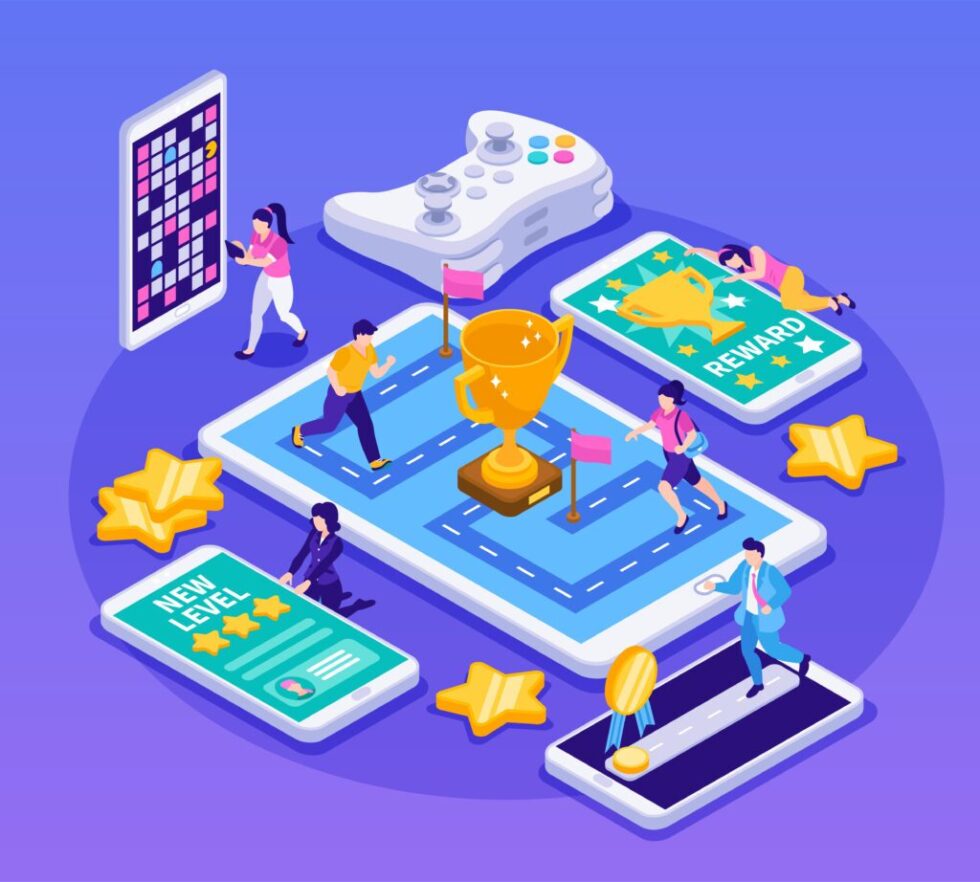
Building a Gamified Customer Journey
Implementing a successful gamification strategy requires a thoughtful, user-centric approach. It's not enough to simply add points to an existing system. The most effective strategies are deeply integrated into the customer journey, providing clear value and a satisfying experience. The process begins with understanding the core motivations of your target audience and defining clear business objectives. The key is to design a system that feels natural and intuitive, rather than an arbitrary layer of game mechanics.
A Step-by-Step Guide for Businesses
A well-planned gamification strategy is a phased approach that starts with research and ends with data analysis. It should focus on solving a specific business problem, whether it's increasing app usage, boosting sales, or improving customer retention. This systematic process ensures that the gamified elements are not just a gimmick but a powerful tool for achieving real, measurable results.
| Phase | Key Actions |
| 1. Strategy | Define business goals (e.g., increase app usage by 20%), understand target audience motivations, identify key user behaviours to reward. |
| 2. Design | Choose appropriate game mechanics (points, badges, leaderboards), map out the customer journey, design a clear and appealing user interface. |
| 3. Implementation | Integrate the gamification platform into your existing systems, test the user experience, launch a pilot program to a small group. |
| 4. Analysis | Collect and analyze user data, measure key performance indicators (KPIs), iterate and refine the system based on user feedback. |
Once the system is live, the work is not done. Continuous monitoring and iteration are crucial for long-term success. The best gamification platforms are dynamic, with new challenges and rewards introduced regularly to maintain user interest. Gathering feedback from users is essential to ensure the mechanics remain engaging and don't become stale or frustrating. A well-designed gamified system can transform a transactional relationship into a deeply engaging partnership.
Gamification is no longer a fleeting trend but a powerful and enduring strategy for business growth. By tapping into core human psychology, it transforms passive consumers into active participants, driving engagement and building lasting loyalty. The UK, particularly its innovative tech sector, is at the forefront of this movement, showcasing how game elements can revolutionize traditional business processes. A successful strategy requires a thoughtful, step-by-step approach focused on the customer's journey and motivations. It's a fundamental shift from simply selling a product to providing a valuable, rewarding experience. This new paradigm is not just about making business more fun; it's about making it more human.
Read about the life of Westminster and Pimlico district, London and the world. 24/7 news with fresh and useful updates on culture, business, technology and city life: The Impact of ESG Trends on British Banks and Businesses in 2025.