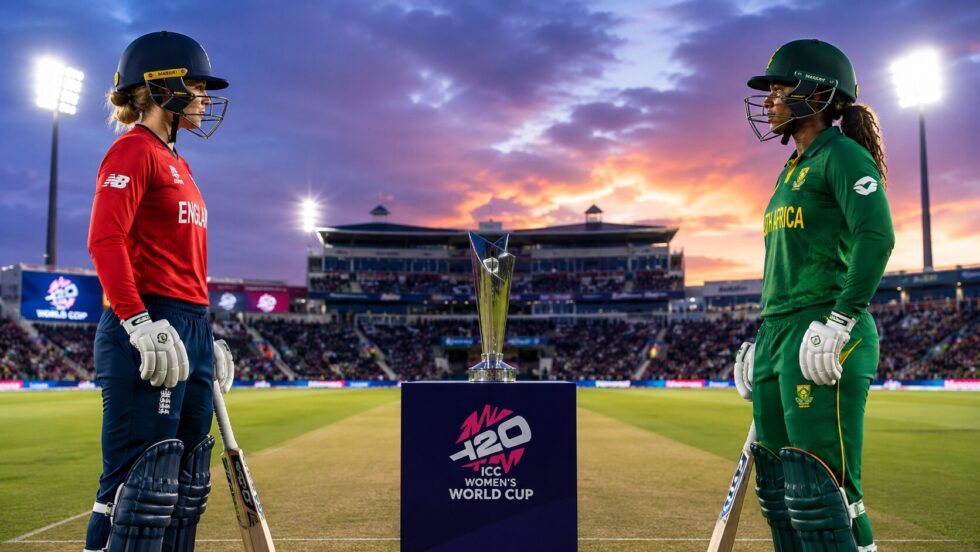
ICC Women’s T20 World Cup semi-final at The Oval on Thursday, 2 July 2026, began with South Africa winning the toss and choosing to bowl first against England, before Shabnim Ismail struck early to remove Amy Jones and put the hosts under immediate pressure in London, The WP Times reported. England, unbeaten through the group stage, brought captain Nat Sciver-Brunt back into the side for a knockout match whose winner will face Australia in Sunday’s final at Lord’s.
The match, listed as England Women vs South Africa Women in the second semi-final of the ICC Women’s T20 World Cup 2026, quickly became a test of England’s top order after South Africa’s new-ball pair Marizanne Kapp and Ismail found early control. The key live storyline is clear: England must rebuild after the early wicket, while South Africa are trying to turn a strong start in the field into another major World Cup blow against the England cricket team.
ICC Women’s T20 World Cup semi-final: what happened first at The Oval
South Africa captain Laura Wolvaardt won the toss and chose to field first, a decision that immediately put England’s openers Danni Wyatt-Hodge and Amy Jones under pressure on a green-looking Oval surface. Kapp opened with a tight first over, conceding only three runs, before Ismail made the first major breakthrough.
Jones was dismissed for 2, caught by Annerie Dercksen at point after cutting Ismail’s first delivery of the spell. That brought Nat Sciver-Brunt to the middle early, a major moment because the England captain had only just returned to the XI after injury concerns. At the time of the early live updates, England were already one wicket down inside the opening two overs, with Wyatt-Hodge and Sciver-Brunt asked to steady the innings. South Africa had not yet batted.
EN-W vs SA-W live context: why the toss mattered
The toss mattered because the conditions appeared to offer something for seam bowling, especially under early evening light at The Oval. South Africa’s choice to bowl first was not passive; it was a direct attempt to use Kapp and Ismail against England’s top order before the ball softened.
The Oval has also been a strong batting venue in women’s T20 cricket, but first-innings totals often need to be well above 150 to feel safe. CricViz analysis cited in live coverage put the average first-innings score at The Oval in women’s T20 internationals at 152, while winning totals have usually needed to pass 170.
For England, that made the powerplay decisive. A fast start could have built a platform for 170-plus; early wickets, however, risked forcing the hosts into repair mode before the halfway stage of the innings.
England cricket team selection: Sciver-Brunt returns for Dunkley
England’s major selection call was the return of Nat Sciver-Brunt, who came back as captain in place of Sophia Dunkley. That changed the balance of the side and gave England their senior all-rounder for the biggest match of the tournament so far.
England XI: Danni Wyatt-Hodge, Amy Jones, Nat Sciver-Brunt, Alice Capsey, Heather Knight, Freya Kemp, Danielle Gibson, Charlie Dean, Sophie Ecclestone, Linsey Smith, Lauren Bell.
South Africa XI: Laura Wolvaardt, Tazmin Brits, Annerie Dercksen, Sune Luus, Marizanne Kapp, Nadine de Klerk, Chloe Tryon, Sinalo Jafta, Shabnim Ismail, Ayabonga Khaka, Nonkululeko Mlaba.
Why Nat Sciver-Brunt’s return is central to England’s semi-final
Sciver-Brunt’s return is more than a selection detail. She is England’s captain, a senior batter and a player who can influence both innings. England’s tournament had been strong, but a semi-final against South Africa required experience under pressure.
Her recovery was also a major pre-match storyline. Live coverage reported that she used a combination of ice, compression, physio treatment, oxygen therapy and magnetic resonance therapy to get fit for the match.
That matters because England were forced to use her almost immediately after Jones fell. Instead of entering later with a platform already built, Sciver-Brunt walked in during the first serious pressure moment of the evening.
South Africa’s plan: Kapp, Ismail and early pressure
South Africa’s plan was clear from the start: bowl first, attack the off-side channel, challenge England’s openers and make the hosts rebuild. Kapp’s first over gave little away, and Ismail’s first-ball wicket rewarded the decision to attack early.
Ismail’s dismissal of Jones was also psychologically important. England had entered the semi-final unbeaten, but South Africa have recent World Cup knockout history against them, including wins in previous global semi-finals. Sky Sports noted before the match that England had lost to South Africa in their last two World Cup semi-finals, in the 2023 T20 World Cup and the 50-over World Cup last year.
What is at stake in the ICC Women’s T20 World Cup semi-final
The prize is a place in Sunday’s final at Lord’s against Australia. Australia had already reached the final after beating West Indies in the first semi-final, meaning England and South Africa were playing for the right to meet the tournament’s most consistent global power. For England, the stakes are also domestic. This is a home World Cup semi-final in London, at a ground where the crowd was strongly behind them. For South Africa, it is another chance to turn their experience in major finals and semi-finals into a defining win.
Key match facts so far
| Detail | Information |
|---|---|
| Match | England Women vs South Africa Women |
| Tournament | ICC Women’s T20 World Cup 2026 |
| Stage | Second semi-final |
| Date | Thursday, 2 July 2026 |
| Venue | The Kia Oval, London |
| Toss | South Africa won and chose to bowl |
| First wicket | Amy Jones c Dercksen b Ismail 2 |
| England change | Nat Sciver-Brunt returned; Sophia Dunkley missed out |
| Final opponent | Winner faces Australia at Lord’s on Sunday |
Why The Oval crowd matters for England
The atmosphere at The Oval was described in live coverage as partisan, with strong support for England during the anthem and in the opening overs. That matters because this tournament has been part of a wider rise in the profile of women’s cricket in Britain.
A home crowd can lift a side, but it can also increase pressure when early wickets fall. England’s challenge was to use that energy without allowing the occasion to tighten their batting.
What England need from here
England’s immediate task is simple: rebuild without losing tempo. Wyatt-Hodge remains important because she can score quickly square of the wicket, while Sciver-Brunt gives the innings control and experience.
England will want a platform by the end of the powerplay, then acceleration through Capsey, Knight, Kemp and Gibson. If they reach the final five overs with wickets in hand, they still have the batting depth to push towards a competitive total.
What South Africa need from here
South Africa need to keep attacking. One early wicket is a strong start, but England’s middle order is deep enough to recover if allowed time.
Kapp and Ismail set the tone, but the next phase is just as important. Nonkululeko Mlaba’s spin, de Klerk’s control and Tryon’s experience could decide whether South Africa keep England below par or allow a late recovery.
Quotes and live reaction from The Oval
Cricinfo journalist Firdose Moonda told Test Match Special that the surface looked “very, very green” and said the early passage could decide where the game was “won and lost”. That assessment fitted South Africa’s decision to bowl first and the immediate impact of Ismail’s new-ball spell.
Moonda also noted after Ismail’s wicket that the bowler had been frustrated with her tournament impact before the semi-final, making the breakthrough an important personal and team moment.
How to understand this semi-final in one line
This ICC Women’s T20 World Cup semi-final is England’s unbeaten home campaign against South Africa’s knockout threat: a match shaped first by the toss, then by Ismail’s early wicket, and now by whether England’s middle order can turn pressure into a defendable total.
Read about the life of Westminster and Pimlico district, London and the world. 24/7 news with fresh and useful updates on culture, business, technology and city life: What are the World Cup 2026 last-16 fixtures and when do England play Mexico