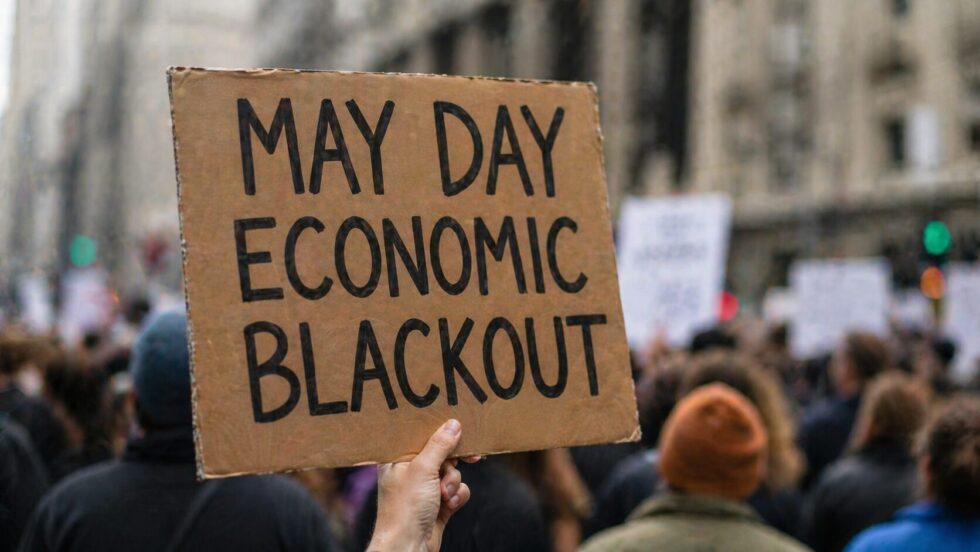
May Day economic blackout protests are unfolding across the United States on 1 May, with unions, community groups and activist networks coordinating a nationwide campaign urging “no work, no school, no shopping” in what organisers describe as a mass demonstration of economic power, The WP Times reports. The mobilisation, tied to International Workers’ Day, has expanded rapidly in scale, with organisers expecting more than 3,000 actions across cities including Chicago, Los Angeles and Minneapolis, reflecting growing coordination between labour and immigration movements.
The campaign is rooted in recent protest momentum following immigration enforcement operations and broader political tensions, with organisers arguing that economic disruption is the most effective lever available to workers and communities. Demonstrations range from rallies in public parks to city-wide shutdown efforts, as unions and advocacy groups seek to transform May Day from a symbolic event into a coordinated national action with measurable economic impact.
May Day economic blackout: how the movement expanded nationwide
The May Day economic blackout has evolved from traditional labour rallies into a coordinated, multi-sector mobilisation that now spans thousands of local actions. Organisers report that participation has more than doubled compared with previous years, signalling a shift from symbolic protest to operational disruption. The strategy centres on collective withdrawal from daily economic activity, aiming to demonstrate the dependency of local economies on workers and consumers. This approach mirrors tactics seen in international general strikes, though organisers acknowledge the US has historically lacked the infrastructure for full national shutdowns.
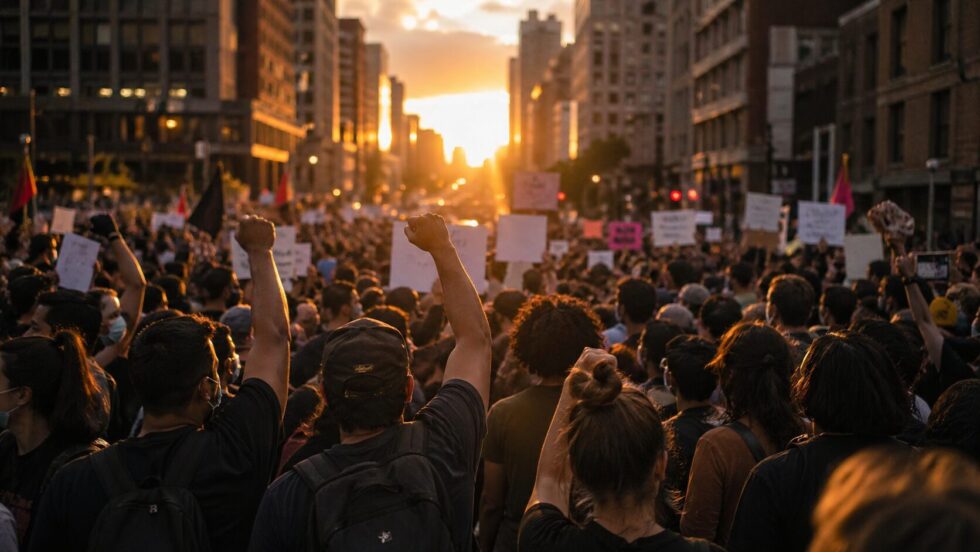
The rapid scaling of the campaign has been driven by local coalitions linking labour unions, immigrant rights groups and grassroots organisations. This coalition model has enabled simultaneous actions across multiple states while maintaining consistent messaging. Key operational features of the blackout include:
- Coordinated calls for workers to stay home from jobs
- Student participation through school walkouts
- Consumer boycotts targeting retail and services
- Public demonstrations in major urban centres
- Integration of immigration and labour demands
This structure allows decentralised participation while maintaining a unified national narrative focused on economic leverage.
Why immigration policy and labour rights are driving protests
The current wave of May Day protests is closely tied to opposition against immigration enforcement policies, particularly those linked to federal agencies such as Immigration and Customs Enforcement (ICE). Activists argue that immigration enforcement has become a central labour issue, affecting workforce stability and community safety. Organisers cite recent enforcement operations and political proposals as catalysts for mobilisation, framing the protests as a response to both immediate policy actions and broader systemic concerns. The connection between immigration and labour rights has strengthened alliances between traditionally separate advocacy groups.
Statements from organisers emphasise that the protests are designed not only to challenge specific policies but to build long-term organising capacity. The framing of economic disruption as a democratic tool reflects a strategic shift toward sustained activism.
A leading organiser noted that participation growth indicates increasing awareness among workers of their collective influence, particularly when actions are synchronised across regions. Another labour leader highlighted the responsibility of institutions such as schools and unions to engage with broader societal issues affecting communities.
City-level shutdown strategies and coordinated actions
Major cities are preparing for large-scale participation, with some organisers aiming for city-wide economic slowdowns. Chicago and Los Angeles have emerged as key focal points, where coalitions of unions and advocacy groups are coordinating extensive programmes. In Chicago, multiple unions and community organisations have jointly endorsed the blackout, aligning messaging and logistics to maximise participation. In Los Angeles, a coalition of more than 100 organisations is coordinating actions that combine protests, marches and economic withdrawal.
These city-level strategies are designed to create visible and measurable impact, particularly in densely populated urban economies where participation levels can significantly affect daily operations.
Planned actions across major cities include:
| City | Planned action type | Key focus areas |
|---|---|---|
| Chicago | Economic blackout + rallies | Labour rights, public services |
| Los Angeles | Mass protests + shutdown efforts | Immigration, voting rights |
| Minneapolis | Coordinated demonstrations | ICE-related protests |
| Tampa / Florida | Public rallies and gatherings | Immigration reform |
| Aberdeen | Local rally with civic engagement | Worker rights, voter registration |
These coordinated efforts highlight the scale and organisational capacity behind the 2026 mobilisation.
What organisers say about economic disruption and long-term goals
Organisers consistently frame the blackout as a step toward building a broader movement capable of sustained economic impact. The emphasis is not only on immediate protest but on developing infrastructure for future actions.
“Last year, there were about 1,300 May Day actions across the country. This year, we think there’s going to be more than 3,000,” said one organiser involved in national coordination (Organised Power in Numbers, US, April 2026). The statement reflects both growth in participation and increased confidence in large-scale mobilisation.
Another organiser highlighted the strategic objective behind the actions: “We’re trying to organise people to understand that economic disruption is a form of power that can defend communities and democratic systems” (US labour coalition statement, April 2026).
Labour leaders have also linked the protests to broader concerns about affordability, institutional trust and the role of public services. One union president noted that educators and workers see themselves as central to maintaining democratic infrastructure, reinforcing the connection between labour rights and civic stability. This narrative positions the May Day economic blackout as part of a longer-term shift toward coordinated, cross-sector activism.
What happens next as May Day actions unfold
The immediate impact of the May Day economic blackout will depend on participation levels and the extent to which local economies experience disruption. Early indicators suggest that turnout could exceed previous years, particularly in major metropolitan areas.
In the short term, organisers will assess participation metrics, including turnout at demonstrations and levels of economic activity. These data points will shape future strategies and determine whether similar actions are expanded or intensified. Longer term, the movement’s trajectory will depend on its ability to sustain engagement beyond a single day of action. Organisers have indicated that May Day 2026 is intended as a foundation for ongoing mobilisation rather than a standalone event. The scale, coordination and messaging of this year’s protests suggest that May Day in the United States is entering a new phase, with economic disruption positioned as a central tactic in labour and social movements.
Read about the life of Westminster and Pimlico district, London and the world. 24/7 news with fresh and useful updates on culture, business, technology and city life: Highland Council faces backlash as council tax on second homes rises sharply across Scotland
sources: Guardian, Reuters, AP News