Milad un-Nabi, also known as Mawlid al-Nabi, marks the birth of the Prophet Muhammad in 570 CE. Falling this year on 6 September 2025, the celebration has become an integral part of Britain’s multicultural landscape. While its roots lie in Fatimid Egypt in the 11th century, the tradition arrived in Britain with South Asian migrants in the 19th century. London quickly became the centre of British observances, thanks to its thriving Muslim communities. Northern Ireland, where Muslims represent a small but growing minority, has adapted the holiday into a context of interfaith outreach. The festival is both religious and cultural, combining devotion, education and social harmony, reports The WP Times.
Chronology of Mawlid observance
- 570 CE — Prophet Muhammad born in Mecca.
- 11th century — First public Mawlid celebrations in Egypt.
- 13th century — Sunnis adopt the practice across the Middle East.
- 19th century — Migrants bring Milad un-Nabi to Britain.
- 20th century — London mosques host sermons and processions.
- 21st century — Interfaith dialogue added in Belfast.
Muslim communities in London and Northern Ireland
Britain’s Muslim population is now over 3.9 million, representing 6.5% of the national total. London alone counts 1.3 million Muslims, with communities concentrated in boroughs such as Tower Hamlets, Newham and Wembley. Birmingham, Leicester and Bradford also host large celebrations, while Northern Ireland’s Muslim population is estimated at around 5,000, primarily in Belfast. Many of these families arrived in the 1970s from Pakistan, Bangladesh, and the Middle East to study or work in health care. In London, the East London Mosque has grown into a national hub of Islamic activity. Belfast, with fewer mosques, emphasises education and inclusivity during Milad.
Table: Muslim population in Britain (Census 2021)
| Region | Muslim Population | % of Local Population | Main Centres |
|---|---|---|---|
| London | ~1.3 million | 15% | East End, Wembley |
| Birmingham | ~300,000 | 27% | Sparkbrook |
| Leicester | ~110,000 | 23% | Belgrave Road |
| Bradford | ~150,000 | 26% | Manningham |
| Northern Ireland | ~5,000 | 0.25% | Belfast |
Traditions and local expressions
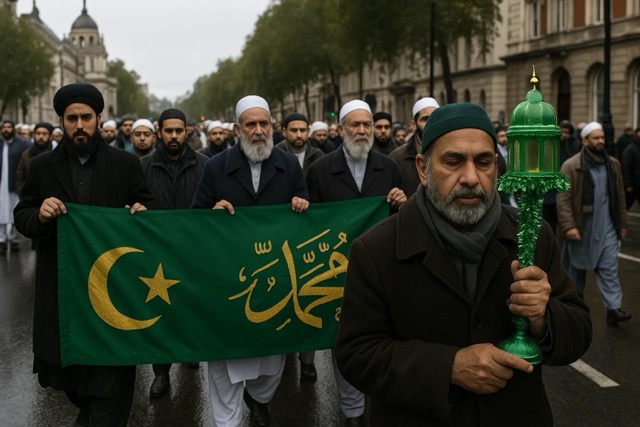
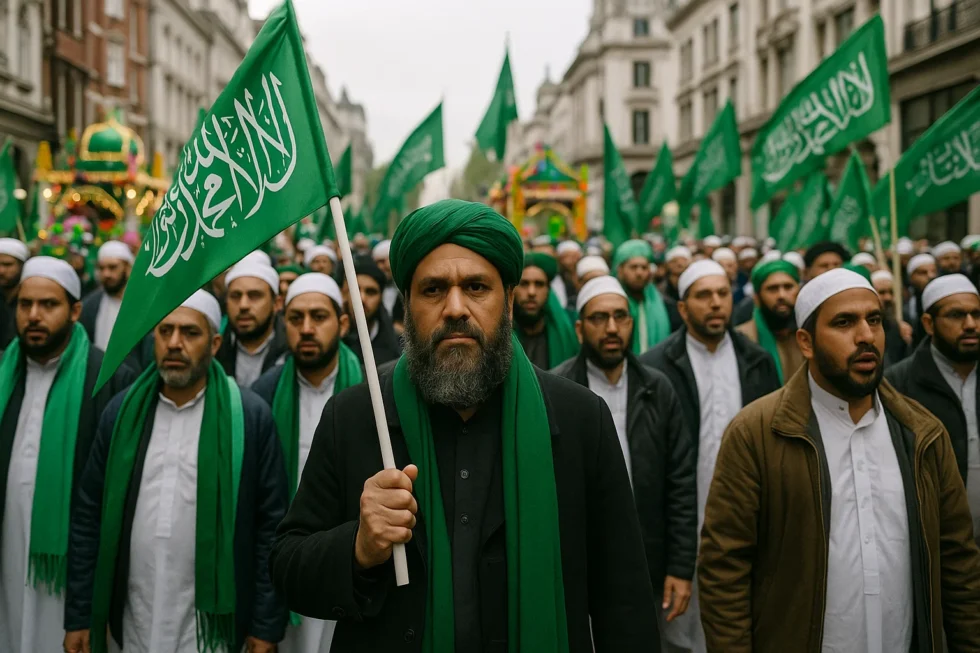
In London, Milad un-Nabi is marked by large public gatherings, mosque sermons and colourful processions, particularly in Whitechapel. Families prepare traditional South Asian sweets such as gulab jamun and halwa, which are shared with neighbours as an act of generosity. The East London Mosque organises poetry recitals, Qur’an readings and youth lectures about the Prophet’s life. In Northern Ireland, the celebrations are smaller but deeply symbolic, featuring open-door mosque evenings with recitations, exhibitions of Islamic art and community meals. Religious leaders underline the message of tolerance, often inviting church representatives to attend. These traditions illustrate how the Prophet’s birthday becomes an opportunity for wider dialogue across communities.
Quote:
“Milad un-Nabi is not only a reminder of our Prophet’s birth but of the moral values we must bring into British society — compassion, justice and peace,” says Sheikh Muhammad al-Hussaini, a London-based scholar.
Greetings and ways to participate
Greetings for Milad un-Nabi are exchanged in mosques, homes and online platforms. The most common phrase is “Eid Milad un-Nabi Mubarak”, often paired with prayers for peace, family well-being and unity. Digital messages have become increasingly popular, with WhatsApp and social media carrying devotional verses and calligraphy images. Schools with large Muslim populations often mark the day with storytelling and charity projects, helping children to understand its cultural importance. In Belfast and London, interfaith groups use greetings as a bridge to foster dialogue and solidarity. The combination of spoken blessings, online expressions and public programmes shows how tradition adapts to the digital and multicultural context of modern Britain.
Examples of greetings:
- “Eid Milad un-Nabi Mubarak — may peace and blessings be upon you.”
- “On this blessed day we remember the light of Muhammad and pray for unity.”
- “Wishing your family joy, health and reflection on the Prophet’s teachings.”
- “May this Mawlid inspire kindness and compassion across our communities.”
Ideas to celebrate in Britain
- Attend a lecture at the East London Mosque.
- Join a community procession in Whitechapel.
- Visit an Islamic art exhibition in London.
- Take part in food distribution projects.
- Listen to devotional nasheeds.
- Share greetings and prayers online.
- Attend interfaith gatherings in Belfast.
- Support local Muslim charities.
- Read a biography of the Prophet.
- Encourage children to learn Mawlid poetry.
Milad un-Nabi in Britain is not only a commemoration of the Prophet Muhammad’s birth; it is a reflection of how faith and culture adapt within a modern, plural society. In London’s bustling East End and Belfast’s quieter mosque halls, the day links history with present realities, turning devotion into dialogue and tradition into community action. At a time when questions of identity and belonging dominate public debate, Milad stands as a reminder that Britain’s strength lies in its diversity, and that spiritual celebrations can foster unity rather than division. The Prophet’s message of compassion, humility and justice continues to resonate — and on 6 September 2025, it finds renewed expression on British soil.
Read about the life of Westminster and Pimlico district, London and the world. 24/7 news with fresh and useful updates on culture, business, technology and city life: What Happened on 6 September in Westminster, Britain and the World