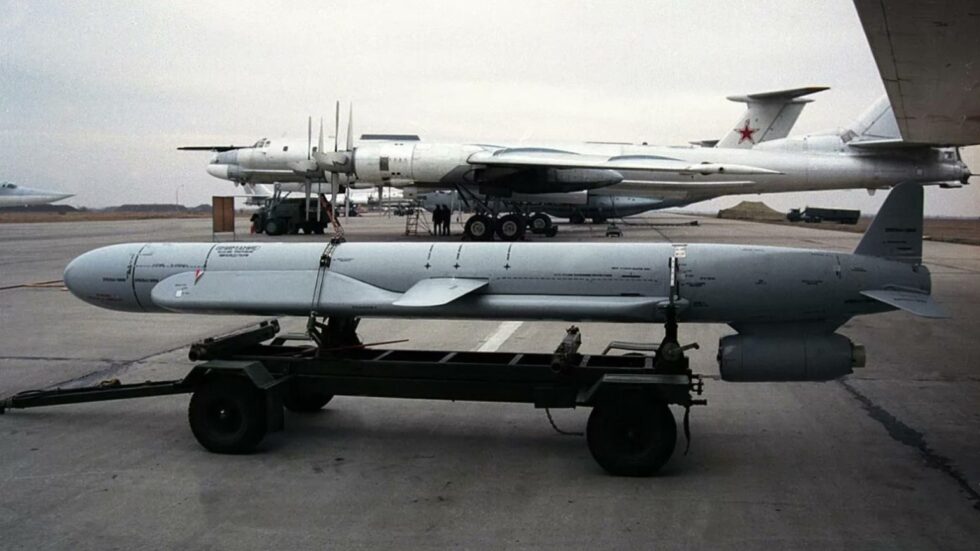
Russia is systematically using the Kh-101 air-launched cruise missile in its campaign against Ukraine, according to defence analysts and international investigators. The missile, carried by Tu-95MS and Tu-160 bombers, has become a symbol of Moscow’s long-range strike strategy: costly to produce, technologically advanced, yet often less precise than claimed. Despite sanctions and restricted access to Western parts, Moscow continues to manufacture the weapon and launch it against both civilian and military targets reported by The WP Times, citing renewz.de.
Development and technical specifications of the Kh-101
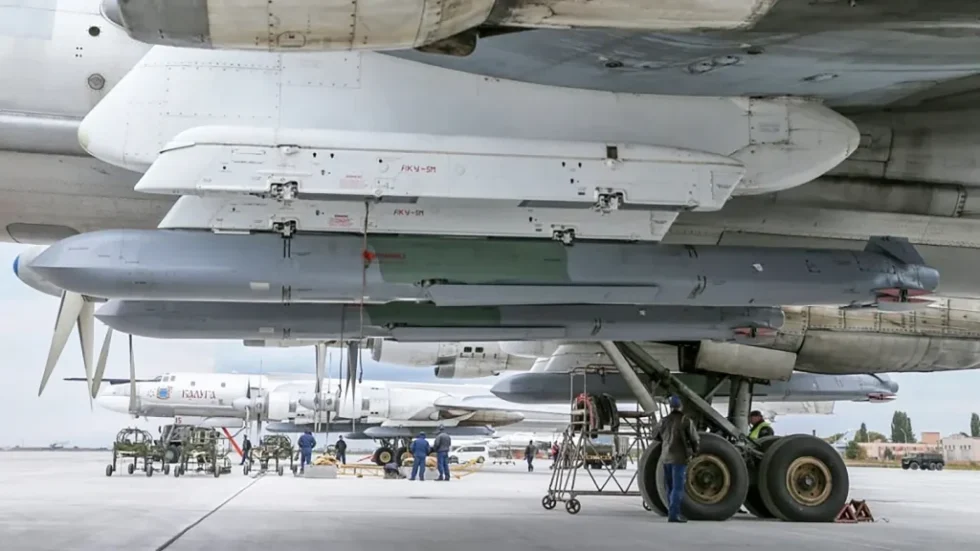
The Kh-101 was developed in the 1990s as a replacement for the Kh-55 and entered service in 2012. Its first combat use was recorded in Syria in 2015, when Russian bombers launched the missile against long-range targets. Designers sought to improve range and survivability, incorporating stealth features to make detection more difficult. Alongside the conventional Kh-101, a nuclear variant, the Kh-102, was produced with a warhead yield reported in the hundreds of kilotons. This dual capability places the missile family at the heart of Russia’s conventional and nuclear deterrence.
Technical data from open defence profiles describe the Kh-101 as 7.45 metres long, weighing about 2.2–2.4 tonnes, and carrying a warhead of roughly 400–450 kilograms. Its subsonic speed is estimated at 700–720 km/h, and its range varies between 2,500 and 4,500 kilometres depending on the variant. Guidance systems combine inertial navigation with GLONASS and electro-optical correction. Ukraine has identified multiple variants in use, including missiles with electronic countermeasures and cluster warheads. These modifications highlight an active adaptation of the design under wartime conditions.
Deployment in Ukraine and questions of accuracy
The missile’s effectiveness has been questioned. On 8 July 2024, a Kh-101 strike hit Kyiv’s Okhmatdyt children’s hospital, killing civilians and destroying part of the facility. The UN human-rights mission said there was a “high likelihood” the hospital was directly hit by a Russian missile, and investigators recovered missile fragments consistent with the Kh-101. Ukrainian officials report that roughly half of the Kh-101s fired are destroyed by air defence, a figure that improves with Western-supplied systems. In January 2025, Ukraine intercepted most of a barrage of more than 70 missiles, demonstrating the limitations of Russia’s precision-strike claims.
Russia routinely fires Kh-101s in mixed packages with drones and other missiles to saturate defences and complicate interception. These waves aim to compress defenders’ reaction time and deplete stocks of expensive interceptors. Analysts say the missile has become a key part of Russia’s long-range strike campaign, but its mixed performance undermines claims of surgical precision. For Ukraine, each Kh-101 that penetrates air defence poses a serious threat to civilian infrastructure. The pattern underscores the importance of continuous Western support for missile defence.
Costs, Western components and production capacity
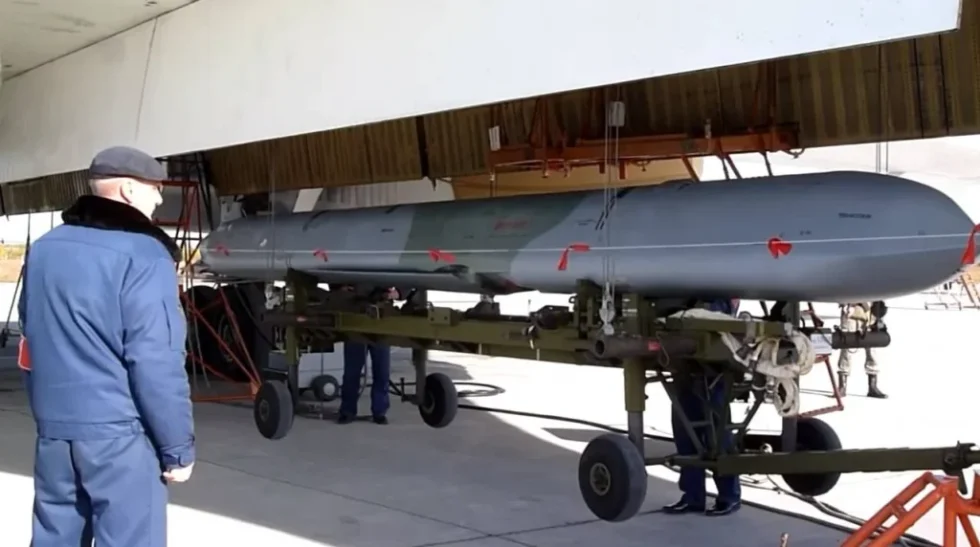
The Kh-101 is among the most expensive missiles in Russia’s arsenal, with Ukrainian sources estimating a unit cost of 10–13 million US dollars. By comparison, the widely used Kalibr cruise missile costs several times less. Independent investigations by RUSI, Bellingcat and the Financial Times have found Western-made microchips and electronic components inside Kh-101 wreckage, raising doubts about the effectiveness of sanctions. Ukrainian intelligence says up to 50 foreign parts can be found in each missile, often obtained through intermediaries in China. These findings underline the challenges of cutting Russia off from global supply chains.
According to Ukrainian military intelligence, Russia held around 300 Kh-101 missiles at the end of 2024, having started the war in 2022 with more than 440. Production continues despite constraints, with estimates of 40–50 missiles built monthly. Moscow fires many of them soon after manufacture, keeping stockpiles relatively low but sustaining strike capacity. Reports suggest the Kremlin aims to expand monthly output further in 2025, making the Kh-101 a regular feature of future bombardments. Analysts warn that every missile produced increases the threat to Ukrainian cities.
For Kyiv, the Kh-101 represents both a technical challenge and a political weapon. Its subsonic speed allows early detection, but waves of launches combined with drones make interception difficult. Ukrainian air defence claims success rates of up to 80 per cent, though these fall during saturation attacks. Western aid has become critical in maintaining such defences, with Patriot and SAMP/T systems proving particularly effective. For the international community, the Kh-101 illustrates how a single missile type embodies the contradictions of Russia’s war: technologically dependent on the West, ruinously expensive, and devastating for civilians.
Read about the life of Westminster and Pimlico district, London and the world. 24/7 news with fresh and useful updates on culture, business, technology and city life: Flamingo Missiles Hit Russian FSB Base in Crimea – Ukraine’s New Weapon Unveiled