
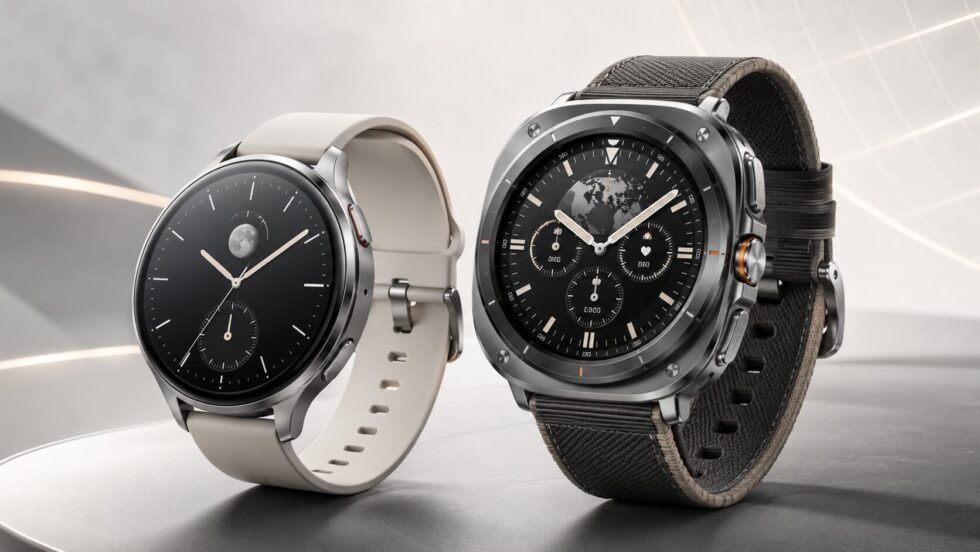
Samsung Galaxy Watch 9 and Samsung Galaxy Watch Ultra 2 are now moving from routine rumour cycle into a more serious pre-launch phase, after certification records and new software-sourced renders pointed to a smaller but more strategic smartwatch line-up for Samsung in 2026. The latest leaks suggest three important changes: no Galaxy Watch 9 Classic at launch, a more refined Ultra 2 design with thinner bezels and a boxier case, and a stronger push into AI health features, The WP Times reports.
The timing matters because Samsung is expected to use its July Unpacked event to present not only foldable phones but also its next wearables. For British buyers, the story is not just whether the new watch looks better. It is whether Samsung can make the Galaxy Watch line more competitive against Apple Watch, Garmin and Pixel Watch by improving battery life, standalone connectivity and health software without losing the familiar design language that made the Classic model popular.
Samsung Galaxy Watch 9 leaks suggest a cleaner line-up without the Classic model
The most striking detail in the latest leaks is not a new colour, a new face or a software animation. It is what appears to be missing. Current regulatory and leak-based evidence points to the Galaxy Watch 9 and Galaxy Watch Ultra 2, but not to a Galaxy Watch 9 Classic. That matters because the Classic line has traditionally been Samsung’s model for buyers who want a more traditional watch feel, especially the physical rotating bezel.
The reported FCC and CMIIT model numbers show the standard Galaxy Watch 9 in smaller and larger versions, alongside the Ultra 2 cellular model. The absence of a Classic model number does not legally confirm cancellation, because Samsung has not announced the line-up yet. But at this stage of the launch cycle, certification records are usually a strong signal that the hardware intended for sale is already close to final.
For users in the UK who were waiting for the rotating bezel to return, the message is therefore cautious but clear. A Classic comeback now looks less likely for the July launch. Samsung may be choosing a simpler split: a mainstream Galaxy Watch 9 for everyday users and a more expensive Galaxy Watch Ultra 2 for people who want stronger endurance, sport features and cellular independence.
| Expected model | What leaks suggest | Buyer meaning |
|---|---|---|
| Galaxy Watch 9 40mm | Standard smaller model, Wi-Fi/LTE variants expected | Best for compact wrists and daily health tracking |
| Galaxy Watch 9 44mm | Larger standard model, Wi-Fi/LTE variants expected | Better screen and likely better battery than 40mm |
| Galaxy Watch Ultra 2 | Premium cellular/rugged model | For sport, battery life and standalone use |
| Galaxy Watch 9 Classic | No clear certification sighting so far | Rotating bezel fans may have to wait |
Galaxy Watch Ultra 2 design changes point to refinement, not reinvention
The new Galaxy Watch Ultra 2 leaks suggest Samsung is not abandoning the Ultra idea after one generation. Instead, the company appears to be refining it. Renders reportedly show a boxier body, thinner bezels and a revised side button. The most visible design change may be the button: instead of a fully orange button, the new version may use an orange outline, which would make the watch look less aggressive and more premium.
That kind of change is important because the first Galaxy Watch Ultra divided opinion. Some users liked the bold sport-watch identity. Others thought the case looked too heavy or too experimental. If the Ultra 2 keeps the rugged character while reducing visual weight, Samsung could make the model more attractive to buyers who want a premium smartwatch but do not want something that looks too extreme.
Colour options also appear to be expanding or shifting. Leaks mention black, silver and beige as possible variants for either the Watch 9, the Ultra 2 or both. These colours would fit Samsung’s current strategy: black for sport and utility, silver for a more traditional watch look, and beige for buyers who want something softer and more lifestyle-focused.
What could change visually
The Galaxy Watch Ultra 2 may not need a dramatic redesign to become more convincing. Small design corrections can matter more on a smartwatch than on a phone because the object sits on the body all day. A thinner bezel makes the screen feel larger without increasing case size. A less bright side button can make the watch easier to wear with normal clothes. A cleaner case shape can make the Ultra model feel less like a first draft and more like a mature premium product.
Expected visual changes include:
- a boxier Ultra 2 case;
- thinner bezels around the display;
- a side button with orange outline rather than full orange colour;
- black, silver and beige colour options in the wider line-up;
- updated watch face and Samsung Health visuals in leaked software renders.
Samsung Galaxy Watch Ultra 2 battery and 5G could be the real upgrade
The most important Ultra 2 upgrade may not be cosmetic. Several reports point to a much larger battery, with one figure around 784 mAh. If accurate, that would be a major increase over the previous Galaxy Watch Ultra and would move Samsung closer to the endurance expectations of serious sport and outdoor users. Battery life remains one of the main reasons some buyers choose Garmin instead of a Wear OS watch.
The Ultra 2 is also linked to 5G RedCap, a reduced-capability form of 5G designed for smaller connected devices. This is not the same as putting a full smartphone-grade 5G modem into a watch. The point of RedCap is to offer better connectivity with lower power demands, making it more realistic for wearables. If Samsung uses it well, the Ultra 2 could become more useful without a phone nearby.
For UK users, the practical question will be network support. Even if the hardware supports 5G RedCap, the experience will depend on operator compatibility, eSIM support and Samsung’s final regional configuration. That is why buyers should treat early 5G claims carefully until Samsung and UK carriers confirm details.
| Feature | Why it matters | What remains unclear |
|---|---|---|
| Larger battery | Could improve multi-day use | Final capacity and real-life endurance |
| 5G RedCap | Better standalone connectivity | UK carrier support |
| Snapdragon Wear Elite | Faster AI and lower power use | Whether all models get it |
| Samsung Health redesign | Better health dashboard | Final feature list |
| No Classic model | Simpler product line | Whether Classic returns later |
Snapdragon Wear Elite may turn the Galaxy Watch into an AI health device
The Snapdragon Wear Elite platform is one of the most important technical clues behind the 2026 Galaxy Watch story. Qualcomm says the platform is built on a 3nm architecture and includes an NPU for on-device AI. It supports 5G RedCap, Bluetooth 6.0, UWB, GNSS and other connectivity features, while promising stronger performance and better battery efficiency than previous wearable chips.
For Samsung, this could change the role of the watch. The Galaxy Watch has long been a fitness and notification device. With stronger on-device AI, it could become a more personalised health assistant, capable of interpreting recovery, sleep, activity and context without constantly sending every task to the cloud. That is especially important for privacy, speed and battery life.
The unresolved question is whether both the Galaxy Watch 9 and the Ultra 2 will use Snapdragon Wear Elite, or whether Samsung will reserve the strongest chip for the Ultra 2. A split would make the Ultra model easier to justify at a premium price. A shared chip would make the standard Galaxy Watch 9 more attractive and could give Samsung a stronger answer to Apple and Google across the whole range.
Why the chip question matters for buyers
If only the Ultra 2 gets Snapdragon Wear Elite, buyers will need to decide whether AI features, 5G RedCap and battery performance are worth paying more for. If both watches get the same platform, the standard Watch 9 could become the smarter purchase for most people. That would leave the Ultra 2 to compete on battery, durability, screen size and outdoor positioning.
The chip also matters because Wear OS watches have often struggled with the balance between performance and endurance. Faster software is useful, but not if the watch needs charging too often. Samsung’s challenge is therefore not simply to make the watch more powerful. It must make the watch feel more reliable across two or three days of real use.
Samsung Health redesign shows where the software battle is moving
Leaked renders also point to a Samsung Health redesign and what appears to be a new watch face picker. This may sound minor, but the software layer is increasingly where smartwatch companies compete. Apple has strong health integration, Garmin has deep sport data, Google has Fitbit and AI ambitions, and Samsung needs a clearer identity inside that market.
A redesigned Samsung Health experience could make the Galaxy Watch 9 and Ultra 2 feel more serious for everyday health tracking. The key will be readability. A smartwatch is not a phone. Users glance at it while walking, exercising, commuting or waking up. If Samsung makes the health interface cleaner and faster to understand, the watch becomes more useful even without dramatic new sensors.
The possible watch face picker also matters because personalisation is part of the Galaxy Watch appeal. Samsung has a large user base that changes faces, complications and health widgets regularly. A simpler picker could make that experience less cluttered and more accessible, especially for users who are not technically confident.
What British buyers should watch before Samsung’s July event
The first thing to watch is whether Samsung confirms the July Unpacked date and whether the event includes UK pricing at launch. The second is whether the Galaxy Watch 9 Classic is truly absent. The third is whether the Ultra 2’s rumoured battery and 5G RedCap support apply globally or only to selected markets.
Price will be crucial. If Samsung raises the Ultra 2 price significantly, it will need to prove that the larger battery, premium design and AI-ready hardware offer more than a cosmetic upgrade. If the standard Galaxy Watch 9 keeps a more accessible price, it may become the better choice for most Android users in Britain.
The buying advice is therefore simple. Users who want a rotating bezel should not rush until Samsung confirms the final line-up. Users who want battery life and phone-free connectivity should watch the Ultra 2 closely. Users who simply want a good Android smartwatch for notifications, fitness and sleep tracking may find the Galaxy Watch 9 enough, especially if it receives the same software improvements.
FAQ: Samsung Galaxy Watch 9 and Galaxy Watch Ultra 2
Will there be a Samsung Galaxy Watch 9 Classic?
At the moment, the latest certification and leak evidence does not clearly show a Galaxy Watch 9 Classic. That does not equal an official cancellation, but it makes a July launch less likely. Samsung has not confirmed the final line-up.
When could Samsung launch the Galaxy Watch 9 and Ultra 2?
Reports point to a July 2026 Galaxy Unpacked event, with London mentioned in several leaks. Samsung has not yet officially confirmed every product detail for the watches.
What is the biggest Galaxy Watch Ultra 2 upgrade?
The biggest expected upgrades are battery capacity, possible 5G RedCap support, a refined design and stronger AI performance through Snapdragon Wear Elite. Final details still need official confirmation.
Should UK buyers wait for the Galaxy Watch Ultra 2?
Yes, if battery life, sport tracking and cellular independence matter. Buyers who only need daily notifications, sleep tracking and fitness basics may find the standard Galaxy Watch 9 more sensible.
Is Snapdragon Wear Elite confirmed for Samsung watches?
Qualcomm has listed Samsung among partners for Snapdragon Wear Elite, and the platform is strongly linked to Samsung’s next watches. The exact model split — Watch 9, Ultra 2 or both — still needs final confirmation from Samsung.
Read about the life of Westminster and Pimlico district, London and the world. 24/7 news with fresh and useful updates on culture, business, technology and city life: ASML denies China EUV claim as US scrutiny puts chip export controls under pressure