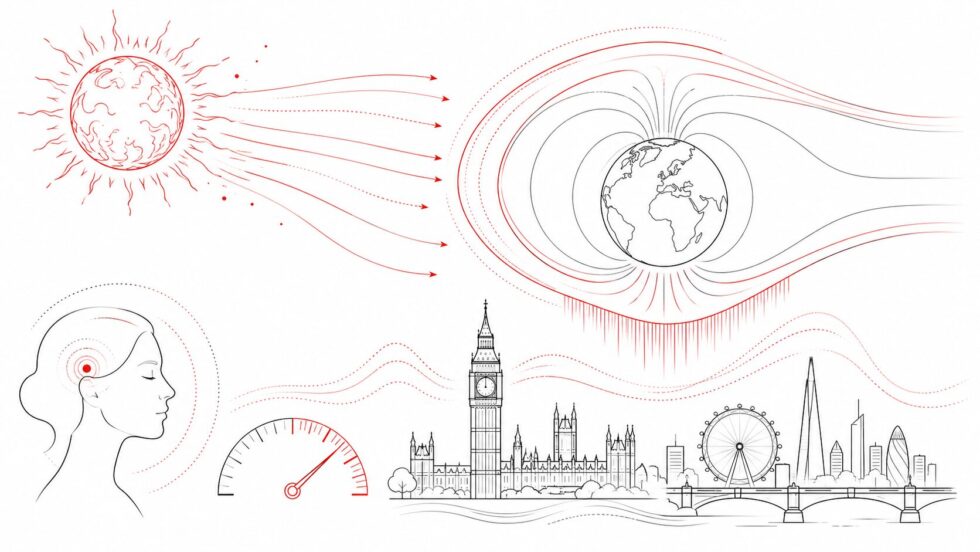
Solar storm on 26 June 2026 should be treated in London not as a confirmed “mega-storm”, but as a space-weather watch date that depends on real solar activity in the final 24–72 hours before impact. The latest picture is cautious: geomagnetic conditions may strengthen if a coronal mass ejection or faster solar-wind stream reaches Earth’s magnetic field, but there is no verified forecast showing an extreme event locked in for 26 June. For Londoners, the practical meaning is clear: follow updates in UK time, watch the Kp-index, do not expect guaranteed aurora over the capital, and do not mistake viral warnings for official space-weather forecasting, The WP Times reports.
The timing matters because solar storms are not forecast like ordinary rain on a calendar. A solar flare’s light reaches Earth in about eight minutes, but the charged plasma cloud that can trigger a geomagnetic storm usually takes roughly 15 to 72 hours to arrive, which means the most reliable forecast for 26 June will only become clear close to the day itself. If the Kp-index rises sharply and skies are dark and clear, aurora visibility may improve further north in the UK, while London would still need unusually strong conditions and low light pollution. For weather-sensitive people, the sensible approach is simple: protect sleep, reduce stress, stay hydrated, avoid panic-driven claims and check official space-weather updates during the day in London time.
What Is Actually Forecast for 26 June 2026
The short, honest answer is: an elevated chance of geomagnetic unsettledness, no more and no less. The date has gained traction online partly because of a genuine uptick in solar activity through June, and partly because of a separate, unscientific "solar flash" narrative that has nothing to do with measurable space weather.
The Sun has certainly been busy this month. An increase in geomagnetic activity was expected from 4 June owing to heightened solar activity, after a faint halo CME left the Sun on 3 June associated with an M9-class solar flare from a region near the centre of the Sun. A few days later the picture intensified again. By 8 June, the British Geological Survey expected a further increase in geomagnetic activity as another CME arrived, with G3 storm periods judged likely, giving Scotland, northern England and Northern Ireland the best chance of aurora.
By the solstice, though, things had quietened markedly. Over the days around 16–20 June, Earth's magnetic field stayed at quiet levels of Kp 1–2 with no geomagnetic storm conditions, as the Bz component kept Earth's magnetic shield firmly closed. That is the crucial context for any 26 June prediction: conditions can swing from G3 to quiet within a fortnight, so a fixed date is best read as a probability, not a promise.
Solar Flare, CME, Kp-Index: The Key Terms Explained
To make sense of the forecasts, it helps to get the vocabulary straight.
It all begins on the Sun. Solar flares occur when the Sun's magnetic field lines become stressed and break, causing massive explosions of energy that release charged particles — mainly protons and electrons — which hurtle through space at very high speeds. When a flare hurls a cloud of plasma outward, that cloud is a coronal mass ejection, or CME. When this energy reaches Earth and collides with our magnetosphere, it triggers geomagnetic activity, producing effects from colourful auroras and radio blackouts to satellite disruptions and even power-grid failures.
The single most important number in any forecast is the Kp-index. The Kp-index is a scale from 0 to 9 used to characterise the magnitude of geomagnetic storms, with a higher value indicating a stronger storm. For aurora-watchers in the UK, the threshold matters enormously. For stargazers, a Kp-index of 5 or higher is usually required to see the Northern Lights at lower latitudes such as the UK, whereas high-latitude regions like Iceland may need only Kp 2 or 3. SpaceinformerSpaceinformer
| Term | What it means |
|---|---|
| Solar flare | An intense burst of radiation from a sunspot, classed B, C, M or X |
| CME (coronal mass ejection) | A cloud of charged plasma flung from the Sun |
| Solar wind | A steady stream of charged particles from the Sun |
| Geomagnetic storm | A disturbance of Earth's magnetic field when plasma arrives |
| Kp-index | The strength measure, on a 0–9 scale |
| G-scale (G1–G5) | NOAA's classification of storm severity |
How Reliable Is the 26 June Forecast?
Here, candour is essential. Forecasters are very good at two things — and fundamentally unable to do a third.
They excel at short-range warning. While a flare's light reaches Earth in eight minutes, the CME itself takes between 15 and 72 hours to arrive, and this delay allows accurate solar-storm forecasts a day or two in advance. They are also reasonably good at medium-range modelling of incoming plasma, as the Met Office's rolling outlooks demonstrate. In its space-weather outlook, the Met Office noted no significant Earth-directed CMEs were expected, with only a minor glancing influence possible and geomagnetic activity likely to stay mainly quiet. SpaceinformerMet Office
What no observatory can do is fix a major storm to an exact calendar date weeks ahead. Even when a large event is genuinely brewing, the experts stress the limits of prediction. As BGS geomagnetic hazard specialist Dr Gemma Richardson put it during the November 2025 storm, it is not possible to say with certainty exactly how big a storm will be, and solar storms can reach Earth in as little as 17 hours or take considerably longer. British Geological Survey
For 26 June, then, treat the date as a flagged window of possible unsettledness — and check the live data a day or two beforehand for the real picture.
Why 2026 Is an Active Solar Year
The reason magnetic storms keep making news has a solid astronomical basis: the Sun runs on an roughly eleven-year activity cycle, and we are near its peak. In 2026 we are approaching solar maximum, the period in the Sun's eleven-year cycle when activity is at its peak, meaning more sunspots, more frequent flares and a significantly higher probability of intense Northern Lights displays.
That heightened backdrop has already produced dramatic events. In November 2025 the BGS upgraded its forecast to the highest intensity level during an ongoing "cannibal storm", warning that a second storm feeding off the first could become potentially the largest to hit Earth in over two decades, with the potential to reach G5 on the NOAA scale. Episodes like that confirm the cycle is real — even if not every flagged date turns out to be spectacular.
What a Strong Storm Can Do to Technology
Before turning to health, it is worth noting the technological consequences, which are scientifically well established rather than speculative.
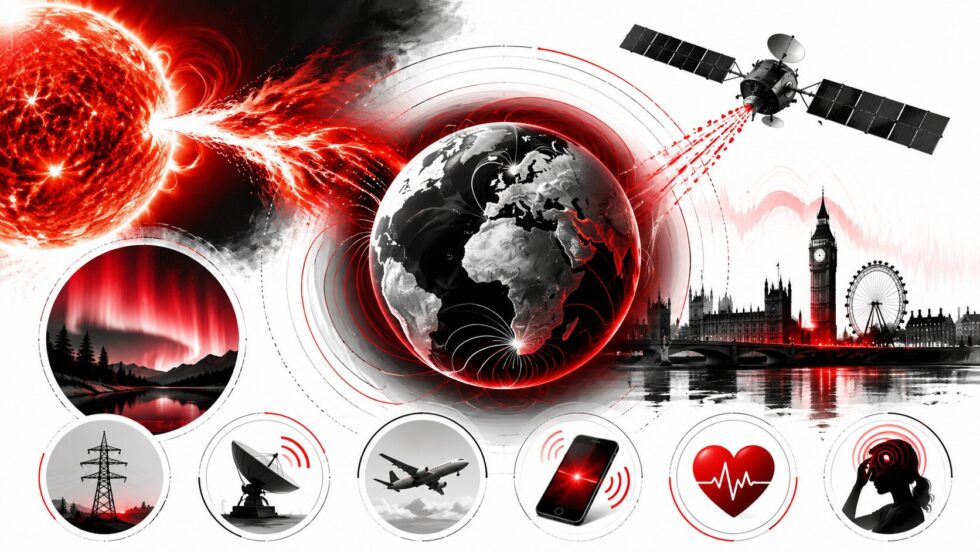
A powerful storm reaches well beyond pretty lights in the sky. Intense geomagnetic activity can disrupt technology such as communication systems, global positioning systems and satellite orbits, and the November 2025 event had already disrupted communications and GPS accuracy. The list of affected sectors is broad. NOAA's Space Weather Prediction Center serves communities spanning aurora, aviation, electric power, emergency management, GPS radio communications and satellites. British Geological SurveyNOAA Space Weather Prediction Center
The good news for Londoners is that a moderate storm — the realistic ceiling for late June — does not threaten everyday life. At most, residents might notice minor GPS inaccuracies, with serious infrastructure impacts reserved for the rare, severe G4–G5 events.
Will London See the Aurora?
This is the question many readers care about most, and the geography demands honesty. London sits at roughly 51.5° north — well south of the prime aurora zone — so the bar for visibility from the capital is high.
The latitude rules of thumb make this clear. At Kp 5, aurora could reach as far as Edinburgh and the Scottish Highlands, though the brief summer nights at these latitudes severely limit any viewing window. In practice, even when the rest of the UK gets a show, the advantage lies firmly in the north. When G3 storm periods were likely on 8 June, it was observers in Scotland, northern England and Northern Ireland who had the best chance, assuming clear, dark skies. EarthSkyBritish Geological Survey
There is a second, season-specific obstacle that London-based aurora hopefuls should understand. Celestial geometry is unhelpful around the June solstice: the angle at which Earth sits relative to the Sun does not favour auroral displays at this time of year, the opposite of the favourable angle around the equinoxes. Combined with the capital's heavy light pollution and the very short hours of true darkness in late June, the realistic verdict is that London is highly unlikely to see the aurora on the 26th — and anyone determined to try would be far better heading well north, away from city lights, with a clear northern horizon. EarthSky
Solar Storms and Health: Sorting Fact from Hype
Now to the topic that concerns most readers: can a magnetic storm actually affect the body? This calls for careful distinction.
The relationship is not fully proven scientifically, yet it is widely discussed. Many weather-sensitive people report changes in how they feel around active days — most commonly tiredness, headaches, disturbed sleep and a sense of being "on edge". The crucial point is that such symptoms are subjective and have many possible causes: summer heat, stress, poor sleep, a change in the weather. No one should treat a flagged storm day as a medical diagnosis.
That said, taking sensible precautions costs nothing and may help regardless of the true cause. If you regularly notice you feel out of sorts on particular days, treating a flagged date as a cue for a gentler routine is entirely reasonable — and it does no harm if your symptoms turn out to stem from something else entirely.
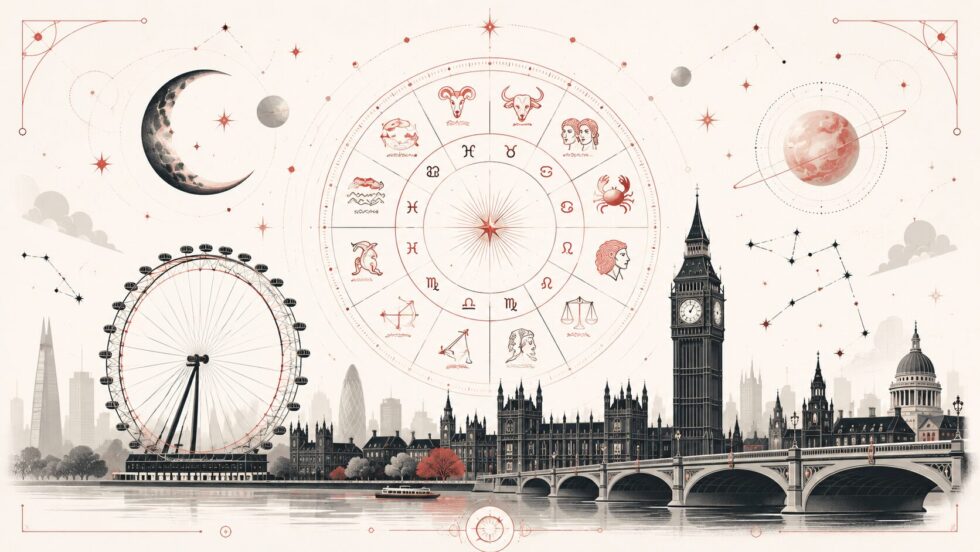
It is also worth firmly separating the real science from the online "solar flash" mythology attached to the date 26.6.26. That narrative — a supposed global "reset" or consciousness event — comes from numerology and astrology, not from any scientific institution, and bears no relation to measurable solar activity. Readers who encounter dramatic end-times claims in the coming days can set them aside with confidence.
Symptoms Frequently Reported
From the accounts of weather-sensitive people, a handful of recurring complaints emerge. These are commonly reported sensations, not confirmed medical conditions.
- Sleep disturbance: Difficulty dropping off and restless nights are among the most frequently mentioned.
- Headaches and head pressure: A dull, heavy feeling is often described on active days.
- Fatigue: Feeling less capable despite adequate sleep.
- Circulatory niggles: Light-headedness or a sense of the blood pressure being unsettled.
- Irritability and restlessness: A certain "thin-skinned" edginess.
Why Sleep Tends to Suffer Most
Of all the reported effects, sleep stands out — and there is a plausible logic to it. The human sleep–wake rhythm is sensitive to external cues, from light and temperature to subtle environmental shifts. On flagged days, many people report struggling to settle, whether that owes to the magnetic field itself or simply to heightened anticipation and general tension is, in any individual case, almost impossible to disentangle. What is certain is that poor sleep amplifies nearly every other complaint, from headaches to irritability — so anyone who protects their sleep on a flagged day is doing themselves a favour whatever the underlying cause.
How Sensitive Londoners Can Prepare for 26 June
The most effective approach is reassuringly low-key: a calm, considered relationship with one's own body. For the 26th, the following steps are sensible:
- Keep regular sleep hours. Bed at the usual time, with the bedroom cool and dark — and in high summer, proper blackout helps enormously.
- Avoid overexertion. If you tend to feel the effects, save the punishing workout or the long ride for another day.
- Stay well hydrated. On a warm late-June day, good hydration supports the circulation entirely independently of any magnetic field.
- Reduce stress. A gentler schedule, short breaks and deliberate downtime can markedly lower the felt burden.
- Watch for warning signs if you have a heart or circulatory condition. Anyone with relevant pre-existing conditions should seek medical advice if in any doubt.
None of these measures harms anyone — and they help all the more if the symptoms have causes other than the Sun.
Where to Find Reliable Real-Time Data
Anyone who wants to check the situation for themselves on 26 June, rather than rely on rumour, has excellent tools. The authoritative UK sources are the Met Office and the British Geological Survey, alongside NOAA in the United States.
The BGS runs a dedicated alert service. The British Geological Survey examines solar activity daily and forecasts whether it is likely to have a geomagnetic effect on Earth, issuing a geomagnetic storm forecast if a large magnetic storm looks possible in the next few days; the public can sign up for forecast emails or follow its space-weather and aurora-alert accounts. The Met Office publishes a rolling space-weather outlook, and live solar-wind and Kp data are available from NOAA. A day or two before the 26th, these sources will give the most reliable picture — far better than any weeks-old date prediction.
The Balanced View: Fascination with a Cool Head
Solar storms are a genuinely captivating natural phenomenon, deserving respect but not alarm. The technological risks are real, yet they fall mainly on infrastructure rather than directly on the individual on the street. The health effects are not conclusively proven, but they are worth taking seriously for sensitive people.
For 26 June 2026, then, the watchword is awareness, not anxiety. Keep an eye on the official UK data, take the simple precautions — good sleep, no over-exertion, plenty of fluids, less stress — and the odds are you will pass through any geomagnetic unsettledness without trouble. And if you happen to be far enough north under clear skies, you might even be rewarded with the finest gift a solar storm has to offer: a glimpse of the Northern Lights.
Frequently Asked Questions
Is a solar storm definitely coming on 26 June 2026?
No — nothing is certain. The 26th is flagged as a window of possible heightened activity, but a precise, guaranteed storm weeks ahead is scientifically impossible. Check the live data a day or two before.
Will I see the aurora in London?
Almost certainly not on the 26th. London is too far south, the June solstice angle is unfavourable, and the capital's light pollution and very short nights all work against it. You would need a strong storm and a trip well north.
Can a magnetic storm harm my health?
There is no proven direct harm to healthy people. Weather-sensitive individuals report tiredness, headaches and disturbed sleep, and those with heart or circulatory conditions should stay alert and seek medical advice if concerned.
What is the "solar flash" on 26.6.26?
Nothing scientific. It is an online narrative drawn from numerology and astrology, entirely separate from real, measurable solar activity.
Where can I check reliable forecasts?
The Met Office space-weather outlook, the British Geological Survey alert service and NOAA's Space Weather Prediction Center all provide trustworthy data and short-range forecasts.
At what Kp value does a storm begin?
At Kp 5. The scale runs from 0 (calm) to 9 (severe disturbance); values below 5 count as quiet-to-unsettled geomagnetic activity.
Read about the life of Westminster and Pimlico district, London and the world. 24/7 news with fresh and useful updates on culture, business, technology and city life: House of the Dragon season 3: HBO turns the Targaryen war into its biggest test yet