
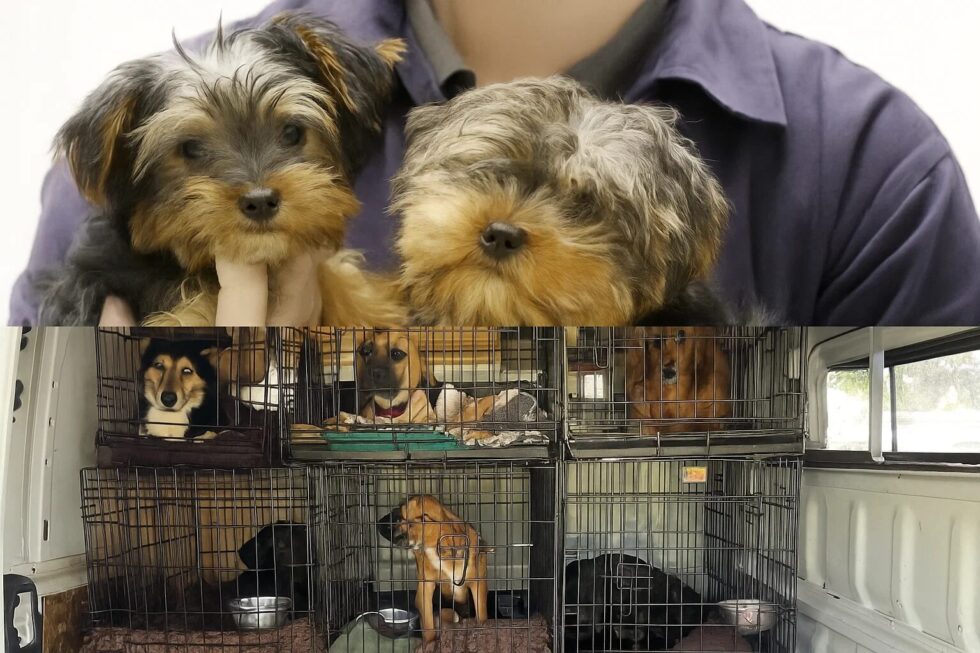
The United Kingdom Parliament has successfully enacted a new law designed to combat the illegal smuggling of puppies and kittens into Great Britain, following two previous unsuccessful legislative attempts. Animal welfare organizations are hailing the measure as a significant turning point in the fight against illicit pet trade. The legislation focuses on raising the minimum age for imported young animals and prohibiting the import of dogs subjected to cosmetic mutilations like ear cropping and tail docking. This move, made possible after the UK's departure from the European Union allowed for unilateral changes to import regulations, addresses a persistent problem highlighted by incidents such as the seizure of two tiny Yorkshire Terriers, named Pip and Squeak by the Dogs Trust, at the Port of Dover in September 2025. These seven-week-old puppies had endured a harrowing 26-hour journey from Slovakia, packed in a box with minimal access to necessities. Katie Bryan, the charity’s Rehoming Coordinator, noted that the animals were "shut down and a little wary," clearly suffering behavioral issues from being separated from their mother too early and lacking socialization skills. Enforcement teams regularly intercept underage animals, often imported with fraudulent documentation, microchips containing false details hidden in collars, or falsely labeled as personal pets, reports The WP Time with reference to BBC.
The core measure of the new legislation is the increase of the minimum import age for puppies and kittens into Great Britain from 15 weeks to six months. The Animal and Plant Health Agency (APHA) believes this change will significantly simplify the process of identifying underage animals and act as a crucial "blocker" on the trade, as older puppies are less desirable to many buyers than younger ones. However, the legislation has sparked concerns among some specialized canine groups. Rosemary Kind, who chairs the Entlebucher Mountain Dog Club of Great Britain, warned that requiring puppies to remain abroad until six months old is impractical and substantially increases the cost, citing the necessity of importing young dogs to maintain a healthy and viable gene pool for their breed, which has only about 150 individuals in the UK. She stressed that these imports come from responsible breeders, not "puppy farms," and keeping the dogs for six months is a "big ask." She is working with The Kennel Club to seek potential exemptions for specialist breed puppies.
Furthermore, the new law introduces a ban on importing dogs of any age that have undergone ear cropping or tail docking, procedures that are illegal in the UK. Lib Dem MP Danny Chambers, who championed the legislation through Parliament and previously worked as a vet, stated that he frequently encountered the results of ear cropping, warning that the procedure, often performed without anesthetic, causes infections and severe behavioral problems, as it hinders the dog's ability to communicate using body language. Louise Nicholson Hume, who adopted a Cane Corso named Betty whose ears and tail were cropped in Romania before she was seized at Dover, attested to the dog being "absolutely terrified" upon arrival. Conversely, the import ban for mutilated dogs has raised concerns among rescue organizations. Linda Demetriou, who runs Stronger Together Animal Rescue focused on rescuing dogs from Cyprus, argues the ban will prevent her from helping abused dogs already mutilated abroad, urging for exemptions for rescue animals to prevent them from living out their lives in a cage. Animal welfare charities like the RSPCA oppose such carve-outs, fearing they would be exploited by smugglers. David Bowles from the RSPCA noted that traffickers often use the excuse of recent import to avoid prosecution for illegal ear cropping performed within the UK, an excuse the ban would eliminate. The UK government is currently collaborating with the devolved administrations in Scotland and Wales to finalize additional necessary legislation and regulations, which will determine any potential exemptions. As for Pip and Squeak, the two Yorkshire Terriers at the start of the story, they found their happy ending and were rehomed under their new names, Elsa and Skye.
Read about the life of Westminster and Pimlico district, London and the world. 24/7 news with fresh and useful updates on culture, business, technology and city life: Holocaust Survivors Demand Farage Apologize for Alleged Antisemitic Remarks at School