
In the high-pressure world of 2026 fitness culture, we are often bombarded with the message that weight loss is a grueling battle of willpower—a mathematical war fought with calorie counters and restrictive lists. However, a revolutionary shift in nutritional psychology is revealing a startling truth: the hardest path to a healthy weight may actually be the one that forbids pleasure. When we categorize foods as "sinful" or "off-limits," we trigger a biological stress response that elevates hunger hormones and slows metabolism.
By reintroducing the concept of "mindful indulgence," individuals are finding that they can stabilize their weight more effectively than those on rigid, joyless regimens. This approach doesn't just save your sanity; it chemically recalibrates your body to feel satisfied with less, turning the act of eating back into a source of nourishment rather than a source of anxiety, reporting for The WP Times via bbc.
The Science of Satiety: Why Your Mind Rules Your Metabolism
The connection between the brain and the gut is a two-way highway that dictates how many calories you actually burn versus how many you store. Research in 2026 has confirmed that the "expectancy effect" is just as powerful as the nutritional content of the food itself. If you eat a salad while feeling deprived and resentful, your brain refuses to lower your ghrelin levels (the hormone that makes you feel hungry).
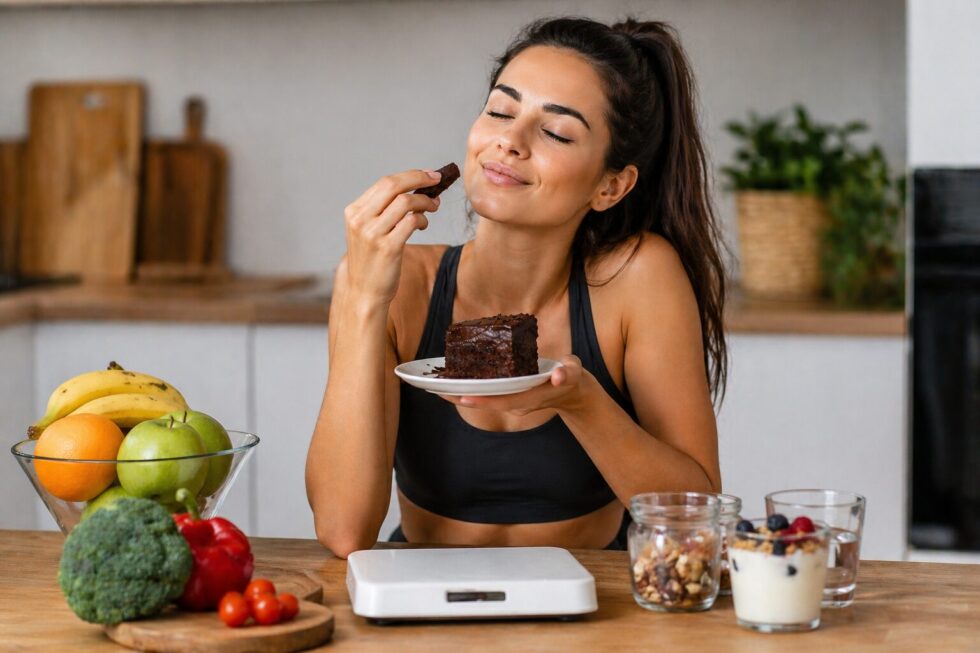
Conversely, if you enjoy a small piece of high-quality chocolate with a sense of celebration, your brain signals a "state of abundance," which allows your metabolic rate to remain high. This biological reality means that "dieting" in the traditional sense can actually be a form of metabolic sabotage.
For the modern professional in 2026, understanding this neurobiological link is the first step to escaping the "yo-yo" dieting cycle. When the brain perceives scarcity, it activates a primitive survival mechanism that prioritizes fat storage.
This is why many people find that after weeks of strict restriction, their weight loss plateaus. The body is effectively "clutching" onto its energy reserves because it doesn't trust that more pleasure or nutrients are coming. By incorporating planned, mindful treats, you send a signal of safety to your central nervous system, which in turn permits the body to release stored energy more freely.
| Psychological State | Dominant Hormone | Metabolic Effect | Long-term Outcome |
| Deprivation/Guilt | Cortisol & Ghrelin | Fat storage increased | Binge eating & stagnation |
| Indulgence/Joy | Dopamine & Leptin | Energy expenditure rises | Sustainable maintenance |
| Stress (Calorie Counting) | Adrenaline | Muscle catabolism | High "rebound" weight gain |
| Mindful Satisfaction | GLP-1 | Natural appetite control | Consistent weight loss |
The Ghrelin Paradox: Lessons from the "Indulgent Shake" Study
The most significant evidence for the "mind-over-matter" approach comes from a landmark study conducted by Dr. Alia Crum. Participants were given two different shakes: one labeled "Sensible" (advertised as 140 calories) and one labeled "Indulgent" (advertised as 620 calories). In reality, both were identical 380-calorie shakes.
The physiological results were undeniable: those who believed they were indulging experienced a dramatic, steep drop in ghrelin, while those who thought they were being "sensible" stayed biologically hungry. Their bodies literally did not "register" the calories because their minds were convinced they hadn't eaten enough.
This study has massive implications for how we label our food in 2026. If you constantly buy "low-fat," "lite," or "zero-sugar" versions of your favorite snacks, you might be accidentally keeping yourself hungry. The brain sees these labels and prepares for a "light" experience, refusing to trigger the hormonal cascade required for fullness.
As an expert tip, try removing the "diet" versions of food from your pantry. Instead, opt for a smaller portion of the "real" version. The psychological satisfaction of the full-fat, full-flavor original often leads to eating fewer total calories throughout the day because the "hunger switch" is actually turned off.
Breaking the "Heavy Metal" Cycle of Ultra-Processed Foods
Professor Ashley Gearhardt of the University of Michigan famously compares modern ultra-processed foods to a "heavy metal concert"—they are so loud and intense that they drown out your body's subtle "classical music" of natural satiety. These foods are specifically engineered to bypass your brain's "stop" button using a precise combination of salt, sugar, and fat.
In 2026, the focus has shifted from counting calories to "lowering the volume" of your food environment. By moving toward whole foods and using small amounts of real, intense treats, you retrain your palate to hear the signals that tell you when you've had enough.
Ultra-processed foods create a "blunting" effect on the dopamine receptors in the brain. This means that over time, you need more and more of the "junk" food to feel the same level of pleasure. To combat this, nutritional experts recommend a "palate reset." By focusing on high-quality, single-ingredient treats—like a fresh peach, a handful of toasted pecans, or artisanal cheese—you begin to recalibrate your brain's reward system. In 2026, we are seeing a trend toward "slow food" indulgence, where the quality of the ingredient provides the satisfaction that used to be sought through sheer quantity of processed sugar.
Steps to "Lower the Volume" of Your Diet:
- Identify "Loud" Foods: Notice which snacks you eat without tasting.
- The 3-Bite Rule: Truly taste the first three bites of any treat; if the pleasure fades, stop.
- Upgrade Quality: Swap a bag of cheap sweets for one high-quality piece of dark chocolate.
- Remove Distractions: Never eat "loud" foods while watching TV or scrolling.
- Prioritize Texture: Crunchy and creamy natural textures satisfy the brain more than mushy processed ones.
The Guilt Gap: Why Shame is the Enemy of a Lean Body
One of the most destructive emotions for anyone trying to manage their weight is guilt. In a famous study, participants who associated chocolate cake with "guilt" were significantly more likely to gain weight over the following 18 months compared to those who associated it with "celebration." Guilt triggers the release of cortisol, which is a primary driver of visceral (belly) fat storage.
When you remove the shame from eating, you remove the stress response that causes your body to hold onto every calorie. In 2026, experts are teaching "guilt-free indulgence" as a legitimate clinical strategy for long-term metabolic health.
When we feel guilty, we often enter a "last supper" mentality. We think, "I've already ruined my diet with this cookie, so I might as well eat the whole box and start again Monday." This binary thinking (being either "on" or "off" a diet) is the root of most weight-loss failures. By viewing a treat as a planned, joyful part of your lifestyle, you eliminate the "failure" narrative. In 2026, successful weight management is about consistency over perfection. If a treat is part of the plan, it cannot be a "cheat," and therefore it cannot trigger the spiral of shame-based overeating.
The Power of Labeling: How Your Vocabulary Affects Your Waistline
The words we use to describe our meals in 2026 have been shown to impact our physical digestion. Studies indicate that describing a meal as "rich," "zesty," or "filling" actually improves the release of digestive enzymes compared to calling it "low-fat" or "lite." The brain prepares the stomach for nutrient absorption based on the descriptions we provide.
For those seeking weight loss, the advice is now to describe your healthy food in the most indulgent, mouth-watering terms possible. "Roasted, honey-glazed carrots with cracked black pepper" sounds (and acts) much more satisfying to the brain than "boiled carrots."
This "linguistic seasoning" is a practical tool you can use every day. When you sit down to eat, take a moment to describe the meal to yourself or your partner in indulgent terms. This primes your cephalic phase of digestion—the stage where the brain signals the stomach to start producing acid and enzymes. By elevating the perceived value of your food, you increase the biological satisfaction it provides. In 2026, the most effective "dieting" technique might simply be an expanded culinary vocabulary that treats every meal as an event.
Indulgent Vocabulary Swaps:
- Instead of "Healthy" $\rightarrow$ Use "Nourishing"
- Instead of "Light" $\rightarrow$ Use "Refreshing"
- Instead of "Low-Calorie" $\rightarrow$ Use "Vibrant"
- Instead of "Diet" $\rightarrow$ Use "Artisanal"
- Instead of "Plain" $\rightarrow$ Use "Pure"
Genetic Satiety and the Placebo Effect of Fullness
Perhaps the most mind-bending discovery of the mid-2020s is that even our genes can be "tricked" by our mindset. In experiments where participants were told they had a "fullness gene" (even if they didn't), their bodies produced significantly more GLP-1—the hormone that modern weight-loss drugs mimic. This suggests that a strong belief in your own ability to feel satisfied can physically alter your hormone profile. Developing a "satiety mindset" is becoming a standard part of medical weight management in 2026, proving that the brain is the ultimate pharmacist for the body.
This doesn't mean you can "think" your way into a smaller dress size while eating only pizza, but it does mean that your mental state while eating whole foods determines how effective those foods are at keeping you full. If you eat a high-fiber, high-protein meal while worrying about your weight, you may bypass the satiety signals entirely.
To activate your internal "GLP-1" response, you must be present. The modern recommendation is "The Five Senses Check" before every meal: notice one thing you can smell, one you can see, one texture you can feel, one sound (the crunch), and finally, the taste. This grounded presence is the key to unlocking your genetic potential for satiety.
Practical Implementation: The 2026 "Mindful Indulgence" Protocol
To turn this theory into practice, you need a structured approach. Sustainable weight loss in 2026 isn't about what you remove from your life, but how you integrate pleasure. The goal is to move away from impulsive eating toward intentional eating.
When you decide to have a treat, make it a high-quality one and give it your full attention. This ensures that the "reward" center of the brain is fully satisfied, reducing the urge to graze later in the evening.
The Expert Routine for Savoring Treats:
- Selection: Choose the best version of your craving (e.g., a bakery croissant, not a supermarket one).
- Environment: Sit down. Remove your phone. Use a real plate and cloth napkin.
- The First Bite: Close your eyes. Notice the temperature and the way the flavor evolves on your tongue.
- The Halfway Point: Stop for 30 seconds. Check in with your body. Are you still deriving the same level of pleasure?
- The Completion: When you finish (or stop), acknowledge the satisfaction. Tell yourself, "That was delicious and exactly what I needed."
Frequent Questions
Can I really lose weight by eating treats every day?
Yes, if they are planned and eaten mindfully. Incorporating small, high-quality treats prevents the psychological "pressure cooker" effect that leads to massive binges and metabolic stress.
Why does my hunger increase when I start a "clean" diet?
This is often the "expectancy effect." If your brain perceives the diet as a period of famine, it will spike your ghrelin levels to force you to find high-energy food.
What is the best way to handle a sudden sugar craving?
Acknowledge it without judgment. Try to find a "whole food" version first (like fruit), but if the craving persists, have a small portion of the real thing and savor it completely.
Is counting calories a bad idea?
For many, it creates a "restriction mindset" that leads to stress. In 2026, many experts recommend "intuitive eating" or "habit tracking" as more sustainable and less stressful alternatives.
How does cortisol affect my weight?
High cortisol levels from stress or guilt tell your body to store fat around your organs and increase your appetite for high-sugar, "comfort" foods.
What are the best "mindful" treats for weight loss?
High-quality dark chocolate, Greek yogurt with honey and nuts, or fresh berries with a splash of heavy cream. These offer high sensory satisfaction and real nutrients.
Read about the life of Westminster and Pimlico district, London and the world. 24/7 news with fresh and useful updates on culture, business, technology and city life: Which Airlines Are Cancelling UK Flights in 2026? Essential Travel Guide, Rights and Price Updates