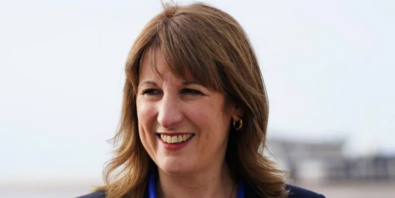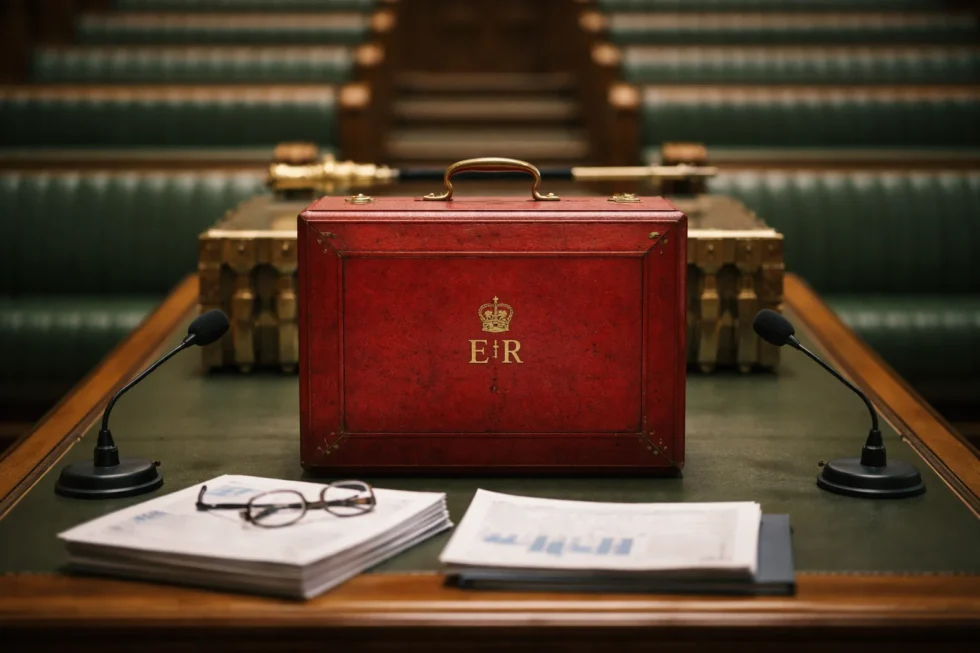
The Spring Statement 2026 was delivered by Chancellor Rachel Reeves as an economic update rather than a full Spring Budget 2026, yet its implications extend beyond Westminster to households, businesses and financial markets across the UK. As reported by BBC, Reeves set out her case that the government’s economic strategy remains on track despite what she described as an “uncertain” global environment. She pointed to geopolitical tensions, volatility in energy markets and slower domestic growth as key pressures shaping the revised forecasts.
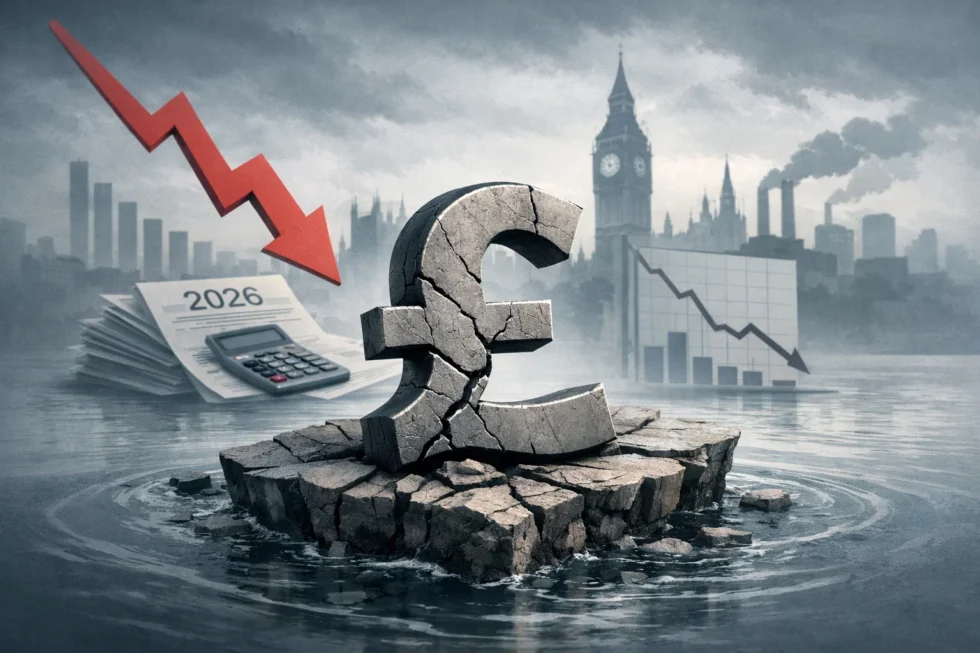
The WP Times reports this, citing the BBC, noting that updated projections from the Office for Budget Responsibility show a downgraded growth outlook for 2026. While the Chancellor insisted that “this government has the right economic plan for our country,” the revised figures have intensified debate over the pace of recovery and the likelihood of further fiscal adjustments in the autumn budget cycle.
Updated OBR forecasts: growth, inflation and unemployment
Central to the Spring Statement 2026 were the revised projections from the OBR. The watchdog lowered the UK growth forecast for 2026 to 1.1%, with the following trajectory:
| Year | UK GDP Growth Forecast | Unemployment Rate | Inflation Target Outlook |
|---|---|---|---|
| 2026 | 1.1% | Peak at 5.3% | 2% target later in year |
| 2027 | 1.6% | Gradual decline | Stabilising |
| 2028 | 1.6% | Falling trend | Around target |
| 2029 | 1.5% | 4.3–4.2% | Stable |
| 2030 | 1.5% | 4.1% | Anchored near 2% |
The OBR stated that unemployment is expected to peak at 5.3% in 2026, before gradually declining to 4.1% by 2030. For those asking what that means in practical terms: it suggests a softening labour market this year, potentially fewer vacancies and slower wage growth, followed by gradual recovery.
Inflation is projected to return to the government’s 2% target later in 2026, a key claim Reeves emphasised in her speech. Independent verification points out that inflation has indeed fallen from its post-energy crisis highs, though external energy shocks remain a risk. Notably, the OBR clarified that its projections do not fully account for potential long-term impacts of renewed Middle East tensions on global energy prices. It warned such developments “could have very significant impacts on the global and UK economies.”
Reeves’ argument: stability in an uncertain world
Throughout the Spring Statement, Rachel Reeves framed her economic approach around “stability” and “discipline”. The emphasis was on avoiding sudden fiscal shifts while maintaining investor confidence. Reeves said: “In an uncertain world, stability is not a luxury — it is a necessity.”
Her argument rests on three pillars:
- Maintaining fiscal credibility with markets.
- Gradually reducing debt as a share of GDP.
- Avoiding unfunded tax cuts or major spending increases.
This contrasts with past periods of volatility in UK fiscal policy, and the Chancellor positioned her approach as measured and cautious. However, economic commentators note that slower growth complicates the public finance outlook. As BBC analysis highlighted, if revenues underperform expectations, there may still be pressure for tax rises or spending adjustments in the autumn Spring Budget.
What Mel Stride said and the youth unemployment debate
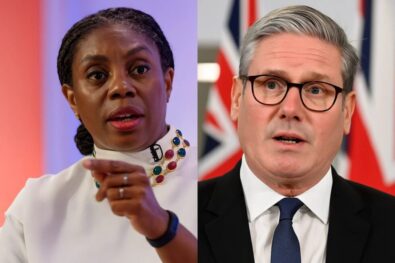
The political response to the Spring Statement 2026 was immediate. Shadow chancellor Mel Stride argued that the UK’s youth unemployment rate was “the highest in Europe for the first time in a quarter of a century,” framing the labour market picture as evidence of economic underperformance.
The claim requires careful scrutiny. According to the latest comparable data from the OECD covering July to September 2025, 13 individual European countries recorded higher youth unemployment rates than the UK over that period. These included economies such as Spain, Italy and Romania. The UK youth unemployment rate stood at 15.3%, which was slightly above the EU-27 average of 15.2%, but not the highest in Europe.
More recent figures from the Office for National Statistics show that youth unemployment in the UK increased further to 16.1% in the October–December 2025 period. However, fully comparable EU-wide data for the same timeframe have not yet been published, making definitive cross-European ranking premature. The disagreement illustrates how labour market statistics can be presented differently depending on the benchmark used — EU average, selected European countries, or OECD groupings. For young people seeking work in 2026, the more practical reality is that hiring conditions have tightened. Slower economic growth, as projected by the OBR, typically translates into fewer entry-level vacancies and longer job searches, even if the UK is not statistically “the highest in Europe.”
Northern Ireland funding and Stormont support
One of the concrete financial measures confirmed in the Spring Statement 2026 concerns additional support for Northern Ireland. The Treasury said the Northern Ireland Executive will receive £380 million over the next three years for public services. The allocation largely represents Northern Ireland’s consequential share of new funding announced for special educational needs provision in England. Under the Barnett formula, spending changes in England generate proportionate adjustments for devolved administrations, including Stormont.
In addition, the Treasury confirmed £10 million in extra capital funding for infrastructure spending in Northern Ireland. The announcement follows recent short-term fiscal pressure in Belfast. The Northern Ireland Executive had previously received what was effectively a £400 million Treasury loan to prevent an overspend in its budget. That support is scheduled to be repaid in three instalments:
- £80 million in the next financial year
- £160 million in 2027
- £160 million in 2028
While ministers in Northern Ireland are not required to spend the new £380 million specifically on special education, the funding could ease budgetary strain and potentially cover a significant portion of the planned loan repayments, depending on how it is allocated.The new allocation could potentially offset much of those repayments, easing immediate fiscal pressure on Stormont.
What time is the Spring Statement
One of the most searched questions on the day of the Spring Statement 2026 is straightforward: what time is the Spring Statement? The precise timing is determined by the parliamentary schedule rather than a fixed public broadcast slot. According to the official Commons order of business for Tuesday 3 March 2026, the House of Commons sits from 11:30am, and the Spring Forecast Statement (Chancellor of the Exchequer) is listed as part of that day’s proceedings. In practice, this means:
- The Commons sitting begins at 11:30am.
- The Chancellor delivers the statement once earlier scheduled business — such as oral questions — has concluded.
- The exact start time can shift slightly depending on how long preceding business takes.
For accuracy, journalists and market participants rely on the official parliamentary timetable, the live feed via Parliament TV, and the publication of documents on GOV.UK at the moment the Chancellor rises to speak. Financial markets typically react within minutes of the statement’s delivery and the simultaneous release of the Office for Budget Responsibility (OBR) forecasts. Sterling, UK government bond yields (gilts), and major stock indices often move quickly as investors digest growth, inflation and borrowing projections. For readers planning to follow proceedings live, the safest reference is that the Spring Statement is delivered during the Commons sitting from 11:30am, with the Chancellor usually speaking around midday, subject to parliamentary timings.
Practical impact: households and businesses
For households, the Spring Statement 2026 did not introduce immediate changes to income tax, National Insurance or VAT. There were no surprise rate adjustments or emergency fiscal interventions. However, the wider economic projections published alongside the statement have direct implications for living standards. The revised growth forecast of 1.1% for 2026, as set out by the Office for Budget Responsibility, points to a modest expansion rather than a strong rebound. In practical terms, slower growth often translates into:
- More cautious pay settlements in both public and private sectors.
- Fewer new vacancies, particularly in entry-level and discretionary sectors.
- Reduced upward pressure on wages compared with tighter labour markets.
The projection that unemployment will peak at 5.3% in 2026 suggests softer hiring conditions over the coming months. For individuals seeking work or negotiating salary increases, this environment is typically more competitive.
At the same time, inflation is forecast to return to the 2% target later this year. If realised, that would help stabilise household budgets after several years of elevated price pressures. Lower inflation does not reverse past increases, but it reduces the pace at which everyday costs continue to rise. For businesses, the implications are equally measured rather than dramatic. The absence of immediate tax changes provides short-term predictability. However, subdued growth signals restrained consumer demand in 2026. Companies dependent on discretionary spending — including hospitality, retail and leisure — will monitor confidence indicators closely. Search trends such as “pubs near me” may appear trivial, but spending in these sectors is closely linked to disposable income and consumer sentiment.
Firms also face continued uncertainty over public spending. With fiscal headroom limited, departments remain under pressure to control costs. Businesses reliant on government contracts or infrastructure pipelines will pay particular attention to borrowing figures ahead of the autumn Spring Budget 2026.
The OBR’s cautious approach
The Office for Budget Responsibility is tasked with providing independent economic and fiscal forecasts to accompany government statements. Its role is analytical rather than political, and it is widely regarded as conservative in its assumptions, particularly during periods of external risk. In its 2026 outlook, the OBR highlighted three principal vulnerabilities:
- Exposure to renewed global energy price shocks.
- Sensitivity of UK growth to international trade performance.
- Risks stemming from geopolitical instability affecting supply chains and investor confidence.
Importantly, the OBR noted that its central forecasts do not fully incorporate extreme energy price scenarios triggered by potential escalations abroad. That caveat matters: fiscal projections are highly sensitive to growth and inflation deviations. Even small changes can materially affect borrowing figures. This institutional caution means that while the Spring Statement itself contained no major fiscal tightening or expansion, policy adjustments in the autumn remain possible if public finance targets drift from expectations.
Political and economic context in 2026
The UK enters 2026 in a stabilising but constrained position. Inflation has fallen markedly from its recent peaks, easing immediate cost-of-living pressures. Growth, however, remains modest. Public debt levels limit the scope for expansive fiscal stimulus, and global conditions remain unsettled.
Chancellor Rachel Reeves has framed her economic strategy around stability and predictability. Her argument is that disciplined fiscal management reduces borrowing costs and builds investor confidence. Rapid tax cuts or large spending packages, she argues, risk destabilising markets.
Opposition figures, including Mel Stride, contend that subdued growth and rising youth unemployment indicate the need for stronger pro-growth measures. The debate reflects a broader pattern across advanced economies: governments attempting to reduce debt burdens while supporting economic expansion in an environment shaped by geopolitical uncertainty, volatile energy markets and slower global trade growth.
Conclusion: a holding statement with long-term implications
The Spring Statement 2026 was not designed to be a transformative fiscal event. It did not announce sweeping tax reforms or significant spending expansions. Instead, it presented updated economic forecasts, acknowledged slower growth and reiterated a commitment to fiscal restraint. The confirmed headline figures are clear:
- 1.1% GDP growth forecast for 2026.
- Unemployment projected to peak at 5.3%.
- Inflation expected to return to 2% later in the year.
- £380 million additional funding for Northern Ireland public services.
Whether the government’s economic plan proves effective will depend less on this single statement and more on subsequent developments: global energy prices, tax receipts, borrowing levels and economic performance through 2026. For now, the message from the Treasury is consistent. In what the Chancellor describes as an “uncertain” global environment, the emphasis remains on steady fiscal management, limited immediate intervention and the possibility of recalibration in the autumn if conditions require it.
Read about the life of Westminster and Pimlico district, London and the world. 24/7 news with fresh and useful updates on culture, business, technology and city life: Gold and silver prices today UK: market signals on 2 February 2026