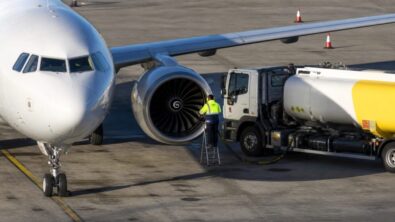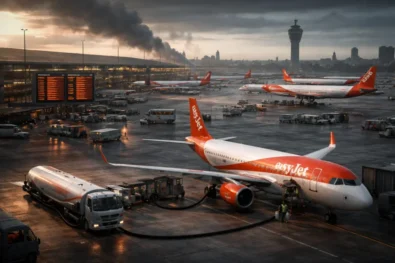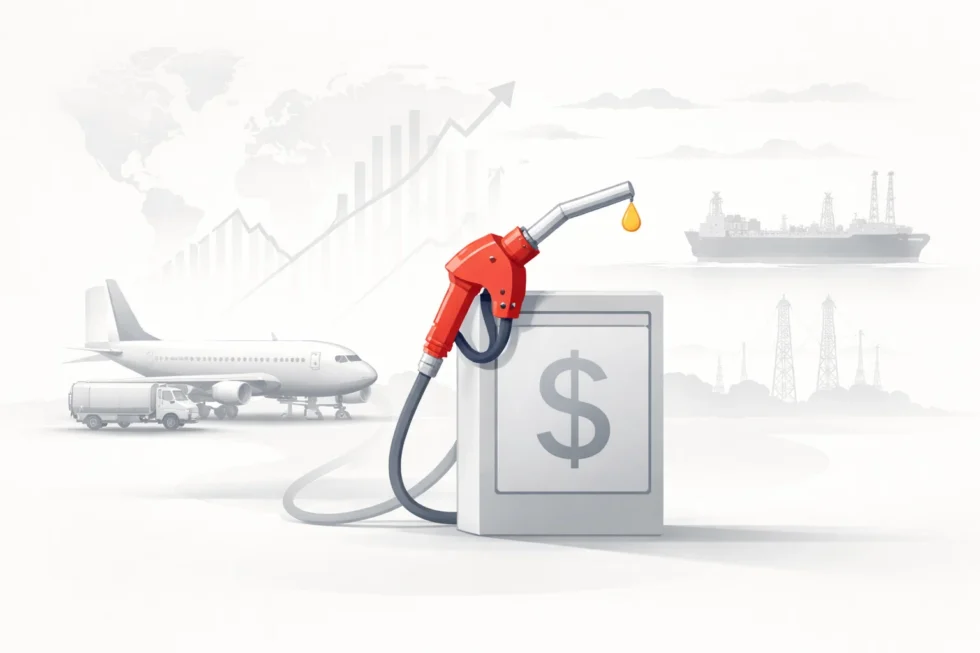
Fuel prices have moved sharply into crisis territory, with the jet fuel price impact airlines now translating directly into flight cancellations, higher fares and tightening global capacity, as geopolitical disruption in the Middle East constrains supply routes and destabilises aviation economics, reports The WP Times, citing BBC News and industry analysts.
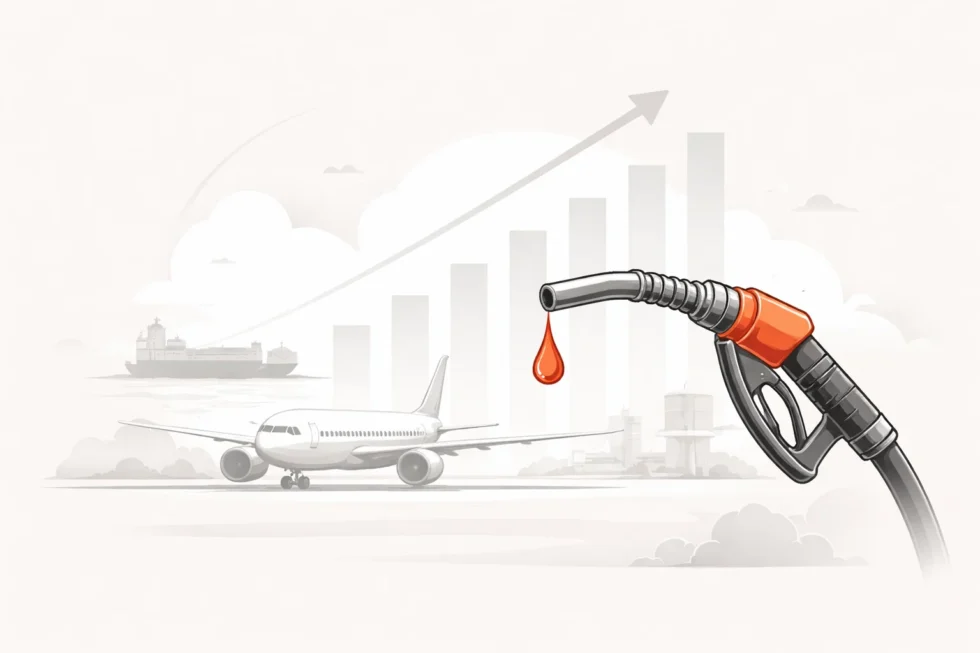
The core driver is the rapid escalation in aviation fuel costs. Benchmark European jet fuel prices have surged to around $1,838 per tonne, more than double pre-conflict levels. For airlines, where fuel typically represents between 20% and 40% of operating costs, such a spike immediately erodes margins and forces operational decisions. Airlines across multiple regions have already begun to respond. Air New Zealand has confirmed further flight reductions across domestic routes, while Air India has shifted to distance-based fuel surcharges and increased international fees. The pattern is consistent: capacity cuts combined with pricing adjustments.
A spokesperson for Air New Zealand stated that jet fuel prices are now “more than double what they would usually be”, underscoring the scale of cost pressure facing the sector.
The supply shock is closely linked to disruptions around the Strait of Hormuz, a critical energy corridor through which a significant share of global oil and refined fuel flows. The Gulf region accounts for roughly half of Europe’s jet fuel imports, making any interruption immediately visible in pricing and availability.
Structural dependence on Middle Eastern refining capacity further amplifies the effect. Facilities such as Kuwait’s Al-Zour refinery alone contribute a substantial share of European aviation fuel supply, meaning disruptions are not easily offset by alternative sources in the short term.Across Asia, where reliance on Gulf energy imports is particularly high, the impact is more acute. Airlines have begun grounding aircraft, reducing frequencies and introducing surcharges. In some cases, governments have issued warnings about limited fuel reserves, highlighting the fragility of supply chains.
European and US carriers are also adjusting, though with variation depending on hedging strategies. Airlines that secured fuel at pre-crisis prices have temporarily avoided immediate fare increases. Others, including major transatlantic and Scandinavian operators, have already cut flights that have shifted from marginal profitability into loss.
Ryanair chief executive Michael O'Leary has warned that supply disruptions could emerge in Europe as early as May if the conflict persists, with potential exposure affecting up to a quarter of fuel availability in a downside scenario. Analysts point to a tightening global market. According to Vortexa data, jet fuel exports are currently at their lowest levels in four years, while demand remains structurally strong ahead of the summer travel season. This imbalance creates a clear trajectory: fewer flights and higher prices.
“Starting from an already tight market, the current lack of Middle East jet fuel exports is worsening the situation,” said an analyst at Vortexa, noting that sustained disruption would make current travel demand “not sustainable” without further capacity reductions. Despite the severity of price movements, immediate shortages in Europe are not yet critical. Analysts at Kpler suggest that April supply remains manageable due to domestic production and existing inventories. However, the situation becomes more uncertain heading into May and June, when reduced imports are expected to be more sharply felt.
For travellers, the implications are increasingly tangible. Flight availability is tightening on certain routes, particularly in regions heavily exposed to fuel costs. Ticket prices are rising, especially on long-haul journeys where fuel burn is highest. At the same time, consumer protection frameworks in the UK and EU continue to guarantee rebooking and assistance in the event of cancellations.
The longer-term trajectory depends on both geopolitical developments and airline hedging cycles. As existing fuel contracts expire, more carriers will be exposed to elevated spot prices, embedding higher costs into ticket pricing across the industry. In practical terms, the jet fuel price impact airlines is no longer a forward-looking risk — it is an active restructuring of global aviation capacity, pricing and reliability, with peak summer travel now directly exposed to energy market volatility.
Read about the life of Westminster and Pimlico district, London and the world. 24/7 news with fresh and useful updates on culture, business, technology and city life: Will British Airways will allow passengers to take voice and video calls onboard using Starlink