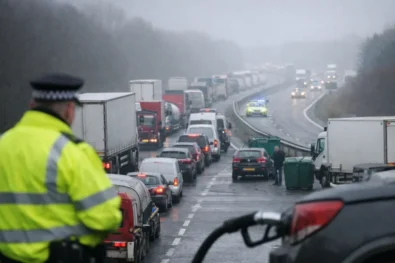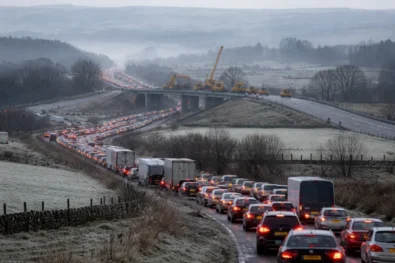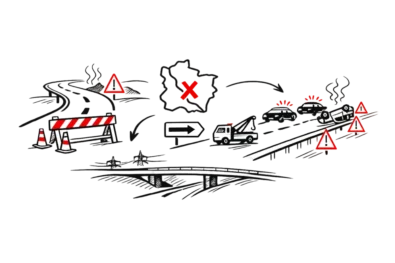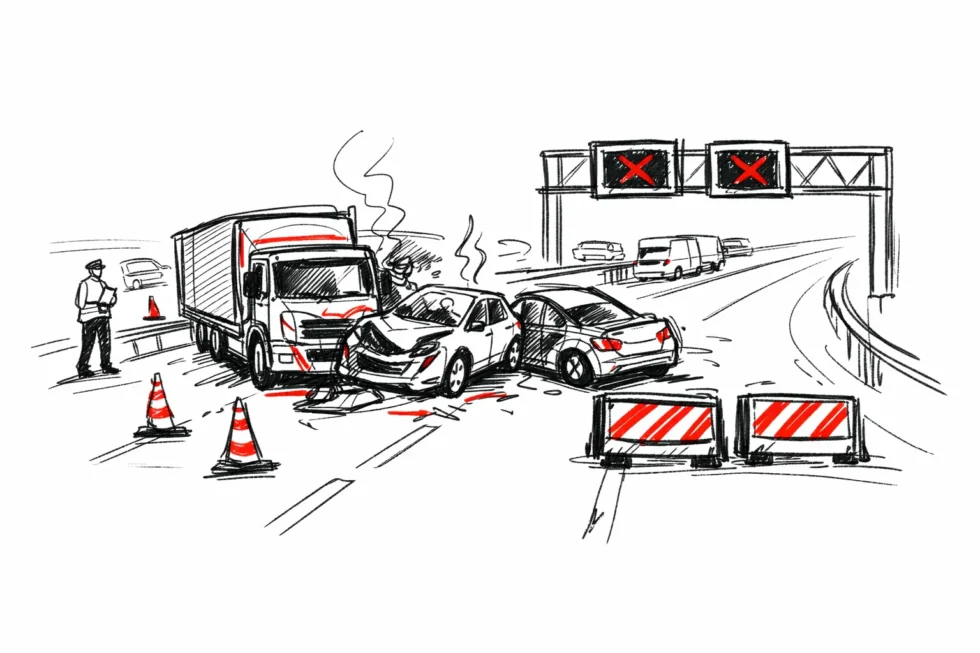
Motorists faced significant disruption on the M6 after a multi-vehicle collision forced traffic to be held on the southbound carriageway near Cannock, with emergency services attending the scene and lanes remaining blocked between Junction 12 and Junction 11a as congestion built across the West Midlands corridor, The WP Times reports.
The incident triggered an immediate response from National Highways and emergency crews, who implemented a full traffic hold to secure the area and allow safe access for responders before beginning a phased reopening of the motorway. Multiple vehicles were involved in the collision, leading to the closure of several lanes and the rapid formation of queues stretching back for miles as traffic volumes continued to feed into the affected section. As operations progressed, the situation moved from a complete standstill to restricted flow, but the motorway did not return to normal conditions immediately. Two lanes remained closed for an extended period while recovery teams worked to remove damaged vehicles and clear debris from the carriageway. Traffic was gradually released past the scene under controlled conditions, resulting in stop-start movement and continued delays for drivers approaching from the north.
Congestion built quickly due to the strategic importance of this section of the M6, which carries a mix of commuter, regional and long-distance freight traffic. The location near Cannock is particularly sensitive within the motorway network, acting as a key link between major routes across the Midlands. As a result, even a single incident involving multiple vehicles can disrupt traffic flow across a wider area, with delays spreading beyond the immediate scene. Drivers experienced extended journey times, with queues forming on the southbound approach and knock-on effects likely affecting surrounding junctions and connecting roads. Even as lanes began to reopen, residual congestion remained an issue, as accumulated traffic took time to clear through the restricted section.
Emergency services prioritised securing the scene and ensuring the safety of all road users, while traffic officers coordinated lane closures and flow management. The staged reopening of lanes reflected standard motorway incident procedures, where safety checks and vehicle recovery must be completed before full capacity can be restored. Public updates indicated that emergency teams were working to reopen lanes as quickly as possible, but also highlighted that traffic conditions would only gradually stabilise after the incident itself had been cleared. This reflects a typical pattern on high-capacity motorways, where delays can persist even after physical obstructions have been removed.
The full details of the collision, including the number of vehicles involved and whether there were any serious injuries, were not immediately confirmed in public updates, with authorities focusing on managing the incident and restoring traffic flow. Such information is often released later once initial response operations have concluded.
For motorists travelling through the area, the key issue was not only the immediate blockage but the extended impact on journey reliability. Even after partial reopening, fluctuations in speed and lane availability continued to affect travel times, particularly for vehicles entering the motorway upstream of the incident. The M6 remains one of the busiest transport corridors in the United Kingdom, and incidents of this nature demonstrate how quickly disruption can escalate when traffic density is high. The combination of lane closures, emergency response activity and sustained vehicle volumes created conditions in which delays persisted well beyond the initial collision.As recovery operations continued, traffic conditions were expected to improve gradually, but the overall situation highlighted the vulnerability of key motorway routes to sudden disruption and the importance of coordinated response measures in restoring normal flow.
Read about the life of Westminster and Pimlico district, London and the world. 24/7 news with fresh and useful updates on culture, business, technology and city life: What is the new East West Rail line and how will it connect Oxford, Milton Keynes, Bedford and Cambridge