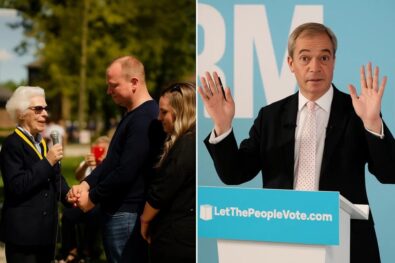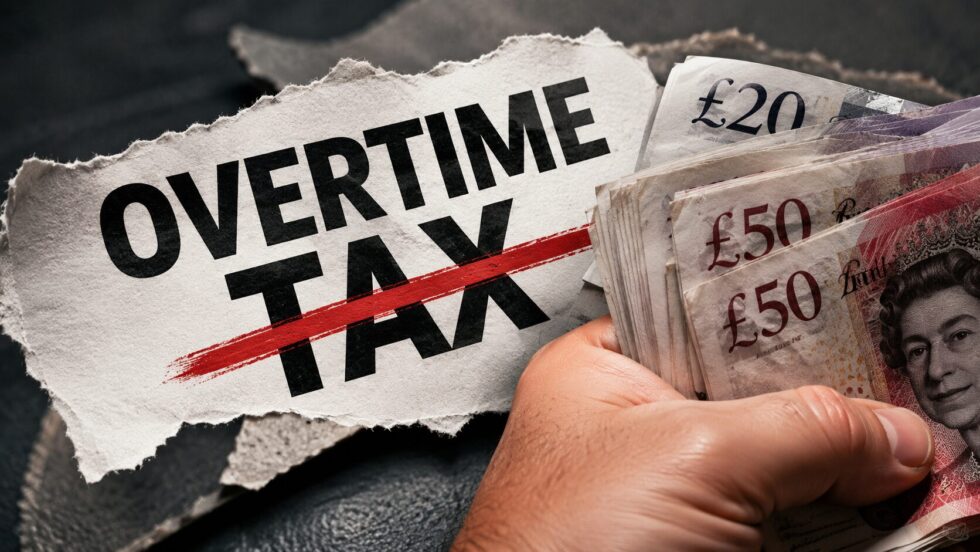
Reform UK has unveiled one of its most economically aggressive proposals ahead of the next general election by pledging to scrap income tax on overtime worked beyond 40 hours a week for employees earning under £75,000 annually. The proposal, presented by party leader Nigel Farage as a “hard work bonus”, is designed to target millions of British workers facing rising living costs, stagnant wages and what the party describes as declining incentives to work additional hours, The WP Times reports via BBC. The policy immediately triggered sharp political and economic debate across Westminster, with Labour, Conservatives and the Liberal Democrats all questioning whether the figures behind the proposal are financially sustainable.
The announcement arrives at a politically sensitive moment for the UK economy. Inflationary pressure has eased compared with the post-pandemic peak, but household finances remain under strain across sectors including healthcare, logistics, retail and public services. Reform UK argues that overtime taxation discourages productivity and penalises employees who already work long weeks. Critics, however, say the proposal risks creating loopholes, weakening Treasury revenues and increasing pressure on already stretched public services. Economists also warn that overtime-based tax exemptions could distort employment structures and encourage employers to redesign contracts around tax advantages rather than workforce stability.
Reform UK Says Workers Should Keep More of Their Overtime Pay
Reform UK says the proposal would apply only after employees complete a standard 40-hour working week. Under the party’s model, overtime earnings above that threshold would become exempt from income tax for workers earning below £75,000 annually. According to the party, approximately 90% of UK workers would qualify for the tax break under that earnings ceiling.
The party estimates around 3.2 million workers currently receive paid overtime. Reform UK claims a full-time nurse working six hours of overtime weekly could save more than £1,300 annually under the scheme. Warehouse staff, prison officers, electricians and construction workers were also used as examples by the party to demonstrate potential savings for employees regularly working additional shifts.
Farage framed the policy as part of a wider ideological message aimed at “making work pay” again. The party argues that many workers increasingly feel trapped between rising taxation and welfare systems that, in Reform UK’s language, fail to reward extra effort. The proposal is therefore being positioned not simply as a tax cut, but as a broader political statement about work culture, productivity and the role of the state in supporting labour participation.
At the same time, the proposal also reflects Reform UK’s attempt to broaden its appeal beyond immigration and Brexit-related politics. Economic credibility has become increasingly important for the party as opinion polls continue to show sustained national support. Recent speeches by Farage have focused more heavily on taxation, productivity, state spending and economic incentives than on the anti-establishment messaging that originally defined the movement.
Estimated savings under Reform UK’s overtime tax proposal
| Profession | Estimated overtime example | Estimated annual tax saving |
|---|---|---|
| Nurse | 6 overtime hours weekly | £1,300+ |
| Warehouse worker | Regular evening shifts | Hundreds to £1,000+ |
| Prison officer | Weekend overtime rotation | £1,000+ |
| Construction worker | Extended site shifts | Variable depending on tax band |
| Factory employee | Ongoing production overtime | Potential four-figure savings |
The exact figures would depend on hourly pay, tax bands and overtime frequency.

Why Critics Say the Numbers Behind the Policy May Not Add Up
The proposal’s estimated annual cost is approximately £5 billion, according to Reform UK calculations. The party says the policy could be funded through reductions in welfare spending and broader state restructuring measures, including cuts linked to benefits reform and civil service reductions.
That claim immediately drew criticism from Labour and opposition economists. Treasury minister Lucy Rigby questioned where exactly the cuts would fall and which public services would absorb the financial impact. Conservatives also challenged the absence of fully detailed funding mechanisms, arguing the proposal repeats a pattern of headline-grabbing tax promises without operational clarity.
Shadow Chancellor Mel Stride argued that Reform UK had not identified new savings sufficient to cover the projected cost of the tax reduction. Liberal Democrats meanwhile accused Farage of promoting what they described as economically risky populism at a time when public finances remain fragile.
Economists have also raised structural concerns about the proposal itself. Helen Miller from the Institute for Fiscal Studies said the policy could create incentives for employers to reclassify ordinary working hours as overtime in order to reduce tax liabilities. She additionally questioned whether encouraging existing employees to work even longer weeks is the most effective way to increase labour supply.
Another issue involves fairness between different categories of workers. Employees in salaried professions often work unpaid additional hours without formal overtime structures. Teaching, healthcare and social care sectors already report high levels of unpaid labour. Critics argue that exempting only paid overtime from tax could disproportionately benefit industries with formal shift systems while excluding professionals already working extended hours without additional pay.
Political reactions across Westminster
| Political figure | Position on proposal |
|---|---|
| Nigel Farage | Supports proposal as “hard work bonus” |
| Lucy Rigby | Questions funding and public service impact |
| Mel Stride | Says Reform lacks credible savings |
| Daisy Cooper | Calls proposal economically dangerous |
| Helen Miller (IFS) | Warns about loopholes and distortions |
The Wider Debate About Work, Productivity and British Taxation
The overtime tax proposal is part of a broader debate now emerging across British politics around productivity, labour participation and stagnating wage growth. Since the pandemic, Britain has faced persistent concerns over workforce inactivity, recruitment shortages and declining productivity growth compared with other major economies.
Reform UK’s argument is built around the idea that taxation discourages additional labour. The party claims employees increasingly see little benefit in taking extra shifts because a substantial portion of overtime earnings disappears through taxation. This narrative particularly targets workers in healthcare, transport, logistics and manufacturing — sectors where overtime remains common.
Yet economists remain divided over whether tax incentives alone meaningfully increase productivity. Studies in multiple European economies have shown mixed results when governments attempt to stimulate labour supply through targeted tax exemptions. Critics note that workforce exhaustion, childcare costs, transport expenses and housing pressures often have greater influence on willingness to work longer hours than taxation alone.
The debate also intersects with Britain’s broader fiscal pressures. Public borrowing remains elevated after years of pandemic-related spending, energy support schemes and rising healthcare costs. Any large-scale tax reduction therefore faces intense scrutiny from economists and financial markets. Recent history has shown how rapidly UK financial markets can react when investors believe fiscal policy lacks credibility or funding detail.
There is also a cultural dimension to the argument. Reform UK increasingly presents itself as the political voice of what it calls “working Britain” — employees who feel financially squeezed despite remaining in full-time employment. The overtime proposal directly targets that sentiment by focusing on visible take-home pay rather than abstract economic indicators.
Sectors most likely to be affected
- Healthcare and nursing
- Warehousing and logistics
- Manufacturing and factory operations
- Prison and emergency services
- Construction and engineering
- Retail distribution centres
- Transport and freight industries
These sectors rely heavily on overtime structures and shift rotations.
Reform UK’s Economic Strategy Is Moving Beyond Protest Politics
The overtime tax proposal also signals how Reform UK is trying to reposition itself politically. Originally viewed largely as a protest movement rooted in Brexit politics and anti-immigration messaging, the party is increasingly attempting to construct a broader economic platform.
Farage has recently focused on themes including taxation, public spending, civil service reform and productivity. Reform UK has also floated proposals involving higher tax thresholds, welfare restructuring and reductions in government administration. Some analysts interpret the overtime proposal as part of a larger attempt to attract traditional working-class voters who historically supported Labour but feel disconnected from mainstream political parties.
At the same time, the party faces credibility challenges. Previous Reform UK tax pledges have been criticised by economists as unrealistic or insufficiently funded. Farage himself has in the past moderated earlier promises for large-scale tax reductions, acknowledging concerns around Britain’s debt levels and public finances.
That tension now sits at the centre of Reform UK’s economic strategy. The party wants to present itself as both anti-establishment and fiscally credible — a difficult balance in British politics. Policies such as overtime tax abolition are politically attractive because they are easy for voters to understand immediately through visible take-home pay calculations. But they also expose the party to intense scrutiny regarding economic modelling and budget arithmetic.
“Today we're announcing our bold new policy that will finally make work pay, drive up productivity, and restore the appeal of a strong work culture once again.” — Nigel Farage speaking about the overtime tax proposal.
Could the Overtime Tax Proposal Actually Become UK Law
At present, the proposal remains a political pledge rather than draft legislation. Reform UK is not currently in government, meaning implementation would depend entirely on future electoral outcomes and parliamentary arithmetic. However, the announcement matters politically because it introduces a highly visible economic dividing line before the next election cycle.
The proposal could also pressure other parties to respond with their own tax-focused offers to workers. British elections increasingly revolve around cost-of-living messaging, disposable income and visible household economics rather than long-term fiscal strategy alone. Reform UK appears determined to occupy that political space aggressively.
Practical implementation would likely prove complex. HM Revenue & Customs would need clear definitions for overtime eligibility, anti-avoidance measures and payroll enforcement rules. Employment lawyers have already noted that distinguishing genuine overtime from reclassified standard hours could become contentious in sectors with flexible contracts or irregular schedules.
Questions also remain about unpaid overtime. Millions of British workers regularly work beyond contracted hours without receiving additional compensation. Trade unions argue that any meaningful debate about overtime should also include stronger protections around unpaid labour and work-life balance rather than simply tax treatment.
The political impact, however, may already be significant. Reform UK has succeeded in forcing discussion about overtime, taxation and labour incentives into the national political conversation at a time when many households remain financially pressured despite moderating inflation figures. Whether the proposal survives economic scrutiny may ultimately determine whether it becomes a defining policy or simply another symbolic campaign pledge in Britain’s increasingly fragmented political landscape.
Read about the life of Westminster and Pimlico district, London and the world. 24/7 news with fresh and useful updates on culture, business, technology and city life: Best UK Cashback Cards 2026 For London Commuters And Travel: Which Cards Actually Save Money