British Airways flight BA284 Birmingham became one of the most closely watched aviation incidents on 28 June after the airline's Airbus A380 operating from San Francisco unexpectedly diverted to Birmingham instead of landing at London Heathrow during the final stage of its transatlantic journey. The aircraft entered holding patterns over north-west England before safely landing at Birmingham Airport, later completing the short flight to Heathrow after a brief ground stop. At the time of publication, British Airways had not confirmed a single official reason for the diversion, while aviation reports pointed to either a reported onboard medical emergency, severe thunderstorms affecting Heathrow, or a combination of operational factors. The WP Times understands that all passengers ultimately reached London safely after the aircraft resumed its journey later the same day.
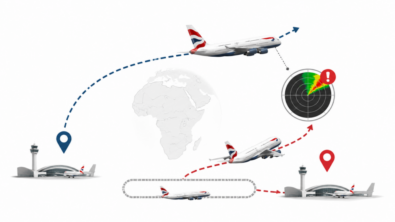
The incident unfolded during an exceptionally difficult operating day for London's airports. Severe thunderstorms across southern England disrupted arrivals and departures throughout the Heathrow network, with hundreds of flights delayed while controllers managed restricted arrival capacity. Flight tracking data showed BA284 circling near Manchester before the crew diverted to Birmingham, where the Airbus A380 landed safely without further incident.
Why did British Airways flight BA284 Birmingham divert instead of landing at Heathrow
British Airways flight BA284 departed San Francisco International Airport as scheduled on Friday for its regular long-haul service to London Heathrow aboard Airbus A380-841 registration G-XLEE, one of the airline's flagship double-deck aircraft operating high-capacity intercontinental routes. The crossing over North America and the Atlantic was reported to have progressed normally. The situation changed only after the aircraft entered UK airspace and began its descent toward London.
Rather than continuing directly to Heathrow, flight tracking data showed the aircraft entering holding patterns near Manchester. Such holding procedures are common whenever aircraft cannot immediately receive landing clearance because of congestion, weather restrictions or other operational issues.
After remaining airborne while controllers managed traffic flows, the crew diverted south-west to Birmingham Airport. The aircraft landed safely before later departing Birmingham for Heathrow, completing the final domestic sector in less than half an hour. Importantly, British Airways has not officially confirmed that the diversion resulted from a medical emergency, severe weather alone or any other single factor.
Timeline of British Airways flight BA284 Birmingham
| Stage | Details |
|---|---|
| Flight number | BA284 |
| Aircraft | Airbus A380-841 |
| Registration | G-XLEE |
| Route | San Francisco (SFO) – London Heathrow (LHR) |
| Diversion airport | Birmingham Airport (BHX) |
| Date | 27–28 June 2026 |
| Holding area | Near Manchester |
| Final destination | London Heathrow |
| Outcome | Landed safely and completed journey |
The diversion occurred only during the final portion of an almost eleven-hour journey, demonstrating how operational decisions can still change shortly before arrival when conditions deteriorate.
Heathrow thunderstorms created major disruption across southern England
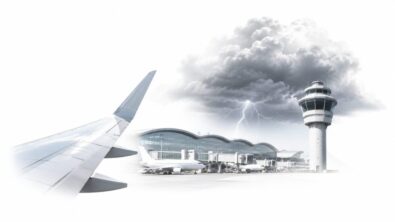
The diversion came during widespread disruption affecting UK aviation. Thunderstorms developed across southern England, producing significant arrival delays into Heathrow while air traffic controllers reduced landing rates to maintain safe aircraft separation. Numerous inbound aircraft entered holding patterns while waiting for available landing slots. Industry flight tracking services recorded extensive disruption affecting Heathrow throughout the day.
More than 900 flights operating to or from Heathrow and Gatwick experienced delays as storms crossed southern England, creating one of the busiest operational periods of the weekend.
Extended holding patterns increase fuel consumption and may require airlines to divert aircraft whenever waiting times become operationally impractical. For that reason alone, diversions during periods of severe weather are not unusual. However, weather has not been officially identified by British Airways as the sole reason behind BA284's diversion.
Reports differ over whether a medical emergency also affected BA284
The central question around British Airways flight BA284 remains unresolved: whether the Airbus A380 diverted to Birmingham because of a medical emergency, because Heathrow was under severe weather pressure, or because both factors shaped the crew’s decision. Aviation reports after the incident gave different explanations, while British Airways had not publicly confirmed a single official cause at the time of publication.
Several aviation monitoring accounts said the aircraft may have been dealing with an onboard medical situation before landing at Birmingham. Other reporting placed stronger emphasis on the wider disruption at London Heathrow, where thunderstorms over southern England had created heavy arrival delays and saturated holding patterns. One aviation report described the flight as having been caught in “stormy skies” and London airspace “gridlock”, while another said “the exact reason for the diversion has not been officially confirmed”.
That distinction matters. A medical diversion would mean the crew chose the nearest suitable airport because a passenger required urgent assistance. A weather-related diversion would mean BA284 could not continue safely or efficiently into Heathrow within the available fuel and traffic limits. A combined scenario is also possible: a passenger issue may have made further holding unacceptable while Heathrow delays were already severe.
Some reports suggested that after the A380 landed at Birmingham, a passenger was removed before the aircraft continued to Heathrow. That detail has not been officially confirmed by British Airways or Birmingham Airport. Airlines generally avoid giving public details about passenger medical cases because of privacy rules, so the absence of a detailed statement is not unusual.
For now, the safest wording is clear: BA284 diverted safely to Birmingham after holding near Manchester, during a period of severe Heathrow disruption, while reports about a possible medical emergency remain unconfirmed.
Why Birmingham Airport became the alternate destination for BA284
Birmingham Airport was a practical alternate for British Airways flight BA284 because it could safely accept an Airbus A380 and sits close enough to Heathrow to allow a quick onward sector once conditions improved. The aircraft did not need a distant diversion across Europe; it needed a suitable UK airport with the runway, apron space, handling capability and operational support required for the world’s largest passenger aircraft.
Although Birmingham does not receive regular British Airways A380 services, it is capable of handling superjumbo aircraft. Emirates operates scheduled A380 flights to Birmingham, so the airport has experience with this aircraft type. That made Birmingham a credible choice when BA284 could not proceed directly to Heathrow.
The decision also made operational sense for passengers. Birmingham is close enough to London for a short repositioning flight, and BA284 later completed the final leg to Heathrow in under half an hour. In practical terms, the diversion avoided prolonged holding, preserved safety margins and allowed the aircraft to continue once the immediate operational problem had passed.
For British Airways, Birmingham also offers a useful balance: it is outside the most congested London airspace but still close to the airline’s Heathrow hub. That is why an airport such as Birmingham can become valuable during storms, medical incidents or arrival restrictions.
British Airways Airbus A380 operations remain centred on Heathrow
British Airways bases its Airbus A380 operation around London Heathrow, where the aircraft is used on high-demand long-haul routes. The double-deck aircraft is designed for dense international services where passenger volume and premium capacity justify using one of the largest aircraft in commercial aviation.
The San Francisco–Heathrow route fits that model. It is a major transatlantic business and leisure corridor, and the A380 gives British Airways the capacity to carry hundreds of passengers between California and London on a single flight. That is why BA284 is normally expected to end at Heathrow, not Birmingham.
This made the Birmingham landing unusual but not unsafe or unprecedented. A diversion does not mean the aircraft was unable to continue flying; it means the crew and controllers selected a safer or more practical airport under the circumstances. The aircraft later departed Birmingham and completed the short hop to Heathrow, which underlined that the diversion was operational rather than catastrophic.
For aviation watchers in the West Midlands, the arrival of a British Airways A380 was a rare sight. Birmingham regularly sees Emirates A380 operations, but a British Airways superjumbo arriving from San Francisco is not part of the normal schedule.
What happens when a long-haul flight diverts close to its destination?
When a long-haul flight diverts close to destination, the crew is usually balancing several pressures at once: fuel, weather, air traffic control restrictions, passenger welfare, technical status and available alternate airports. Even if the aircraft is geographically close to Heathrow, it may still be safer to land elsewhere if delays continue or if another onboard issue needs attention.
Flight crews do not simply wait until fuel becomes critical. They plan alternates in advance and maintain reserves. If holding becomes too long, if the weather does not improve quickly enough, or if a passenger needs medical help, the captain can decide to divert while the aircraft still has strong safety margins.
After landing, the airline decides what happens next. In some cases, passengers leave the aircraft and travel by coach or replacement aircraft. In other cases, the same aircraft refuels, waits for clearance and continues to the planned destination. BA284 followed the second pattern: it landed at Birmingham, remained there briefly, then continued to Heathrow.
The key point for passengers is that a diversion is not a failure of the flight. It is part of the safety system. It gives the crew a controlled option when the original arrival plan is no longer the best option.
Operational flexibility remains central to airline safety
Modern aviation is built around contingency planning. Every long-haul flight operates with alternate airports, fuel planning, weather monitoring and air traffic coordination. That system exists precisely because conditions can change quickly, especially around busy airports such as Heathrow.
For BA284, the diversion showed how quickly a routine transatlantic arrival can become more complicated. The aircraft was nearing the UK after a long overnight crossing, but thunderstorms and possible onboard concerns meant the crew did not simply press on to Heathrow regardless. They used Birmingham as a safe alternate, then resumed the journey.
That is why the incident should be described carefully. The confirmed facts are that BA284 held near Manchester, diverted to Birmingham, landed safely and later continued to Heathrow. The unconfirmed part is the precise trigger behind the diversion.
Until British Airways gives a fuller explanation, the most accurate conclusion is that the diversion was a controlled operational decision made during a period of serious disruption in UK airspace.
Official statements and confirmed information
"At the time of publication, British Airways had not publicly confirmed the specific reason why flight BA284 diverted to Birmingham before continuing to London Heathrow." (British Airways, airline position following the incident).
"Flight tracking data showed British Airways flight BA284, operated by Airbus A380-841 G-XLEE, departing San Francisco for Heathrow before entering holding patterns near Manchester and subsequently diverting safely to Birmingham Airport." (Flight tracking data and operational records, 27–28 June 2026).
"Reports surrounding the incident have differed. Some aviation tracking sources and eyewitness accounts suggested the diversion was prompted by a medical emergency onboard, while other aviation reports linked the decision to severe congestion at London Heathrow caused by widespread thunderstorms across southern England." (Aviation reporting compiled from operational coverage following the diversion).
"At present, however, there is no official confirmation that weather or congestion alone caused BA284's diversion, or that a medical emergency was the sole reason for the decision." (Operational reporting based on information available at the time of publication).
"The Airbus A380 landed safely at Birmingham Airport before later departing for Heathrow, where it completed the final sector of the journey without further reported incident." (Flight tracking records and airport movement data, 28 June 2026).
"Airlines generally do not disclose details relating to passenger medical incidents because of privacy obligations, meaning the absence of an official explanation should not be interpreted as confirmation or denial of reports circulating after the flight." (Standard airline practice regarding passenger privacy and operational reporting).
British Airways flight BA284 Birmingham: confirmed facts
| Category | Detail |
|---|---|
| Flight | BA284 |
| Airline | British Airways |
| Aircraft | Airbus A380-841 |
| Registration | G-XLEE |
| Route | San Francisco International Airport to London Heathrow |
| Diversion airport | Birmingham Airport |
| Holding area | Near Manchester |
| Main confirmed outcome | Aircraft landed safely and later continued to Heathrow |
| Unconfirmed issue | Exact reason for diversion |
| Reported possible factors | Severe Heathrow disruption, thunderstorms, possible medical emergency |
What passengers should know following the BA284 diversion
Passengers should understand that diversions are standard safety procedures, not signs that an aircraft is necessarily in danger. A crew may divert even close to destination if weather, congestion, fuel planning or passenger welfare makes another airport the safer choice.In the case of British Airways flight BA284, the aircraft reached the UK but did not continue directly into Heathrow. It held near Manchester, diverted to Birmingham, landed safely and later completed the final sector to London.
The unanswered question is why the diversion happened. Until British Airways confirms the cause, reports about a medical emergency should be treated as unverified, while the wider Heathrow weather disruption remains an important confirmed context for the event.
Read about the life of Westminster and Pimlico district, London and the world. 24/7 news with fresh and useful updates on culture, business, technology and city life: What are tonight’s Lotto results and National Lottery numbers for Saturday 27 June 2026