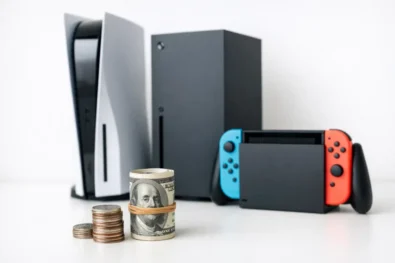
30 June 2026, London — The next PlayStation could launch into a far more expensive console market than British buyers are used to, after Sony told investors it does not intend to sell gaming hardware at heavy losses. The warning came during a question-and-answer session with investors for Sony’s Game & Network Services division, where the company said it was not realistic to absorb all rising component costs.
For UK consumers, the signal is important because PlayStation pricing has already moved sharply higher in this generation. Sony raised recommended UK prices in April 2026 to £569.99 for the standard PS5, £519.99 for the Digital Edition and £789.99 for the PS5 Pro. Sony has not announced a PlayStation 6 price or launch date, but its message to investors suggests the next console may be priced more cautiously from day one, reports The WP Times.
Why Sony’s comments could reshape PlayStation 6 pricing
Sony's remarks matter because they point to a potential shift in the economics of the console business rather than simply hinting at a future price increase. For decades, major console manufacturers have often launched new hardware with little or no profit — and, in some cases, at a loss — expecting to recover those costs through game sales, digital downloads, subscriptions such as PlayStation Plus, third-party licensing fees and purchases made through the PlayStation Store over the life of the console.
During its latest investor Q&A, Sony signalled that this long-standing strategy has practical limits. The company said it is not realistic to absorb all increases in component costs and reiterated that, as a general principle, it does not intend to sell hardware at significant losses. The comments come as the electronics industry continues to face higher costs for advanced processors, memory, storage, cooling technology, manufacturing, global logistics and supply chains.
While Sony did not mention the PlayStation 6 directly or announce any pricing plans, investors and market analysts see the remarks as an important indication of how the company may approach its next console generation. If production costs remain elevated when the PlayStation 6 launches, Sony could place greater emphasis on protecting hardware margins than it has in previous generations, increasing the likelihood of a higher launch price than consumers have historically expected. The company has not confirmed a release date or price for the PlayStation 6, but its latest financial messaging suggests profitability will play a more prominent role in future hardware decisions than during earlier PlayStation launches.
What it could mean for British buyers
The UK is especially exposed because console prices are affected not only by production costs, but also by VAT, import costs, retail margins and currency movements against the dollar and yen. If Sony wants to avoid large losses on hardware, the final shelf price in Britain could rise faster than in previous cycles.
A higher price would also change how families and casual players buy into the next generation. Instead of a mass-market launch price, Sony may lean more heavily on premium positioning, financing, bundles and subscriptions to soften the initial cost.
| Issue | Why it matters for Britain |
|---|---|
| Component costs | More expensive chips, memory and storage can push launch prices higher |
| UK VAT | Adds pressure to the final consumer price |
| Weak currency risk | Sterling moves can affect imported electronics prices |
| PS5 Pro pricing | £789.99 already sets a high premium benchmark |
| Subscription model | Sony may rely more on PlayStation Plus and digital revenue |
Is an £800-plus PlayStation 6 now realistic?
Sony has not announced a PlayStation 6 price, launch date or final specification. That remains the key caveat. But the UK price ladder now explains why an £800-plus next-generation PlayStation is being taken seriously rather than treated as an extreme forecast. From 2 April 2026, Sony’s recommended UK prices are £569.99 for the PS5, £519.99 for the PS5 Digital Edition and £789.99 for the PS5 Pro. That means Sony’s premium PlayStation hardware is already sitting just below the £800 mark before the next generation has even been revealed.
The issue is not that a £1,000 PlayStation 6 is confirmed. It is not. The issue is that Sony has told investors it does not intend, as a principle, to sell hardware at significant losses, while also saying it must monitor the market and explain pricing in relation to value. That changes the assumption behind the next console cycle. If Sony builds a more powerful machine with newer processors, faster memory, larger storage and more expensive cooling, but does not want to absorb heavy losses, more of that cost may reach the customer at launch. In Britain, VAT, retail margins and currency movements can add further pressure to the final shelf price.
Why Xbox makes the price pressure harder to ignore
Sony is not facing this alone. Microsoft confirmed that from 1 August 2026 it will raise Xbox console prices worldwide by $100 for 512GB models and $150 for 1TB models, while also discontinuing its 2TB model.
That matters because console prices are usually restrained by competition. If Xbox and PlayStation are both hit by higher memory, storage and component costs, neither company may have much room to use cheap hardware as an aggressive weapon. The next console battle may therefore shift away from low launch prices and towards subscriptions, cloud gaming, exclusive content, digital stores and financing plans. For consumers, especially families in the UK, that could make the first year of a new console generation more expensive than previous cycles. The next test will be Sony’s pricing behaviour through late 2026. If the company protects PS5 and PS5 Pro prices, avoids deep discounts and continues to frame hardware around value rather than affordability, it would strengthen the view that PlayStation is preparing the market for a more expensive generation.
For now, there is no official PlayStation 6 price and no confirmed release window. But Sony’s investor message is already clear enough: the next PlayStation is likely to be shaped by stricter cost discipline, not by the old assumption that console makers will absorb large hardware losses to keep the launch price low.
Read about the life of Westminster and Pimlico district, London and the world. 24/7 news with fresh and useful updates on culture, business, technology and city life: ASML denies China EUV claim as US scrutiny puts chip export controls under pressure