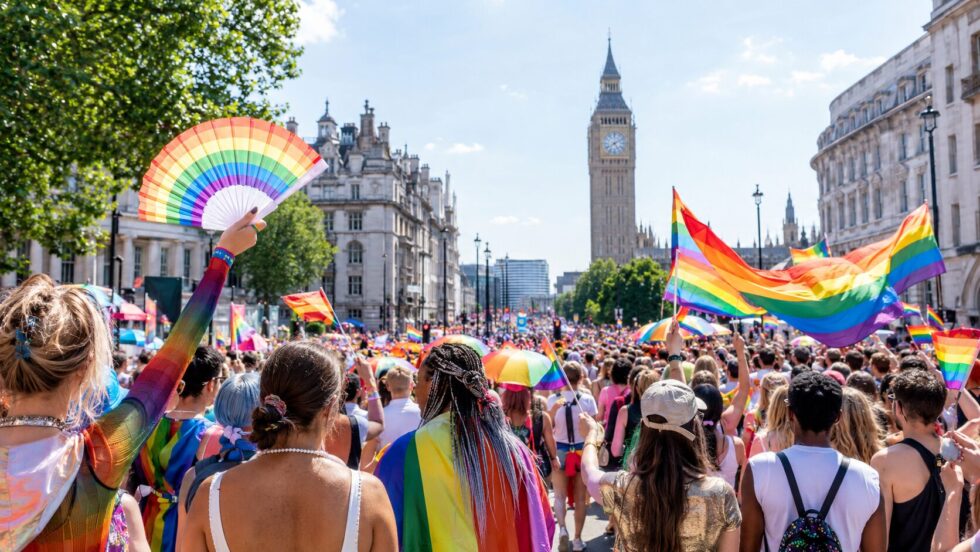
4 July 2026, London — Pride in London turned central London into a vast LGBTQ+ celebration and protest on Saturday, as thousands joined the parade from Hyde Park Corner through Piccadilly Circus, Haymarket and Trafalgar Square before the procession dispersed near Whitehall. The 2026 event carried the theme Many Voices. One Front, with organisers framing the day not only as a party, but as a public response to pressure on trans rights, hate crime, healthcare delays and the shrinking number of LGBTQ+ safe spaces in the capital. Around 1.8 million people had been expected in London across the day, while rumours of a surprise Madonna appearance on the Trafalgar Square main stage gave this year’s Pride an added pop-cultural charge, The WP Times reports.
The parade began at midday and followed Pride’s heritage route, starting near Hyde Park Corner, moving along Piccadilly, crossing Piccadilly Circus, turning into Haymarket, passing Trafalgar Square and finishing towards Whitehall Place. For spectators, it was one of the most recognisable London routes imaginable: grand buildings, West End junctions, packed pavements, flags from balconies and police barriers holding back dense crowds. Westminster City Council had warned businesses and residents about road closures, parking restrictions and event infrastructure, while Pride in London’s public map showed stage areas, medical support, welfare spaces, accessible facilities, crossing points and one-way crowd flows.
The strongest visual impression was scale. Floats, community groups, diplomats, charities, trade unions, sports clubs, drag performers, campaigners and families moved through the West End in a rolling display of colour and politics. The day was bright, loud and tightly choreographed, but it did not feel sanitised. Placards about trans rights, healthcare, hate crime and equality sat beside music, dancing, costumes and corporate branding. That mix is now the defining character of London Pride: a civic festival watched by tourists, a community gathering for LGBTQ+ Londoners and a political march still rooted in the protest tradition that began in 1972. Sadiq Khan was among those seen at the front of the march, with crowds chanting Happy Pride as the procession moved off. The Mayor of London has repeatedly presented the capital as a city where LGBTQ+ people should feel visible and protected, and his presence gave the parade an official civic weight. But the day’s campaigners were clear that visibility alone was not enough. Pride in London’s 2026 message focused on four core issues: trans healthcare rights, Black and Brown queer visibility, chosen family rights and ending hate crime.
Rebecca Paisis, Pride in London’s interim chief executive, described the ambition directly: “We want 2026 to be the most inclusive Pride in London event yet.” She added that the movement had “always been built on many voices becoming one united front” and linked today’s march to both the first Pride generation and those attending for the first time this year. The line mattered because it captured the central tension of the day: Pride was joyful, but it was also defensive. Its organisers were trying to hold together celebration and urgency in the same public space.
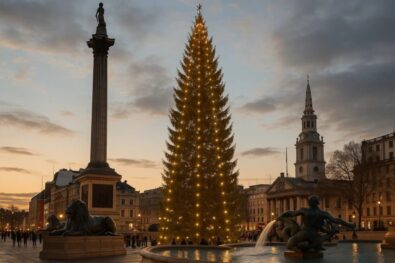
The Trafalgar Square main stage was the day’s biggest entertainment focus. MNEK was billed as the headliner, with Beth Ditto also among the major names listed for the 2026 programme. Hosts and performers included Asifa Lahore, Ade Adepitan, Tia Kofi, BombayMami, Hannah and Jake Graf, Le Fil, Leo Kalyan and others, turning the square into the symbolic centre of the event. Trafalgar Square has long been one of London’s major public stages, and on Saturday it again became the place where activism, celebrity, music and mass gathering met.
The Madonna rumour gave the event a second narrative. Reports before the parade suggested the singer could make a surprise appearance at Trafalgar Square, though not a full performance. The timing fed the speculation: Madonna was said to be in London around the launch of Confessions II, and her history as an LGBTQ+ ally made the possibility especially powerful for Pride crowds. One report quoted an insider saying Madonna was “a passionate advocate for LGBTQ+ rights” and that Pride “means so much to her”. Even without confirmation of a full set, the rumour helped create a sense that something major could happen at any moment. That celebrity excitement did not drown out the harder politics. Pride in London used this year’s campaign to highlight long waits for NHS gender-affirming care, the continued absence of a comprehensive trans-inclusive conversion therapy ban and the loss of LGBTQ+ venues in the capital. Organisers and campaigners have argued that safe spaces are not decorative extras, but infrastructure: places where people meet, organise, recover, build families of choice and feel less isolated. The closure of LGBTQ+ venues since 2006 has therefore become one of the most serious cultural warnings for queer London.
Police messaging also showed how Pride now sits inside a wider security and hate-crime context. Ahead of the weekend, the Metropolitan Police said there would be “no tolerance of hate crime” and urged anyone targeted to speak to officers immediately. The force said Pride should be free from discrimination, abuse or fear, while also asking visitors to plan journeys, look out for one another and seek help if needed. That warning reflected both the size of the event and the reality that LGBTQ+ people continue to face hostility in public spaces.
For many marchers, the most emotional moments came from smaller details rather than the headline acts. Embassy staff walking with equality messages, older activists carrying banners about the early Pride years, young people attending their first parade, families watching from pavements and trans and non-binary groups holding their own space all gave the day depth. The German Embassy in London said its staff joined other diplomats at Pride and stated that it was “committed to equality, freedom and justice for everyone”, a reminder that London Pride also functions as a diplomatic and international statement.
The route worked because it made the capital itself part of the story. Piccadilly gave the march grandeur; Piccadilly Circus supplied the spectacle; Haymarket compressed the crowd energy; Trafalgar Square gave the day its broadcast image; Whitehall supplied the political ending. Ending near the institutions of government mattered. Pride’s message this year was not simply addressed to the crowd. It was also addressed to ministers, lawmakers, public bodies, employers, police, schools and the NHS.
As a live event, London Pride 2026 was visually strong but logistically demanding. Crowds around Piccadilly Circus and Trafalgar Square were dense, movement was slow, and late arrivals faced the usual problem of trying to see a parade through several rows of spectators. The best viewing points were those reached early, while families and visitors needing easier movement were better served by less compressed sections away from the main stage zone. The official planning advice around water, welfare areas, accessible facilities and one-way flows was not cosmetic; it was essential for an event of this scale.
The review verdict is that Pride in London 2026 succeeded because it understood what Pride now has to be. It was entertainment, yes, but not only entertainment. It was a tourism event, but not only tourism. It was a political march, but not only a protest. Its power came from the contradiction: a city dancing while arguing for rights; a parade full of glitter that still spoke about waiting lists, hate crime and legal gaps; a pop rumour about Madonna sitting alongside serious warnings from activists.
The day also showed why Pride still draws such large crowds more than five decades after the first UK Pride march. For some, it is a celebration of freedom. For others, it is a reminder that freedom has not arrived equally. For many, it is both. London Pride 2026 looked like a party from a distance, but up close it was more complicated, more urgent and more British than that: a noisy, crowded, emotional argument for belonging, staged in the middle of the capital.
Sources used: Pride in London official planning information, Westminster City Council event guidance, Time Out London, Attitude, The Independent, Evening Standard, Metropolitan Police reporting and entertainment reports on the Madonna rumour.
Read about the life of Westminster and Pimlico district, London and the world. 24/7 news with fresh and useful updates on culture, business, technology and city life: London Pride 2026: When Is the Parade and Which Westminster Roads Will Close