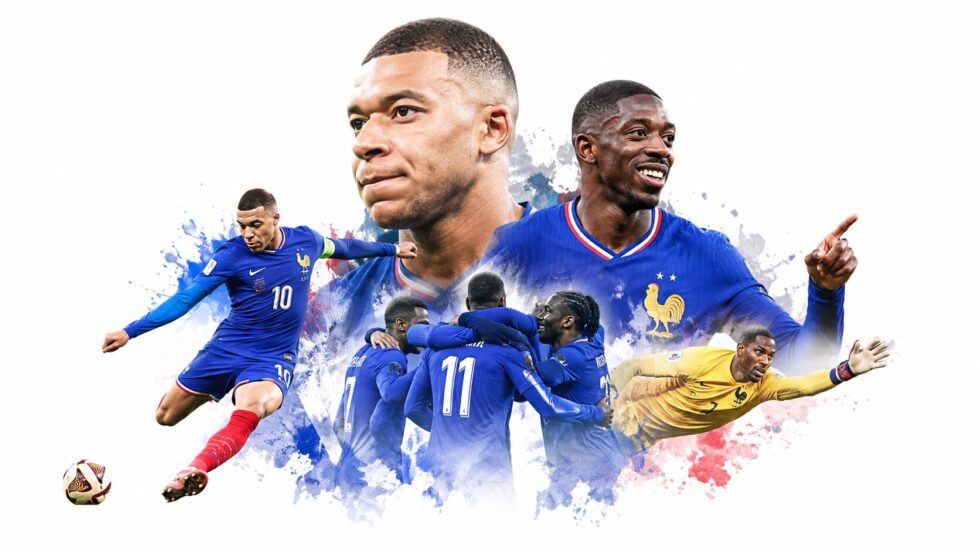
France became the first team to reach the 2026 World Cup semi-finals after Kylian Mbappé responded to a saved penalty by scoring the opening goal and creating another in a commanding 2-0 victory over Morocco at Boston Stadium in Foxborough on Thursday, 9 July. Mbappé broke Morocco’s resistance on the hour before supplying Ousmane Dembélé six minutes later, although a late knock to the captain’s ankle briefly complicated an otherwise authoritative night for Didier Deschamps’s side.
The French dominated territory and chances, forced Yassine Bounou into a succession of first-half saves and struck the crossbar before turning control into goals during a decisive six-minute period after the interval. France have now reached three consecutive World Cup semi-finals and will face Spain or Belgium in Dallas on Tuesday, 14 July, with Mbappé not currently expected to miss the match, The WP Times reports.
France beat Morocco 2-0 to reach a third consecutive World Cup semi-final
France’s place in another World Cup semi-final may look routine when viewed alongside their recent tournament record, but qualification was earned through patience rather than immediate efficiency. Deschamps’s team controlled the quarter-final from the opening minutes. Morocco defended deep, reduced the space behind their back line and relied heavily on Bounou to prevent France’s technical superiority from appearing on the scoreboard. Mbappé and Dayot Upamecano tested the goalkeeper during the opening exchanges, while Désiré Doué repeatedly received possession in the spaces between Morocco’s midfield and defence.
France’s clearest opportunity of the first half arrived in the 28th minute. Noussair Mazraoui was penalised for a challenge on Mbappé inside the area, allowing the France captain to take the resulting penalty. Bounou remained composed, waited for the shot and smothered Mbappé’s low attempt. It was the forward’s first penalty miss for France since the delayed Euro 2020 tournament.
The save temporarily preserved Morocco’s game plan but did not alter the wider pattern. France continued to circulate the ball around the penalty area, moved Morocco’s defensive block from side to side and created further opportunities through Doué and Upamecano.
Lucas Digne came closest to scoring before the interval when his powerful long-range attempt struck the crossbar in stoppage time. France had produced 13 first-half attempts and entered the break without a goal. Their problem was not a lack of possession or penetration but the combination of Bounou’s goalkeeping and their own failure to convert promising positions. Morocco, meanwhile, struggled to progress beyond midfield. The absence of the injured Ismael Saibari removed one of their most important links between midfield and attack, while Brahim Díaz was left isolated as the nominal centre-forward. The Atlas Lions did not register a shot on target until the closing stages of the match. Their defensive structure kept them level for an hour, but they lacked the attacking threat required to force France into a more cautious approach.
France vs Morocco: World Cup quarter-final details
| Match detail | Information |
|---|---|
| Competition | FIFA World Cup 2026 quarter-final |
| Result | France 2-0 Morocco |
| Date | Thursday, 9 July 2026 |
| Venue | Boston Stadium, Foxborough, Massachusetts |
| Half-time score | France 0-0 Morocco |
| France scorers | Kylian Mbappé 60’, Ousmane Dembélé 66’ |
| Missed penalty | Mbappé 28’, saved by Yassine Bounou |
| Mbappé substitution | Replaced by Jean-Philippe Mateta, 77’ |
| Next France match | World Cup semi-final |
| Date of semi-final | Tuesday, 14 July |
| UK kick-off time | 8pm BST |
| Venue | Dallas |
| Opponent | Spain or Belgium |
Kylian Mbappé scores after Bounou saves his first-half penalty
France’s breakthrough arrived on the hour and came from the player whose penalty had been saved 32 minutes earlier. Doué found Mbappé to the left of the Moroccan penalty area. The captain held off Issa Diop, identified the narrow space between the defender and the far corner and bent a controlled finish beyond Bounou. The goalkeeper, who had resisted everything France produced during the first half, could do little to prevent it.
Mbappé’s goal was his eighth of the tournament, drawing him level with Lionel Messi at the top of the 2026 World Cup scoring chart. It was also his 20th goal in his 20th World Cup appearance, leaving him one behind Messi in the competition’s all-time scoring standings.
The significance of the finish extended beyond its statistical value. France had missed a penalty, struck the crossbar and allowed several opportunities to pass without reward. A less experienced side might have accelerated the match unnecessarily or become vulnerable to a counterattack.
Instead, France retained their structure. Mbappé continued to seek the ball, Doué and Michael Olise moved across the attacking line and Dembélé maintained the width required to stretch Morocco’s defence. Deschamps said afterwards that neither Mbappé nor his teammates had allowed the saved penalty to weaken their belief.
“We lacked efficiency and had this penalty saved in the first half, several chances, but there was never any doubt, especially not Kylian,” the France manager said following the victory.
France required only six more minutes to establish a two-goal advantage. Mbappé moved inside and redirected the ball towards Dembélé. His subsequent run occupied the Moroccan defenders and opened the angle Dembélé needed to shoot. The winger curled a right-footed effort towards the far side of the goal. Bounou managed to make contact but could not prevent the ball from crossing the line. The 66th-minute finish was Dembélé’s fifth goal of the tournament and effectively ended Morocco’s hopes of producing a comeback.
How France scored both goals against Morocco
France 1-0 Morocco: Kylian Mbappé, 60 minutes
Doué supplied Mbappé on the left side of the penalty area. The forward fixed Diop in position, created a small shooting lane and curled the ball around the defender into the far side of Bounou’s goal.
France 2-0 Morocco: Ousmane Dembélé, 66 minutes
Mbappé redirected possession towards Dembélé before making a supporting run that drew defenders away from the winger. Dembélé used the space to bend a right-footed shot beyond Bounou, who touched the ball but could not keep it out.
The two goals rewarded France’s control and changed the tactical demands placed on Morocco. Mohamed Ouahbi’s team could no longer remain compact and wait for a rare counterattack. They had to push more players forward, leaving additional space for France’s attacking line to exploit. Morocco did not produce a shot on target until the 84th minute. Mike Maignan was otherwise largely protected by William Saliba and Upamecano, who prevented Morocco from establishing sustained possession inside the French penalty area. France were not flawless. They should have converted at least one of their first-half opportunities, and stronger opponents may punish similar wastefulness. Yet their response to the missed chances was measured, and their defensive control ensured that the failure to score early never became a crisis.
Will Kylian Mbappé be fit for France’s World Cup semi-final
Mbappé was replaced by Jean-Philippe Mateta in the 77th minute after experiencing discomfort in his ankle.
The substitution immediately raised questions about his availability for the semi-final. Mbappé has scored eight times at the tournament and remains the central figure in France’s attack, both as a finisher and as a player capable of creating space for those around him.
The early assessment, however, was reassuring.
Deschamps described the problem as discomfort following a knock rather than a confirmed injury. Reports after the match indicated that the forward was not expected to be doubtful for Tuesday’s semi-final in Dallas. There has been no confirmation of structural damage and no official suggestion that Mbappé will miss the match. His condition will still be monitored during France’s recovery sessions, and the medical staff may manage his training load before the semi-final.
The distinction is important for an accurate account of the situation. Mbappé suffered an ankle knock and was removed before the end of the match. That makes his fitness a legitimate issue in the build-up, but it does not currently amount to a serious injury scare or evidence that France expect to play without him.Manu Koné was also withdrawn after sustaining a blow to his knee and suffering cramp. Deschamps indicated that neither situation caused immediate alarm. France have attacking alternatives in Mateta, Bradley Barcola, Marcus Thuram and Rayan Cherki. None, however, offers precisely the same combination of pace, finishing, international experience and capacity to occupy multiple defenders.
Mbappé’s involvement in both goals against Morocco demonstrated why his availability matters.
He did not simply recover from the missed penalty by scoring. His movement for the second goal also gave Dembélé the space to finish, underlining the influence he can exert even when he is not taking the final shot.
Mbappé’s World Cup and France records after Morocco victory
- Eight goals at the 2026 World Cup
- Twenty goals in 20 World Cup appearances
- Joint leading scorer at the tournament with Lionel Messi
- One goal behind Messi in the all-time World Cup scoring list
- Youngest player to reach 20 World Cup appearances
- Level with Hugo Lloris for the most World Cup appearances by a French player
- Sixty-four goals for the France senior team
- Thirty-seven assists for France
- One hundred and one direct goal involvements for the national side
The French Football Federation said the assist for Dembélé made Mbappé the first player to be directly involved in at least 100 senior international goals for France. His total now stands at 101, comprising 64 goals and 37 assists.
Didier Deschamps praises Mbappé and France’s tournament mentality
Deschamps used his post-match press conference to emphasise the collective control behind France’s progress and to defend Mbappé’s conduct as captain. The manager said the forward had shown no hesitation after missing the penalty and rejected suggestions that his individual status came at the expense of the team.
“Many people say that Kylian is a dictator, that he only thinks of himself,” Deschamps said. “But he’s the captain and he’s exemplary.” Against Morocco, Mbappé’s performance supported the manager’s argument.
The captain accepted responsibility for the penalty, continued seeking possession after failing to score and later combined an important individual goal with an assist for a teammate.
Deschamps also placed the victory within the broader context of France’s recent tournament record. The national side have reached the World Cup semi-finals in 2018, 2022 and 2026. They won the title in Russia, lost the Qatar final to Argentina on penalties and are now attempting to become only the third nation to reach three consecutive World Cup finals. France have won 17 of their 20 World Cup matches since the beginning of the 2018 tournament, drawing two and losing one.
Only Germany and Brazil had previously reached at least three successive World Cup semi-finals. Germany managed four consecutive appearances between 2002 and 2014, while Brazil appeared in three from 1994 to 2002.
“That’s three semi-finals in a row,” Deschamps said. “That’s already good. But even though it seems logical and natural for us to be here, you still have to achieve it.”
His observation captured the central contradiction surrounding this France team.
Their presence in the closing stages of major tournaments has become so familiar that qualification can appear inevitable. Yet each campaign has required Deschamps to reshape the side, manage injuries, accommodate emerging players and find solutions against opponents using increasingly cautious defensive systems. France have also kept clean sheets in all three of their knockout matches at the 2026 World Cup. Morocco rarely threatened that sequence, but Spain or Belgium should provide a more substantial examination of both the French defence and the balance between their midfield and attacking line.
Morocco leave the World Cup after another 2-0 defeat by France
Morocco were eliminated by France for the second consecutive World Cup and by the same scoreline. In Qatar in 2022, goals from Theo Hernández and Randal Kolo Muani ended Morocco’s historic run in the semi-finals. Four years later, the teams met one round earlier, but the result again reflected France’s superior quality in both penalty areas. Morocco nevertheless leave the tournament having strengthened their position within international football. They became the first African nation to reach two World Cup quarter-finals. Following their 2022 semi-final, another place in the last eight demonstrated that the earlier achievement was not simply an isolated run.
Their organisation remained evident in Foxborough. Bounou delivered an outstanding first half, Hakimi worked tirelessly on the right and the Moroccan defence forced France to wait until the hour mark for a breakthrough.
The limitation was their lack of attacking presence.
Without Saibari and without a recognised striker capable of holding the ball against Saliba and Upamecano, Morocco struggled to relieve pressure. They could defend their own area but rarely compelled France to retreat or alter their positioning.
Ouahbi accepted after the match that the stronger team had progressed.
“We have to recognise that France is a great team with excellent players,” he said. “France had the better scoring opportunities. We lacked ideas and freshness, and we have to accept this defeat.”
The Morocco coach also urged restraint in the response to elimination. He pointed to the team’s young players and long-term development before suggesting that Morocco could challenge France again at the 2030 World Cup, which the country will co-host with Spain and Portugal. That wider perspective does not conceal the disappointment of the quarter-final. Morocco arrived intending to repeat or improve upon their 2022 achievement but were ultimately unable to reproduce the attacking efficiency that had carried them through the previous rounds.
Who will France play in the World Cup semi-final
France will face the winner of Spain against Belgium in Dallas on Tuesday, 14 July. The semi-final will begin at 8pm BST in the United Kingdom, corresponding to 9pm in France and 2pm local time in Dallas. Spain and Belgium meet in Los Angeles on Friday, 10 July, with their quarter-final also starting at 8pm BST.
France therefore have the advantage of completing their quarter-final first and can begin their recovery before knowing the identity of their opponent.The additional rest may be particularly valuable for Mbappé and Koné. France will assess both players while preparing for two very different potential opponents. Spain are likely to demand long periods of defensive concentration and test France’s ability to operate without the ball. Belgium would present a different challenge through their experience, physical presence and capacity to attack in transition. Whichever side advances, France will enter the semi-final seeking a more efficient performance in front of goal.
Their first-half wastefulness against Morocco did not prove costly because the opposition created almost nothing in response. A stronger attacking side may not allow Deschamps’s players the same margin for error.France’s principal strengths remain clear: a disciplined defensive structure, exceptional attacking depth and a captain who can recover from a missed penalty to decide the match himself.
Mbappé’s ankle will continue to be monitored, but the immediate evidence is encouraging. France have reached Dallas, their captain is not expected to be absent and a third consecutive World Cup final is now one victory away.
Materials used: Reuters, the French Football Federation, The Guardian and official FIFA World Cup scheduling information.
Read about the life of Westminster and Pimlico district, London and the world. 24/7 news with fresh and useful updates on culture, business, technology and city life: K2 Airways Cargo 737 missing near Karachi after Sharjah flight