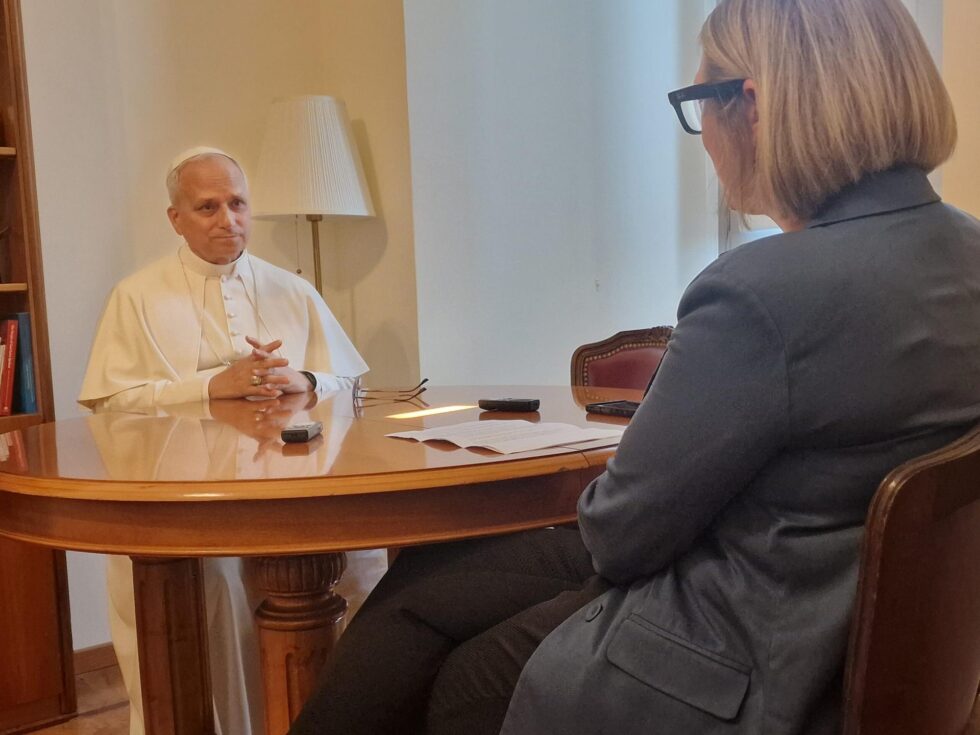
In a rare and extended interview granted to Crux senior correspondent Elise Ann Allen in Rome, Pope Leo XIV reflected on the defining issues of his young pontificate: the war in Ukraine, the growing dangers of global polarisation, the role of synodality in the Catholic Church, and his unexpected rise as a world leader. The two conversations, excerpts of which are included in Allen’s forthcoming biography León XIV: Citizen of the World, Missionary of the 21st Century, offer the first detailed insight into the priorities and personality of the first U.S.-born — and Peruvian citizen — pope in history. As reported by The WP Times, citing the interview with Crux.
A dual identity
Asked whether he sees himself more as an American or as a Latin American pope, Leo XIV was unequivocal: “The answer is both. I am obviously American and I feel very much that I am American, but I also love Peru very much. The Peruvian people are a part of who I am. Half of my ministerial life was spent in Peru.”
This dual identity, he argues, shapes his pastoral vision. “The Latin American perspective has been invaluable to me. It shaped my connection with Pope Francis, my understanding of his vision for the Church, and how we might continue to carry that prophetic vision into the future.”
Synodality as an attitude
One of the strongest themes of the interview was synodality, a word that has defined debates within the Church under Pope Francis. For Leo XIV, it is not a bureaucratic reform but an inner disposition. “Synodality is an attitude, an openness, a willingness to understand,” he said. “In the Church, it means that every member has a voice and a role to play — through prayer, reflection, dialogue. It is a way of being Church together.”
Some clergy have expressed fears that synodality could erode authority. Leo XIV dismissed those concerns: “That is not what synodality is about. Authority misunderstood as control is already a distortion. Synodality is about discovering together, as priests, laity, bishops, families, missionaries, what it means to live as a community of faith.”
He insisted that this concept could have broader relevance beyond Catholic circles: “It is an attitude which I think can teach a lot to the world today. We live in times of division, but if we listen to one another and to the Gospel, there is much to gain.”
Ukraine: “Peace is the only answer”
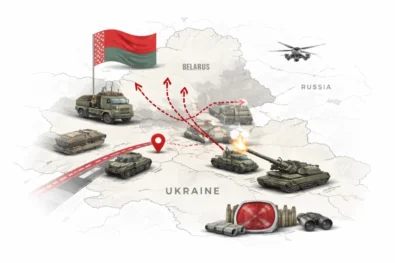
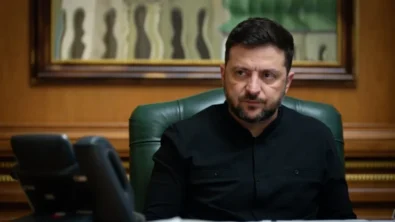
On Ukraine, the pope spoke with urgency but also with realism. “I make a distinction between the voice of the Holy See in advocating for peace and the role of mediator,” he explained. “They are very different. Peace is the only answer. The useless killing after these years must stop. People on both sides are losing their lives. There is another way.”
Since the war began, the Vatican has maintained a position of neutrality — criticised by some, praised by others. “We have offered several times to host negotiations between Ukraine and Russia, either in the Vatican or elsewhere on church property,” Leo XIV said. “But I am very aware of the implications. Mediation is not realistic right now. What is realistic is for multiple actors to push hard enough to make the parties say: enough is enough.”
He insists that hope must never be abandoned. “I believe strongly that we cannot give up hope. There are always temptations, there are bad actors on every side. Yet there are also higher values, real values. To encourage people to look towards them makes a difference. Hope is indispensable.”
Polarisation and inequality
Polarisation, both inside and outside the Church, was another recurring theme. “We live in a time when polarisation seems to be the word of the day,” Leo XIV said. “But it is not helping anyone. If it helps anyone, it is very few, while everyone else suffers.”
He pointed to several underlying causes. “The crisis of 2020 and the pandemic certainly deepened it, but it began earlier. Perhaps in some places there has been a loss of the higher sense of what human life is about — the value of life, of family, of society. If we lose that, what matters anymore?”
The pope also highlighted economic inequality. “Sixty years ago, CEOs were earning four to six times what workers received. The last figure I saw was 600 times. And yesterday the news broke that Elon Musk may become the world’s first trillionaire. What does that mean? If money is the only thing that has value, then we are in serious trouble.”
Building bridges through dialogue
Asked about his inaugural call to “build bridges”, Leo XIV underlined dialogue as the Church’s most important tool. “The way of building bridges is primarily through dialogue. In theory, the United Nations should be the place where many of these issues are addressed. Unfortunately, it is widely recognised that the UN at this moment has lost its ability to bring people together on multilateral issues.”
Instead, he argued, bilateral dialogue is often the only way forward. “We must remind ourselves of the potential humanity has to overcome violence and hatred. Dialogue is not optional, it is necessary.”
A pope with a sporting spirit
Not all of the conversation was heavy. Asked who he would support in a World Cup clash between the United States and Peru, Leo XIV smiled: “Probably Peru, just because of affective bonds. But as pope, I am a fan of all teams.”
He recalled his childhood in Chicago. “I was a White Sox fan, my mother a Cubs fan. We learned early not to shut out the other side. Otherwise, we might not have gotten dinner.”
“Only by the grace of God”
Reflecting on his early months as pontiff, Leo XIV admitted that the role of global statesman has been daunting. “The pastoral part has been easier,” he said. “The completely new part is being thrown into the level of world leadership. I had to jump into the deep end very quickly.”
Still, he sees his mission primarily as spiritual. “Being pope, successor to Peter, asked to confirm others in their faith — this can only happen by the grace of God. My hope is to strengthen others in their faith, because that is the most fundamental role of the successor of Peter.”
The second part of Allen’s interview will be published with the release of her biography on 18 September. For now, Leo XIV has offered a clear message: the papacy of the 21st century will be shaped not by hierarchy alone, but by dialogue, hope and the determination to pursue peace.
Read about the life of Westminster and Pimlico district, London and the world. 24/7 news with fresh and useful updates on culture, business, technology and city life: Will compulsory military service return in Germany
(Credit: Crux Photo.)