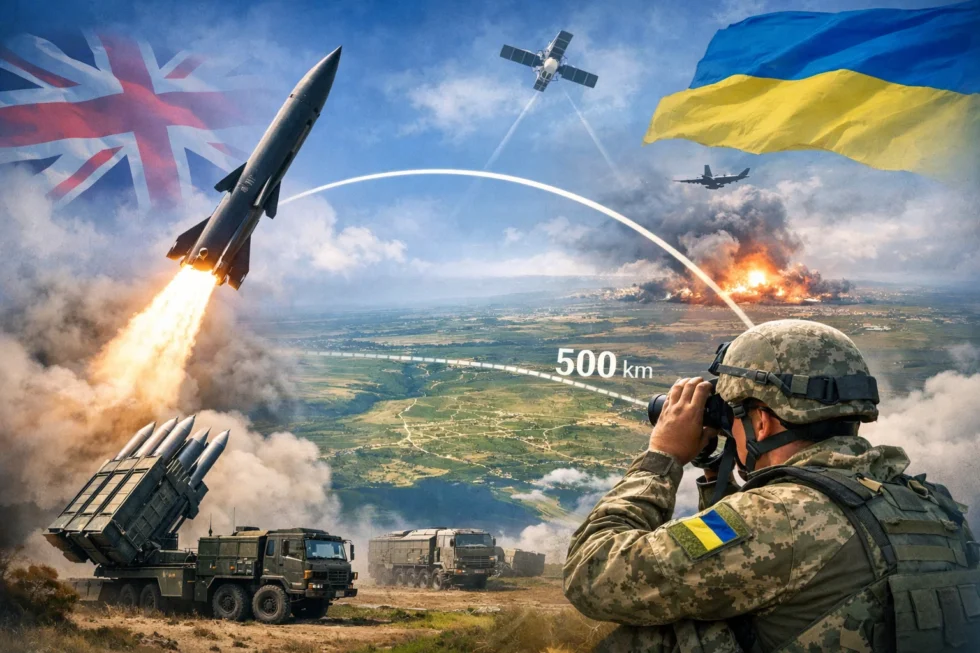
London, Sunday 11 January 2026, 20:58 GMT —The United Kingdom has formally confirmed plans to design and supply a new class of short-range ballistic missile, codenamed Nightfall, for use by Ukraine. The weapon is designed to carry a 200-kilogram warhead and strike targets at distances of more than 500 kilometres, placing large parts of western Russia within range if launched from Ukrainian territory.
The programme was confirmed by Defence Secretary John Healey during a visit to Kyiv, where he said Britain was moving beyond air-defence support to provide Ukraine with systems capable of retaliatory and deterrent strikes. This is reported by The WP Times, citing Daily Mail, The Sun and UK Ministry of Defence tender documents.
What the Nightfall programme involves
According to documents published on the UK government’s BidStars procurement platform, the Ministry of Defence is seeking British companies to design, build and deliver the first three Nightfall missiles under an initial contract worth £9 million.
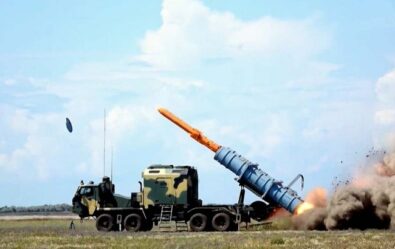
The tender describes Nightfall as a mobile-launched ballistic missile system intended for rapid deployment and survivability on the battlefield. The aim is to provide Ukraine with a high-speed strike weapon that is significantly harder to intercept than cruise missiles or long-range drones.
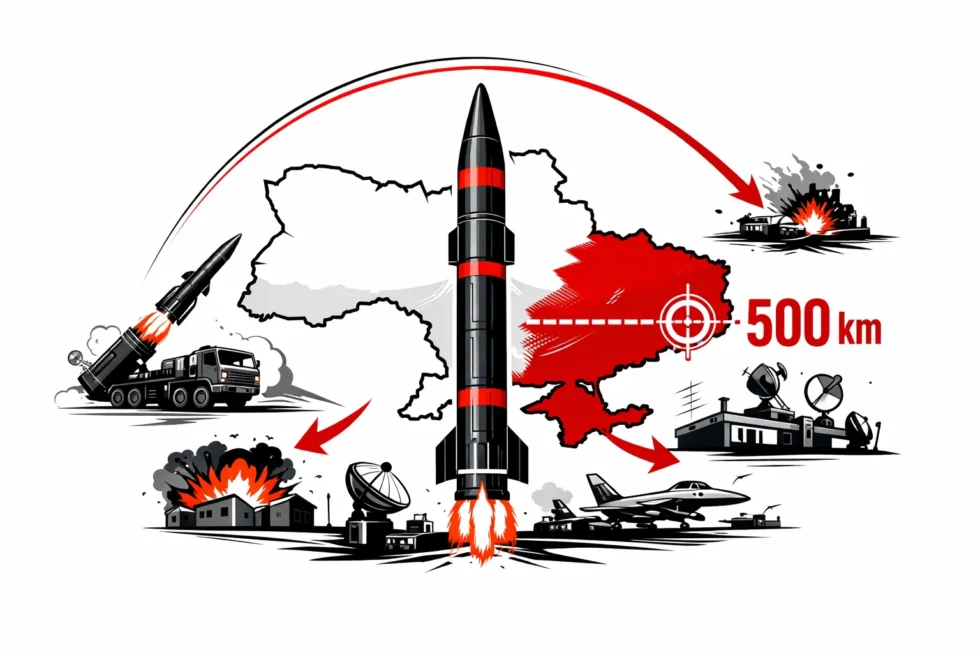
Unlike existing US-supplied systems such as ATACMS, Nightfall is designed to be simpler and cheaper, allowing it to be produced in large numbers rather than held as a limited strategic stockpile.
Technical requirements set by the UK Ministry of Defence
The tender, first issued in December 2025, sets out detailed performance and production criteria:
- Range: more than 500–600 km
- Warhead: at least 200–300 kg
- Launch platform: mobile launcher with at least two ready-to-fire missiles
- Time to fire: 10 minutes to prepare, 15 minutes to launch
- Post-launch relocation: within 5 minutes
- Unit cost: below £500,000 per missile
- Production rate: at least 10 missiles per month
These specifications indicate the system is designed for sustained, high-volume use, rather than limited strategic deployment.
Why Nightfall matters militarily
Ballistic missiles travel on a high-altitude, high-speed trajectory, making them more difficult to intercept than cruise missiles or drones. A missile with a 500–600 km range launched from central or eastern Ukraine could strike airfields, logistics hubs, ammunition depots and command centres across much of western Russia. Although Healey did not name specific cities, analysts say the stated range would place Moscow-linked infrastructurewithin theoretical reach, depending on launch locations.
Why Nightfall matters militarily
Speaking in Kyiv, Healey said the Nightfall programme reflected a shift in UK policy from defence to deterrence. He referred to the night of 9 January, when his train was forced to stop during a Russian missile and drone attack on the capital, in which four people were killed.
“It was a stark reminder of the scale of the missile and drone assault Ukrainians face in sub-zero temperatures. We will not accept this. We are providing Ukraine with advanced weapons so it can resist and respond,” Healey said.
How Nightfall fits into Ukraine’s missile programme
Ukraine is already expanding its long-range strike capabilities. In 2025, it began serial production of the Flamingo cruise missile, which its manufacturer Fire Point says has a range of up to 3,000 km. Fire Point has also announced two Ukrainian ballistic missile projects: FP-7, with a range of up to 500 km, and FP-9, planned for around 850 km in 2026. Nightfall would therefore give Ukraine a parallel Western-supplied ballistic capability, reducing reliance on domestic production alone.
Why the UK is building its own missile
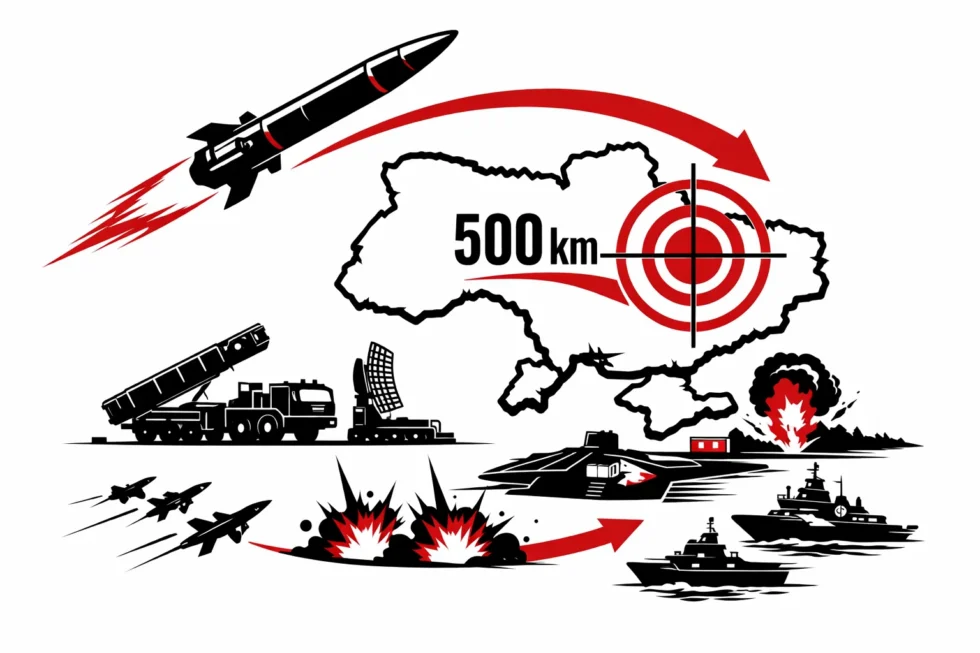
The United States has restricted the export and use of long-range ATACMS missiles. By developing Nightfall, Britain avoids those constraints and retains control over production, supply and deployment policy. The programme also allows the UK to rebuild a domestic missile-manufacturing base focused on high-volume output — something Britain has not maintained at scale since the Cold War.
The Ministry of Defence expects a prototype and first test missiles within nine to 12 months, meaning early operational capability could be reached in 2027, with limited deliveries potentially starting in late 2026. The first three missiles funded under the £9 million contract will be used for testing, validation and integration with Ukrainian launch systems.
If deployed, Nightfall would mark the first time a NATO country has provided Ukraine with a ballistic missile system. Unlike cruise missiles, which can be intercepted by layered air-defence networks, a ballistic weapon of this type would force Russia to invest more heavily in missile defence and dispersal, increasing the cost of continuing long-range attacks on Ukrainian cities and infrastructure.
Read about the life of Westminster and Pimlico district, London and the world. 24/7 news with fresh and useful updates on culture, business, technology and city life: What is Arrow 3 and can Germany’s new missile shield stop Russia’s Oreschnik near NATO’s border