NASA has confirmed that astronauts taking part in upcoming missions, including Artemis II, will be allowed to carry modern smartphones such as iPhones into space and on lunar flights, marking a notable shift in the agency’s long-standing hardware rules. This is reported by The WP Times, citing official NASA statements.
The decision was announced by NASA Administrator Jared Isaacman, who said astronauts assigned to Crew-12 and Artemis II will be authorised to bring iPhones and other modern smartphones with them. Writing on X, Isaacman said: “NASA astronauts will soon fly with the latest smartphones, beginning with Crew-12 and Artemis II. We are giving our crews the tools to capture special moments for their families and share inspiring images and video with the world.”
NASA astronauts have long produced striking photographs from space, particularly aboard the International Space Station, but the presence of a smartphone is expected to significantly expand video capabilities. Smartphones allow for quick, high-quality recording during experiments or when astronauts observe short-lived or unexpected phenomena through spacecraft windows, offering flexibility that traditional cameras do not always provide.
However, NASA officials have stressed that the move is not only about photography. Isaacman described the decision as part of a broader effort to challenge what he called long-standing and often excessive technical requirements that slow innovation. “Just as important, we challenged long-standing processes and qualified modern hardware for spaceflight on an expedited timeline,” he said, adding that this operational urgency will be critical as NASA pursues science and research both in orbit and on the lunar surface.
Qualifying modern consumer technology for spaceflight remains complex. Devices must undergo extensive testing for radiation exposure, battery safety, thermal extremes, vacuum conditions, vibration loads and material outgassing. These requirements exist for safety reasons, but NASA leadership has signalled that some processes have become outdated. Isaacman has instructed teams to reassess whether all existing requirements are still justified under current technological standards.
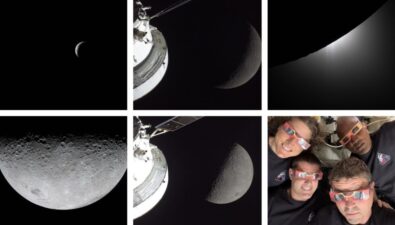
Before this policy change, the newest camera scheduled to fly on Artemis II — the first crewed mission to orbit the Moon since 1972 — was a Nikon DSLR model released in 2016, alongside GoPro cameras that were already a decade old. Allowing smartphones means astronauts will have access to lightweight, portable devices capable of advanced video recording and low-light photography, potentially transforming how lunar missions are documented.
Smartphones have travelled to space before, but only in limited circumstances. Two iPhone 4 models were carried aboard the final Space Shuttle mission in 2011, though it remains unclear how extensively they were used. In more recent years, astronauts on the International Space Station have mainly relied on tablets for communication with Earth. By contrast, astronauts on private missions, including Polaris and Axiom flights, have already taken smartphones into orbit.
What makes this announcement significant is that NASA has now formally approved modern smartphones for government-led exploration missions beyond low Earth orbit. The move reflects a broader cultural shift within the Artemis programme, which aims to establish a sustained human presence on the Moon and lay the groundwork for future missions to Mars.
For the public, the change is expected to deliver more immediate and visually compelling content from lunar missions, captured using familiar consumer technology developed by companies such as Apple. For NASA, it signals a willingness to modernise internal processes as human spaceflight enters a new era.
Read about the life of Westminster and Pimlico district, London and the world. 24/7 news with fresh and useful updates on culture, business, technology and city life: What is HD 137010 b? NASA highlights a potentially habitable Earth-sized planet