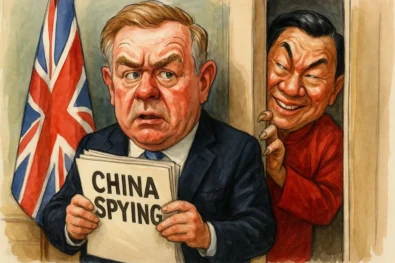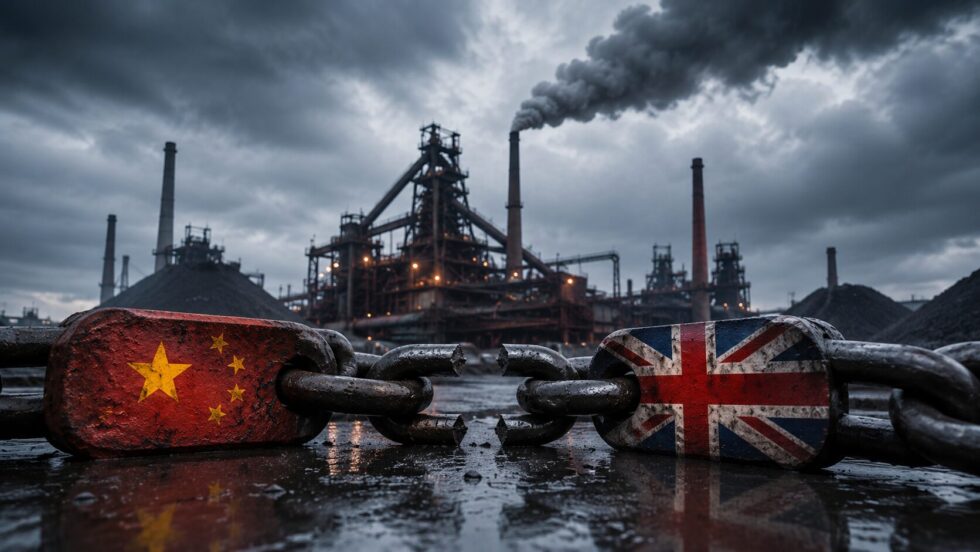
China British Steel nationalization warning has escalated into a direct geopolitical and economic flashpoint as the UK government prepares legislation to take full ownership of British Steel, aiming to prevent the collapse of the Scunthorpe steelworks, safeguard 3,500 jobs and retain the country’s last large-scale capacity to produce virgin steel, with taxpayer exposure already exceeding £400 million and projected to reach well over £1.5 billion in the coming years, The WP Times reports as ministers confront the combined pressures of industrial decline, global overcapacity and strategic vulnerability.
The move follows the government’s seizure of operational control from Chinese owner Jingye Group in April 2025 after raw material orders were halted, bringing blast furnaces within days of shutdown, while Beijing has warned the UK to act prudently and respect market principles, signalling possible retaliation as Britain argues that losing primary steelmaking capability would leave it uniquely exposed among G7 economies in defence, infrastructure and supply chain resilience at a time of intensifying global competition and trade fragmentation.
What went wrong at British Steel under Jingye ownership
British Steel’s crisis did not emerge suddenly. It reflects a longer trajectory of structural weakness, failed ownership models and external economic pressure.
Jingye Group acquired the company in 2020 after insolvency, promising stabilisation and investment. However, the underlying economics of the plant remained fragile. High energy costs in the UK, combined with global steel oversupply and tightening environmental regulations, steadily eroded margins.
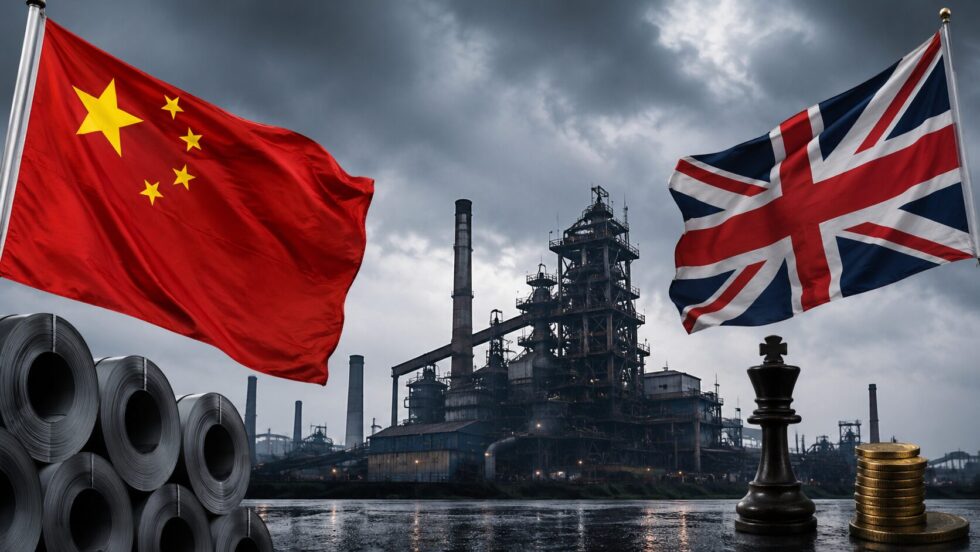
By early 2025, operational decisions accelerated the crisis. The suspension of orders for iron ore and coking coal effectively placed the blast furnaces on a shutdown path — a move widely interpreted as a signal that continued operation was no longer financially viable. Core failure drivers
- Chronic unprofitability under global price pressure
- Rising energy and carbon compliance costs
- Lack of long-term capital investment
- Exposure to tariffs and international competition
- Strategic misalignment between owner and UK policy priorities
This combination left the UK government with limited options beyond intervention.
Why Scunthorpe matters beyond a single plant
The Scunthorpe steelworks represents more than a regional employer. It is one of the last remaining facilities in the UK capable of producing steel from raw materials using blast furnaces — a capability that underpins critical national functions. If the furnaces had shut, Britain would have become the only G7 country without primary steelmaking capacity, increasing reliance on imports in sectors where supply security is essential.
Strategic importance of Scunthorpe
| Dimension | Impact |
|---|---|
| Employment | 3,500 direct jobs, thousands indirect |
| Defence | Steel for military and infrastructure |
| Economy | Anchor industry in Lincolnshire |
| Supply chain | Reduces dependency on imports |
| National security | Maintains sovereign capability |
The plant’s symbolic significance — embodied in its blast furnaces historically named after British queens — reinforces its political weight.etition in the mid-2020s.
China’s warning and what it means in practice
China’s response has shifted the issue from a domestic industrial intervention into a test case for how far Western governments can go in reclaiming control over strategically sensitive assets owned by foreign investors. The language used by Beijing signals concern not only about the immediate financial implications for Jingye Group, but about the precedent such a move sets for Chinese capital deployed in Europe’s industrial base. At its core, the warning reflects a clash between two models: state-led industrial security policy in the UK and market-based ownership protections defended by China in international investment frameworks.
(Chinese Ministry of Commerce, Beijing, May 2026) China urged the UK to respect market principles, avoid administrative coercion and confirmed it would take strong measures to safeguard the legitimate rights of Chinese companies operating abroad. The phrasing is calibrated but deliberate, indicating that Beijing views the situation not as an isolated restructuring but as a potential erosion of investor protections. In practical terms, this introduces a layer of geopolitical risk that extends beyond steel, potentially influencing future Chinese decisions on capital allocation across UK infrastructure, manufacturing and energy sectors. The warning also signals that retaliation, while undefined, is now part of the strategic equation. This could take the form of regulatory tightening on UK firms operating in China, delays in approvals, or broader trade friction in sectors where bilateral flows remain significant. Even without immediate action, the signalling effect alone may alter investor confidence and recalibrate how sovereign risk in the UK is priced by foreign capital.
Potential consequences of the warning
- Diplomatic strain between London and Beijing at ministerial and regulatory levels
- Reduced appetite for Chinese investment in UK industrial and infrastructure assets
- Legal disputes over compensation linked to asset valuation and ownership transfer
- Trade friction in sectors sensitive to state intervention narratives
- Increased scrutiny of foreign ownership across strategic UK industries
The episode reflects a wider global shift in which national security considerations are increasingly overriding traditional market openness, particularly in sectors tied to energy, defence and heavy industry.
How much will nationalisation cost and who pays
The financial dimension of nationalisation sits at the centre of the policy debate, with the UK government already deeply exposed after intervening to keep operations running at Scunthorpe. Public funding has effectively replaced private capital as the primary source of liquidity, raising questions about long-term sustainability and fiscal discipline. What began as an emergency stabilisation measure is now evolving into a multi-year financial commitment with uncertain return.
Current estimates suggest that total taxpayer exposure will extend well into the billions, particularly when accounting for both operational losses and the capital investment required to modernise the plant. The absence of a commercial buyer means the state must absorb not only immediate costs but also long-term transformation risks.
Financial exposure overview
| Category | Estimated cost |
|---|---|
| Emergency support (2025–2026) | £377m–£419m |
| Ongoing support (to 2028) | Up to £1.5bn |
| Green transition (arc furnace) | £1bn+ |
| Liabilities and compensation | Uncertain |
| Total exposure | Multi-billion |
Beyond direct expenditure, the government will assume structural risks tied to market volatility, future steel pricing and the success or failure of technological transition. Any delays in modernisation or cost overruns could significantly increase the fiscal burden, particularly if the plant continues operating at a loss during the transition period.
Why private investors are staying away
The absence of private sector interest reflects a clear assessment of risk versus return. British Steel, in its current form, is a capital-intensive, loss-making asset requiring extensive restructuring before it can become competitive. For investors, the timeline to profitability — combined with regulatory uncertainty — makes the proposition difficult to justify.
(Industry source, UK steel sector, May 2026) Any investor entering the project would face several years of negative returns before stabilisation, with no guarantee of competitiveness in a volatile global market. This reality has effectively removed private capital from the equation in the short term.
The challenge is not simply financial but structural. The plant requires not incremental improvement but a fundamental redesign aligned with low-carbon production standards and future demand patterns.
Key investor barriers
- Long payback horizon exceeding five years before potential profitability
- High upfront capital expenditure with uncertain return profiles
- Policy and regulatory uncertainty around carbon pricing and subsidies
- Infrastructure constraints, particularly electricity grid capacity
- Exposure to global steel price volatility and import competition
In this context, the government becomes the investor of last resort, not by strategic preference but by necessity.
The transformation challenge: from blast furnaces to green steel
Transitioning from traditional blast furnaces to electric arc furnace technology is central to any long-term recovery plan. This shift is driven by both environmental regulation and competitive pressure, as lower-carbon steel production becomes the industry standard across Europe and beyond. However, the transformation is complex, requiring not only capital investment but also structural changes in supply chains, workforce skills and energy infrastructure. The availability of affordable and reliable electricity becomes a critical factor, particularly given the energy-intensive nature of electric arc furnaces.
Transformation timeline
| Phase | Duration | Key challenge |
|---|---|---|
| Planning and approvals | 1–2 years | Regulatory clearance and funding |
| Infrastructure setup | 2–3 years | Grid capacity and energy contracts |
| Construction | 2–3 years | Capital execution and supply chain |
| Stabilisation | 1–2 years | Market integration and cost control |
The total transition period is expected to extend beyond five years, during which the plant will likely require continued financial support. The success of this transition will determine whether British Steel can compete in a decarbonising global market or remain dependent on state aid.
Political context: why Starmer is acting now
The timing of the nationalisation push reflects a convergence of political and economic pressures. Industrial decline in key regions, combined with concerns over job losses and strategic dependency, has intensified calls for decisive government action. Recent electoral setbacks have further increased the urgency to demonstrate control over critical economic issues. (Keir Starmer, London, May 2026) Strong nations in a world like this need to make steel. The statement encapsulates the government’s framing of the issue as one of national capability rather than purely economic calculation.
The policy direction signals a broader shift toward active industrial strategy, where the state intervenes to maintain capabilities deemed essential for long-term resilience. This approach aligns with trends seen across other major economies, where governments are reasserting control over strategic sectors.
Quotes and positions shaping the debate
(Chinese Ministry of Commerce, Beijing, May 2026)
China will take strong measures to safeguard the rights of its companies if their interests are undermined.
(UK government source, Westminster, May 2026)
Maintaining domestic steel production is essential for national resilience and cannot be left entirely to market forces.
(Senior steel industry figure, UK, May 2026)
The transformation will take years and billions, with no immediate path to profitability under current market conditions.
These positions illustrate the tension between geopolitical interests, domestic policy priorities and economic realities.
What happens next for British Steel
The next phase will be defined by legislative approval and operational restructuring. The government must pass the nationalisation bill and complete a public interest assessment before assuming full ownership. This process will determine the legal and financial framework for the transition.
Immediate next steps
- Introduction and passage of nationalisation legislation
- Completion of public interest test
- Independent valuation of assets and liabilities
- Negotiation of compensation with Jingye
- Development of long-term industrial and investment strategy
Each stage introduces potential delays and risks, particularly where legal and financial complexities intersect.
British Steel nationalisation has evolved into a defining test of how the UK balances market principles with strategic intervention in an increasingly uncertain global environment. The decision reflects a recognition that certain industrial capabilities cannot be replaced once lost, particularly in sectors linked to defence, infrastructure and economic sovereignty.
At the same time, the scale of financial exposure and geopolitical sensitivity ensures that the policy carries significant risk. The outcome will shape not only the future of steelmaking in Britain but also the credibility of its broader industrial strategy. In that context, the China British Steel nationalization warning is not limited to Scunthorpe. It signals a structural shift in global economic governance, where state power, industrial policy and international investment are becoming increasingly intertwined.
Top questions about China British Steel nationalization warning (FAQ)
What is the China British Steel nationalization warning
The China British Steel nationalization warning refers to Beijing’s official response to the UK government’s plan to take full control of British Steel. China signalled that such a move must respect market principles and warned it could take measures to protect Chinese corporate interests. The warning reflects concerns over the treatment of Jingye Group, which owns British Steel, and highlights the broader implications for foreign investment security in the UK.
Why does the UK want to nationalise British Steel
The UK government is considering nationalisation to prevent the collapse of the Scunthorpe steelworks and maintain domestic steel production capacity. Without intervention, the UK risked becoming the only G7 country unable to produce steel from raw materials. The decision is driven by national security concerns, job protection and the need to maintain critical infrastructure supply chains.
How much will British Steel nationalisation cost taxpayers
Estimates suggest the total cost could reach several billion pounds. The government has already spent over £400 million to stabilise operations, with projections of up to £1.5 billion by 2028. Additional costs include at least £1 billion for transitioning to electric arc furnace technology, as well as potential liabilities and compensation payments.
What is the Scunthorpe steel plant and why is it important
The Scunthorpe plant is one of the UK’s last facilities capable of producing virgin steel using blast furnaces. It employs around 3,500 people and supports key sectors including construction and defence. Its closure would significantly increase reliance on imports and weaken the UK’s industrial independence.
Who owns British Steel and what role does Jingye Group play
British Steel has been owned by the Chinese company Jingye Group since 2020. Jingye acquired the company after insolvency but has struggled to make operations profitable. The UK government took operational control in 2025 after the company halted raw material orders, putting production at risk.
Can China retaliate against the UK over nationalisation
China has indicated it may take strong measures to protect its companies, but specific actions have not been detailed. Possible responses could include legal challenges, reduced investment or trade-related pressure. The situation adds uncertainty to UK–China economic relations.
Why are private investors not buying British Steel
Private investors are deterred by the high costs and long timeline required to modernise the plant. The transition to green steel technology requires significant upfront investment, and profitability may take more than five years. This risk profile makes the asset unattractive without government support.
What is an electric arc furnace and why does it matter
An electric arc furnace is a steelmaking technology that uses electricity and recycled materials instead of raw iron ore. It produces lower emissions and aligns with environmental regulations. Transitioning to this system is essential for British Steel’s long-term viability but requires major investment and infrastructure upgrades.
What happens next in the British Steel nationalisation process
The UK government will introduce legislation to enable nationalisation, followed by a public interest test. It will also conduct an independent valuation of the company and determine compensation for the current owner. The process will define how the plant is restructured and funded.
How does this affect the UK economy and industry
Nationalisation could stabilise a critical industry but will increase public spending and financial risk. It also signals a shift toward greater state involvement in strategic sectors. The outcome will influence investor confidence and the future of industrial policy in the UK.
Read about the life of Westminster and Pimlico district, London and the world. 24/7 news with fresh and useful updates on culture, business, technology and city life: Virgin Media down: Why are TV channels pixelated and is Virgin Media down across the UK right now
Used materials: Sky News:, Politico:, The Guardian:, National Audit Office:, UK Government:, Chinese Ministry of Commerce