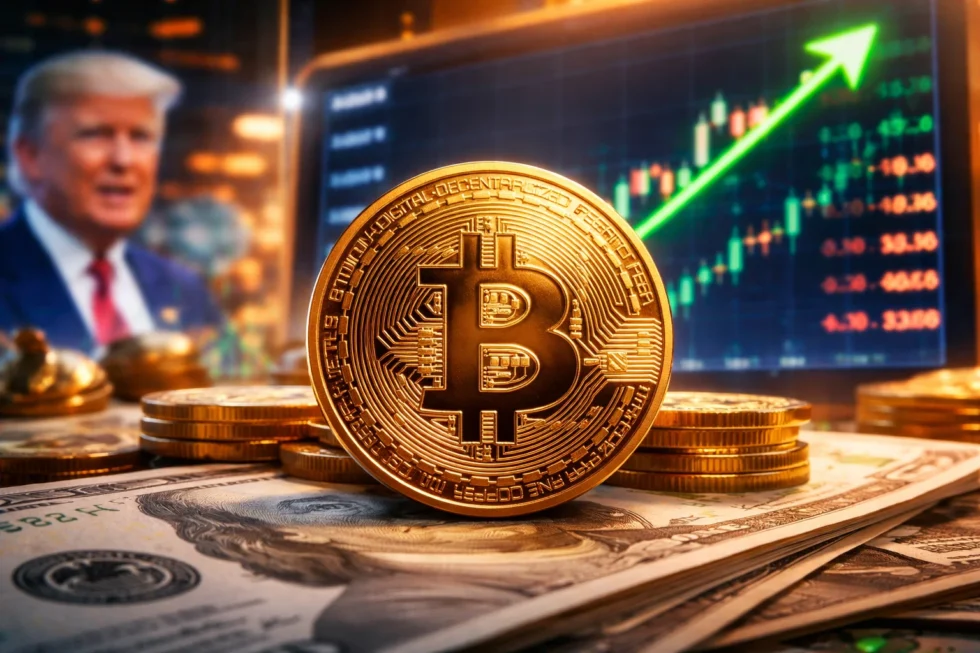
The global digital asset market witnessed a sharp 2.5% recovery in the early trading hours of Monday, April 6, 2026, adding approximately $70 billion to the total market capitalization, which now stands at an 11-day high of $2.44 trillion. This upward trajectory was catalyzed by high-stakes geopolitical signaling from U.S. President Donald Trump regarding a potential 24-hour breakthrough in negotiations to reopen the Strait of Hormuz, a move that triggered $255 million in liquidations—73% of which were short positions.
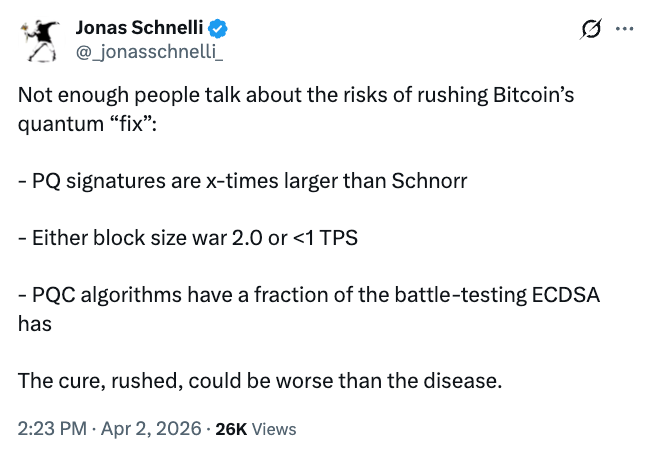
Simultaneously, the industry is grappling with a profound technical debate as prominent figures like Samson Mow warn of a "Block Size War 2.0" over the rushed implementation of post-quantum cryptography. As Bitcoin (BTC) hovers near the $69,500 mark on major exchanges like Coinbase, the convergence of algorithmic security risks and macroeconomic shifts has created a complex environment for institutional and retail investors alike, reports The WP Times.
Quantum Resistance vs. Network Stability: The Samson Mow Warning
A rift is forming between Silicon Valley’s major exchanges and Bitcoin’s core ideological proponents over the speed of "quantum-proofing" the blockchain. Samson Mow, the founder of Jan3, has issued a stern warning that a premature transition to post-quantum (PQ) cryptography could inadvertently compromise the network's current security. The debate intensified following calls from Coinbase CEO Brian Armstrong and CSO Philip Martin for the immediate adoption of PQ standards to defend against emerging hardware capabilities from Google and Caltech. Mow argues that larger signature sizes inherent in PQ solutions could lead to network congestion and compatibility failures.
Risks of Rushed Post-Quantum Implementation
Network Degradation: Larger digital signatures could reduce transaction throughput by an estimated 30-40%.
Increased Attack Surface: Mow suggests that PQ-hardened code might be vulnerable to existing "classical" hacking methods if not rigorously audited.
Economic Centralization: Higher hardware requirements for validating PQ signatures could push smaller miners out of the market.
"Simply put: make Bitcoin safe from quantum computers, only to have it broken by conventional computers," Mow stated, adding that a poorly planned transition could weaken the protocol against modern threats before it ever faces a future quantum challenge.
Geopolitical Triggers: Trump, Iran, and the $70 Billion Rally
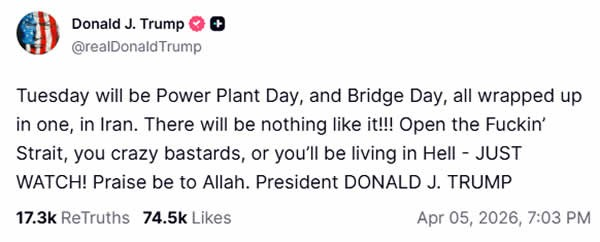
The cryptocurrency market's sensitivity to executive rhetoric reached a peak this weekend. President Donald Trump utilized his Truth Social platform to issue a dual-track message:
a severe warning that Iran would "live in hell" if the Strait of Hormuz remained closed, immediately followed by an optimistic Fox News interview suggesting a deal could be reached within a day. This "volatility as a service" strategy resulted in Bitcoin climbing to $69,500, catching short-sellers off-guard.
Market Impact of Geopolitical Signals
According to CoinGlass data, the ensuing price action forced the liquidation of hundreds of millions in leveraged positions. This suggests that in 2026, Bitcoin continues to act as a "geopolitical hedge," reacting more dynamically to energy corridor stability than traditional equity markets.
Metric
Value (April 6, 2026)
Change (24h)
Total Crypto Market Cap
$2.44 Trillion
+2.5%
Total Liquidations
$255 Million
73% Shorts
Bitcoin (BTC) Price
$69,500
+$1,750
Short-Term Liquidity
$70 Billion added
Recovery Trend
The Petrodollar 2.0: Bitcoin’s Symbiosis with the USD
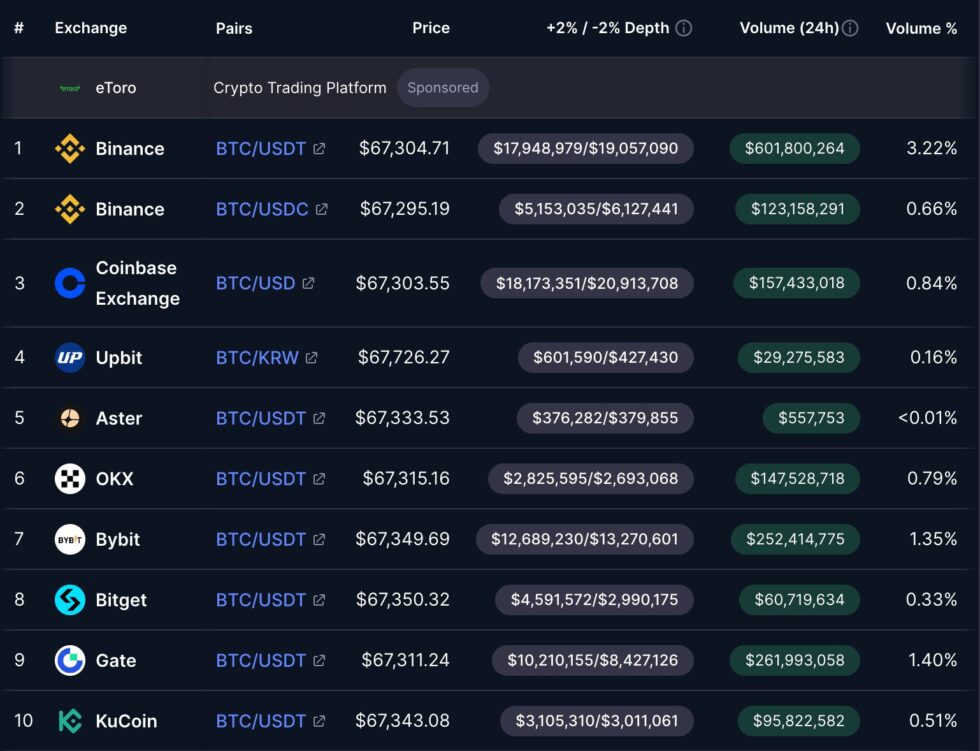
Sam Lyman, head of research at the Bitcoin Policy Institute (BPI), has introduced a new analytical framework for understanding Bitcoin’s role in U.S. monetary hegemony. In 2026, the dominance of the BTC/USD pair and the reliance on Tether (USDT)—which is backed by U.S. Treasury bills—has effectively integrated Bitcoin into the American financial system. Lyman posits that just as oil was priced in dollars to drive global currency demand in the 1970s, Bitcoin and USD-pegged stablecoins are now reinforcing the dollar's status in the digital age.
The New Monetary Mechanics
Treasury Support: Stablecoin issuers are now among the top holders of U.S. government debt, providing a steady source of demand for short-term bonds.
Global Settlement: In regions facing hyperinflation, the BTC/USDT pair has become the de facto standard for preserving purchasing power.
Institutional Alignment: Analysts from BPI suggest that Bitcoin provides the "hard asset" backing that the digital dollar requires to maintain trust.
"Bitcoin is good for the American system because the biggest trading pair for Bitcoin is BTC/USD," Lyman explained. He noted that the relationship is increasingly resembling the petrodollar system, where digital assets drive global demand for the greenback.
In light of the current "Block Size War 2.0" threats and the rapid liquidation cycles, investors should consider the following steps to mitigate risk in April 2026:
Evaluate Custody Solutions: Ensure that your cold storage providers are actively discussing—but not prematurely implementing—PQ standards.
Monitor Energy Corridors: Middle Eastern news remains a primary driver of BTC volatility; use alerts for Strait of Hormuz developments.
Stablecoin Risk Management: Given the symbiosis with the USD, ensure your stablecoin holdings are transparently audited and backed by liquid U.S. Treasuries.
Avoid High Leverage: The $255 million in liquidations highlights that even a "positive" news cycle can be fatal for over-leveraged traders.
Frequently Asked Questions
What is the "Block Size War 2.0"?
It refers to the debate over increasing Bitcoin’s data requirements to accommodate post-quantum security measures, which some fear will lead to network fragmentation.
Why did Bitcoin go up today?
A 2.5% rise followed President Trump's signals regarding a potential deal to reopen the Strait of Hormuz, boosting investor confidence.
How do quantum computers threaten Bitcoin?
Future quantum computers could theoretically "crack" the Elliptic Curve Cryptography (ECC) that currently secures Bitcoin private keys.
Is Bitcoin replacing the dollar?
No, according to the BPI, Bitcoin and the dollar are currently in a "symbiotic" relationship where they mutually support each other's global adoption.
What are the risks of post-quantum cryptography?
Prematurely adding PQ code could introduce bugs that "classical" computers can exploit, as warned by Samson Mow.
Who is Samson Mow?
He is the CEO of Jan3 and a prominent Bitcoin strategist known for his work on nation-state adoption and Layer 2 solutions.
Read about the life of Westminster and Pimlico district, London and the world. 24/7 news with fresh and useful updates on culture, business, technology and city life: HMRC £50,000 MTD rule explained: who must comply from April 2026 and what changes