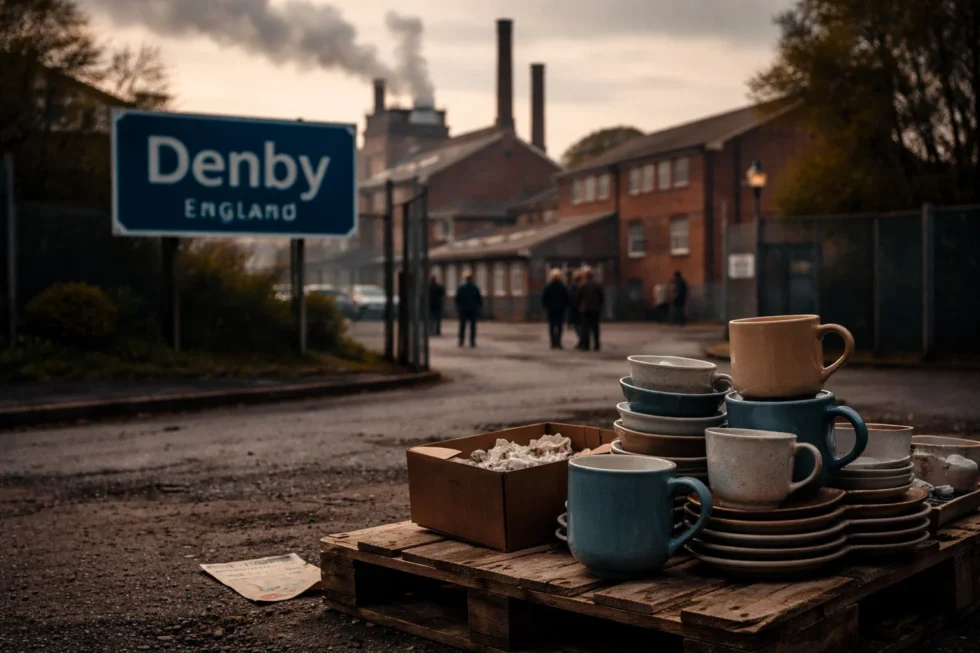
April 2026, Derbyshire, England — One of Britain’s oldest manufacturing brands, Denby Pottery Company, has entered administration after mounting financial pressure, triggering confirmed job losses and raising concerns about the future of a business founded more than two centuries ago. The development has quickly become one of the most discussed industrial stories in the UK, with searches for denby pottery redundancies rising sharply. The situation is reported by BBC News and other national outlets, as confirmed by The WP Times.
Around 80 workers have already been made redundant, according to UK media, while the full scale of job losses remains unclear (BBC News, April 2026). Earlier estimates suggested that up to 600 roles could ultimately be at risk if a buyer is not secured (The Guardian, March 2026). For a company deeply embedded in its local community, the impact has been immediate and personal.
Denby, based in Derbyshire and known for its stoneware tableware, formally appointed administrators after years of rising costs and weakening demand placed sustained pressure on the business. Founded in 1809, the company has long been associated with “Made in England” ceramics and exported products worldwide. The move into administration means control has passed to restructuring specialists, with an urgent process underway to sell or stabilise the business.
The process is now being handled by FRP Advisory, whose representatives say they are working to secure a future for the brand. “We are focused on progressing the sale process as quickly as possible,” administrators said, adding that Denby remains “one of Britain’s most beloved and enduring pottery brands” (FRP Advisory, April 2026).
For workers, however, the announcement has been described as devastating. Many employees have spent decades at the company, developing specialised skills that are difficult to transfer. “People who have been there for 30, 40 years… their skills are in pottery and there isn’t anything else around here for them to do like that,” one worker said (Fran Cutmore, BBC News, April 2026). Another employee, who joined as an apprentice, described the moment as deeply personal: “It was literally heart-breaking. I felt like my world had shattered” (Daizy Stevens, BBC News, April 2026). Others emphasised the close-knit nature of the workplace, describing Denby as “very much a family” (BBC interview, April 2026).
The financial pressures behind the collapse reflect broader trends affecting UK manufacturing. Ceramics production depends on energy-intensive kilns operating at high temperatures, making the sector particularly vulnerable to rising gas and electricity costs. At the same time, increased labour expenses and a slowdown in consumer demand — especially for premium homeware — have reduced profitability. Workers said the company had felt unstable “for a number of years” prior to the current crisis (BBC News, April 2026).
Despite the administration process, operations have not stopped entirely. Orders continue to be fulfilled, stores remain open, and international divisions in markets such as the United States and Asia are still functioning. The immediate priority is to find a buyer who can preserve at least part of the business and protect remaining jobs. The situation has wider implications beyond a single company. Denby represents a segment of British industry built on long-term craftsmanship and regional identity. Its potential decline highlights ongoing structural challenges facing traditional manufacturing in the UK, where rising costs and global competition continue to reshape the landscape.
Founded in 1809 in Derbyshire, Denby built its reputation on durable, everyday stoneware designed for long-term use. Its products have been widely used in British households for generations, making the current crisis not only an economic issue but also a symbolic moment for the country’s industrial heritage. Whether the brand survives will depend on the outcome of the sale process now underway. But for many of those affected, the consequences are already real and immediate, marking what some describe as the end of an era for a company that once defined stability in British manufacturing.
Background: what is Denby and why the brand matters
Founded in 1809 in Derbyshire, England, Denby Pottery Company is one of the longest-standing names in British manufacturing, built on local clay resources and a tradition of stoneware production that has continued for more than two centuries. From its earliest years, Denby positioned itself not as a decorative porcelain house but as a producer of durable, functional ceramics designed for everyday use. Its core products — plates, bowls, mugs and ovenware — became known for their strength and practicality rather than ornament, helping the brand establish a distinct place in British homes.
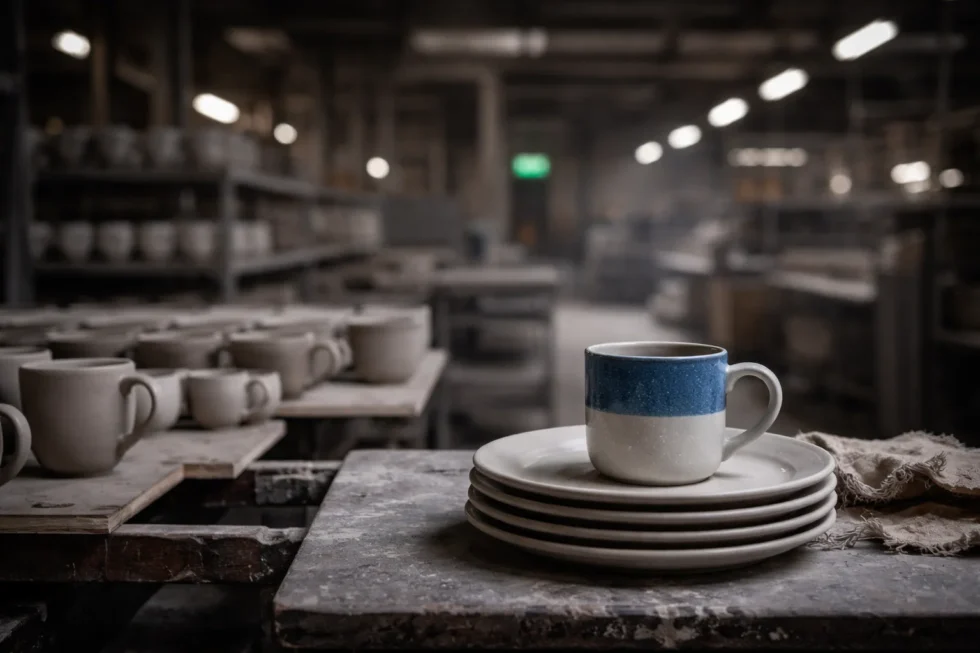
A defining feature of Denby has been its commitment to “Made in England” production. While much of the global ceramics industry shifted manufacturing overseas, Denby retained its primary production base in Derbyshire, combining industrial processes with a significant level of hand-finishing. This approach has long been central to its identity and pricing. The manufacturing process itself reflects a hybrid model. Clay is sourced and prepared locally, while shaping, firing and glazing involve both mechanised systems and skilled manual work. As a result, Denby products often carry slight variations in finish, which are considered part of their character rather than defects.
Over time, the company developed a reputation for what is often described as “everyday premium” tableware — products that are not luxury in the traditional sense but are designed to last for decades. Items are typically resistant to chipping, suitable for ovens and dishwashers, and intended for continuous use rather than occasional display.
Denby’s reach extended well beyond the UK. Its collections have been exported internationally, particularly to the United States and parts of Asia, while maintaining a strong domestic presence in British retail and hospitality. Industry observers have long pointed to three factors behind the brand’s resilience: heritage, durability and local production. That combination allowed Denby to maintain relevance even as cheaper imports entered the market.
The current crisis, therefore, is not only a financial story but also a symbolic one. A company founded in 1809 — and still producing in its original region — represents a model of continuity that has become increasingly rare in modern manufacturing. Even now, as the business undergoes restructuring, the brand retains significant recognition and consumer trust. For potential buyers, that legacy — built over more than 200 years — remains one of its most valuable assets.
Read about the life of Westminster and Pimlico district, London and the world. 24/7 news with fresh and useful updates on culture, business, technology and city life: Castle Combe named one of the most beautiful villages in the world: why this untouched Cotswolds gem still has no new homes after 400 years