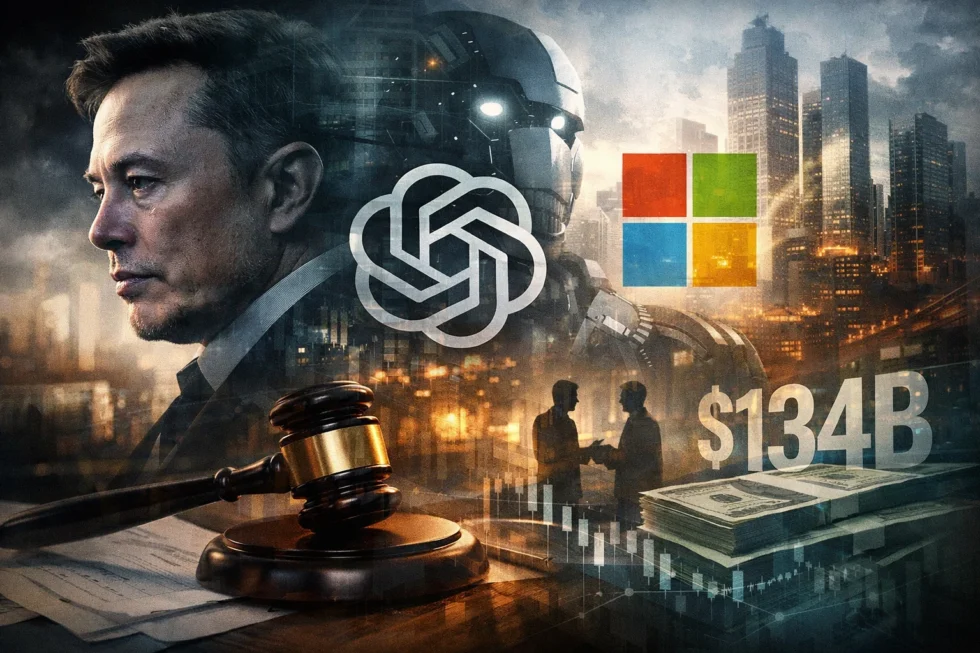
Elon Musk has filed a high-profile lawsuit against OpenAI and Microsoft in a California federal court, seeking up to $134 billion in compensation over alleged “wrongful gains” from artificial intelligence technology. The legal action claims that the ChatGPT creator and its main investor earned vast commercial profits from a project that was originally launched as a non-profit initiative with Musk’s early funding and strategic support. This is reported by The WP Times, citing primary media sources including Reuters.
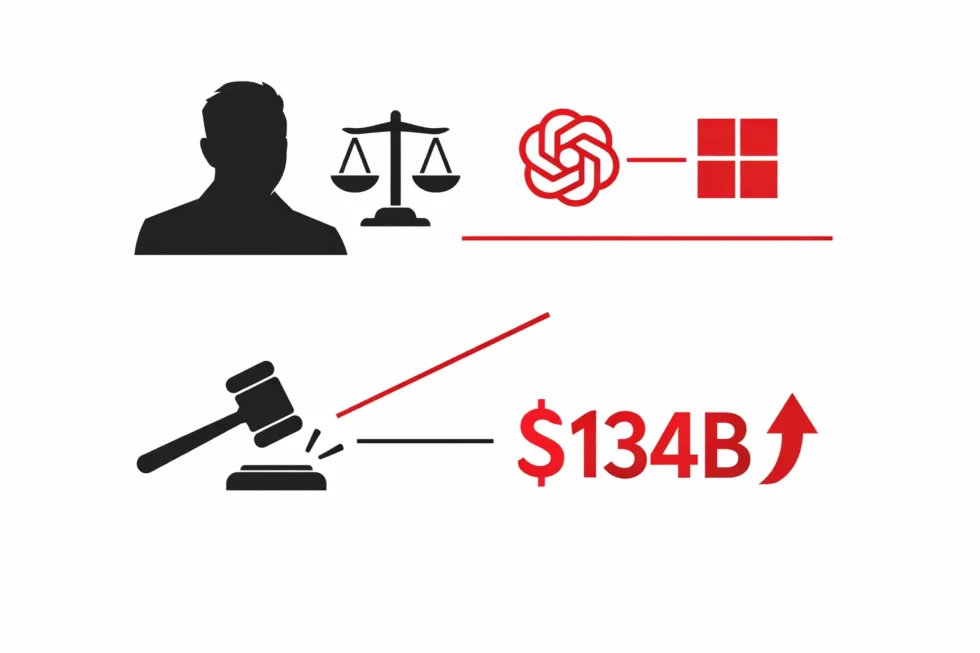
The case, submitted in Oakland, centres on accusations that OpenAI abandoned its founding mission to develop AI for the benefit of humanity and instead transformed into a profit-driven enterprise closely aligned with Microsoft. Musk’s lawyers argue that this shift allowed both companies to monetise technology that was built on the basis of his initial contributions. According to the court filing, Musk invested about $38 million in OpenAI in 2015, helped recruit key personnel and provided credibility that enabled the start-up to grow. The lawsuit now demands repayment of profits that Musk claims were generated as a direct result of that early involvement.
What are the key claims in the Elon Musk lawsuit
The lawsuit sets out a series of detailed allegations about Musk’s early role in OpenAI and the later commercial success of the company. According to the legal complaint:
- Musk invested approximately $38 million in OpenAI during its formative years
- That investment accounted for around 60 per cent of the organisation’s initial funding
- He helped recruit senior researchers and technical staff
- He provided strategic direction at a crucial stage of development
- His public reputation and industry standing attracted additional investors
- OpenAI later shifted from a non-profit model to a profit-driven corporate structure
- Microsoft became the primary commercial beneficiary of that transformation
Musk’s legal team argues that OpenAI’s move away from its original non-profit purpose fundamentally breached the founding principles on which the organisation was created.
“Without Elon Musk, there would be no OpenAI,” said Steven Mollo, Musk’s lead attorney (statement to Reuters, January 2026).
The complaint maintains that Musk’s early financial and strategic support was essential to OpenAI’s later commercial growth, and that he should therefore be entitled to a share of the profits generated after the company became a global AI leader.
| Category | Amount claimed |
|---|---|
| Musk’s initial investment | $38 million |
| Share of early funding | Approximately 60% |
| Estimated OpenAI profits | $65.5bn – $109.4bn |
| Estimated Microsoft profits | $13.3bn – $25.1bn |
| Total compensation sought | Up to $134bn |
The lawsuit is based on financial modelling prepared by experts hired by Musk’s legal team. Both OpenAI and Microsoft have challenged these calculations.
How have OpenAI and Microsoft responded
OpenAI has strongly rejected the allegations, describing the lawsuit as “baseless”. Company representatives say Musk left the organisation voluntarily in 2018 and had no further involvement in its operations. A spokesperson for Microsoft denied any wrongdoing.
“There is no evidence that Microsoft aided or encouraged any breach of OpenAI’s original mission,” a company lawyer said (legal filing, January 2026).
Both defendants have criticised the methods used to calculate the alleged damages.
“The figures presented by Mr Musk’s expert rely on unverified assumptions and speculative projections,” Microsoft’s legal team stated in court papers. OpenAI has also argued that the company’s transition to a commercial structure was necessary to fund expensive AI research and to remain competitive in the global technology market.
Why did Musk leave OpenAI
OpenAI was founded in 2015 as a research lab dedicated to creating safe and beneficial artificial intelligence. Musk was one of several prominent technology leaders involved in its creation. In 2018, he stepped down from the board, citing potential conflicts of interest with his own AI projects at Tesla and other companies.
Since then, OpenAI has built a close partnership with Microsoft, which has invested billions of dollars and integrated OpenAI technology into products such as Azure cloud services and the ChatGPT platform. Musk’s lawsuit argues that this relationship turned OpenAI into a commercial entity that prioritises profits over its original humanitarian goals.
What happens next in the Elon Musk lawsuit
A federal judge in Oakland, California, has ruled that the case will proceed to a jury trial, which is expected to begin in April 2026. The court will examine:
- Whether Musk retains any legal rights to OpenAI’s profits
- Whether OpenAI breached any founding commitments
- Whether Microsoft benefited improperly from the restructuring
- Whether financial damages can be accurately calculated
Legal experts say the trial is likely to become one of the most significant technology industry cases in recent years.
Timeline of major events in the Elon Musk lawsuit
| Year | Event |
|---|---|
| 2015 | OpenAI is founded as a non-profit research organisation with Elon Musk as a key early investor and co-founder |
| 2016–2017 | Musk provides financial support and strategic guidance during OpenAI’s early development |
| 2018 | Musk steps down from the OpenAI board, citing potential conflicts of interest with Tesla and other ventures |
| 2019 | OpenAI begins shifting towards a more commercial structure and forms a major partnership with Microsoft |
| 2020–2024 | Microsoft invests billions of dollars in OpenAI and integrates its technology into commercial products |
| 2025 | ChatGPT and related AI tools become globally profitable platforms |
| January 2026 | Musk files a lawsuit against OpenAI and Microsoft seeking up to $134bn in damages |
| January 2026 | OpenAI and Microsoft formally reject the allegations in court filings |
| April 2026 | Jury trial scheduled to begin in Oakland, California |
Read about the life of Westminster and Pimlico district, London and the world. 24/7 news with fresh and useful updates on culture, business, technology and city life: How is Grok AI being used to digitally undress women on Elon Musk’s X without their consent