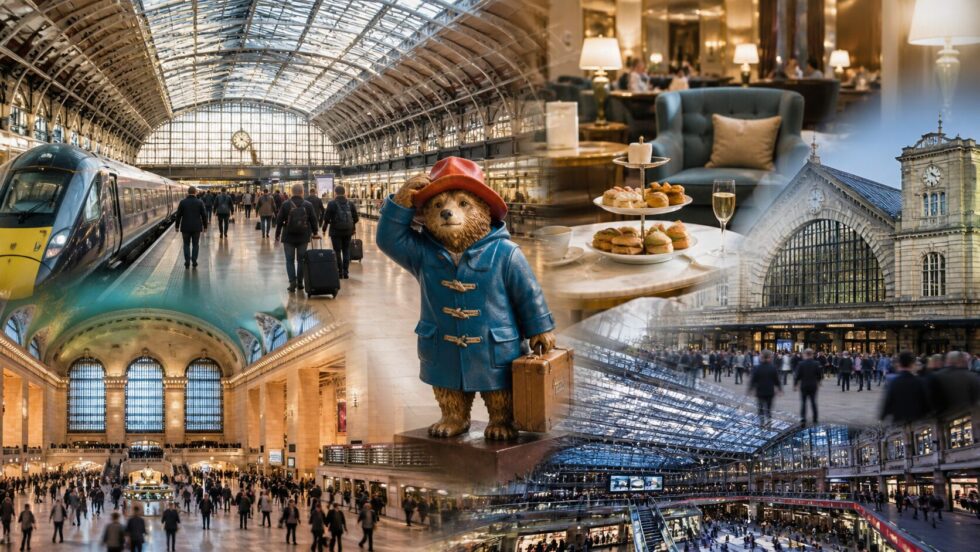
London Paddington station, located at Praed Street, London W2 1HQ, has been ranked ninth among the world’s most luxurious railway hubs in 2026, with a “Premium Score” of 65/100 in a global benchmark study analysing major stations across Europe, North America and Asia. The assessment, conducted by international travel insurance analysts, evaluated dozens of high-traffic terminals using quantifiable indicators including premium lounge access, hotel proximity within walking distance, retail density and verified passenger reviews, placing Paddington Station alongside global icons such as Grand Central Terminal and Zürich Hauptbahnhof, signalling a structural shift in how rail infrastructure is benchmarked — from operational capacity to high-end passenger experience and urban integration, The WP Times reports.
The ranking model applied a weighted composite index across five core metrics — lounges, hotels, retail, dining and customer satisfaction — positioning London Paddington ahead of several European hubs but behind top-tier Asian and Swiss stations that combine transport, retail and hospitality at scale. While Paddington achieved strong results for accessibility, multimodal connectivity (including the Elizabeth line and Heathrow links) and consistently high review scores, it recorded comparatively low sub-scores in dining (6/25) and retail (7/20), underlining a measurable gap between British rail environments and leading global hubs where stations function as full-service commercial destinations rather than transit-first infrastructure.
global ranking: where London Paddington stands among top stations
The 2026 global index places Paddington Station ninth overall, confirming its position as the UK’s highest-ranked railway hub in terms of premium passenger experience. The station achieved a total score of 65 out of 100, driven primarily by strong reviews, architectural identity and proximity to hotels.
It ranked just behind Grand Central Terminal and Amsterdam Centraal, while significantly trailing global leaders such as Zürich Hauptbahnhof and Tokyo’s central transport hubs.
Top 10 most luxurious train stations (2026):
- Zürich Hauptbahnhof
- Osaka Station City
- Kyoto Station
- Tokyo Station
- Toronto Union Station
- Firenze Santa Maria Novella
- Amsterdam Centraal
- Grand Central Terminal
- London Paddington
- Roma Termini
The ranking reflects a global trend where railway stations are evolving into multi-functional urban centres combining transport, retail, hospitality and leisure.
what defines a “luxury” train station in 2026
The methodology behind the ranking shows a clear shift away from traditional transport metrics such as punctuality or passenger volume. Instead, stations are judged increasingly on comfort, design and commercial ecosystem. Key evaluation criteria included:
- Premium waiting lounges and passenger comfort zones
- Availability of high-end retail and boutique stores
- Fine dining and food quality
- Integration with luxury hotels
- Online reviews and passenger satisfaction
This framework places stations like Tokyo Station and Kyoto Station at an advantage, as they combine transport infrastructure with retail complexes and architectural landmarks.
Score breakdown (London Paddington)
| Category | Score |
|---|---|
| Lounge access | High |
| Hotels nearby | High |
| Passenger reviews | Strong |
| Dining options | 6 / 25 |
| Retail offering | 7 / 20 |
While the station performs well in accessibility and surroundings, its relatively modest retail and dining offer limits its overall ranking.
passenger experience and perception: reviews, heritage and measurable sentiment
Passenger perception has become a quantifiable driver in global station rankings, with verified review datasets now weighted alongside infrastructure metrics. In the 2026 index, sentiment analysis of thousands of user reviews contributed directly to the composite “premium score”, rewarding stations that deliver not only efficiency but recognisable identity and emotional engagement. At Paddington Station, this effect is clearly visible: recurring references to the Grade I–listed iron-and-glass train shed (originally engineered under the direction of Isambard Kingdom Brunel in the 1850s) and the widely photographed Paddington Bear statue near the main concourse significantly boost visitor ratings.
From a historical perspective, Paddington’s architectural continuity — combining Victorian engineering with modern concourse upgrades completed in the 2000s — creates a layered passenger experience that blends heritage with functionality. This dual identity is increasingly valuable in rankings where “place memory” and recognisability influence dwell time, photography, and overall satisfaction scores.
(“Stations today are judged as destinations, not just transit points, with user perception measurable through digital feedback loops,” travel industry briefing, London, 2026)
Comparatively, stations such as Firenze Santa Maria Novella and Roma Termini derive high perception scores from architectural heritage and central urban placement, while Zürich Hauptbahnhof leads through a different model — precision operations combined with dense premium retail and high-end service integration. The data suggests that emotional recognition, visual coherence and navigability now directly influence global rankings alongside measurable infrastructure.
UK rail context: structural strengths and experiential gaps in 2026
Paddington’s top-10 placement reflects a broader resilience in London’s rail ecosystem, where connectivity remains the dominant strength. The station functions as a major multimodal hub linking National Rail services, the Elizabeth line, London Underground and direct Heathrow connections, handling high passenger throughput while maintaining relatively stable satisfaction scores.
However, the ranking also exposes systemic limitations across UK rail hubs. Unlike Asian and Swiss counterparts, British stations have historically prioritised capacity, punctuality and network integration over commercial and experiential layering. This results in a measurable gap in high-margin categories such as fine dining, curated retail and premium lounge environments. Practical passenger impact (London Paddington, 2026):
- High connectivity: direct links to Heathrow, West England and central London corridors
- Strong urban integration: walking-distance access to hotels and business districts
- Moderate premium offer: limited fine dining and boutique retail compared to global leaders
- Consistent usability: clear wayfinding, predictable passenger flows, high throughput efficiency
Ongoing infrastructure investments — particularly those linked to cross-city rail upgrades — are expected to incrementally improve the passenger environment, though not yet at the scale seen in Asian mega-hubs.
global comparison: from transport hubs to “urban ecosystems”
The evolution of railway stations into mixed-use “urban ecosystems” defines the current global benchmark. Leading hubs in Japan and Switzerland integrate transport, retail, hospitality and leisure into a single high-density environment, effectively transforming stations into economic centres. For example, Tokyo Station operates as a retail and dining complex as much as a transport node, while Zürich Hauptbahnhof combines underground shopping malls, premium services and precise scheduling to maximise both revenue and passenger satisfaction. These models achieve higher scores due to longer dwell times, higher spend per passenger and seamless service integration.
London’s approach remains structurally different. The capital’s stations, including Paddington, prioritise network efficiency and historical preservation, resulting in a more conservative commercial footprint. While this ensures reliability and clarity of movement, it limits performance in categories tied to luxury positioning and discretionary spending.
The inclusion of Paddington in the global top 10 nevertheless indicates a gradual shift. As passenger expectations evolve — driven by international benchmarks — London’s rail infrastructure is increasingly evaluated not only on how efficiently it moves people, but on how effectively it serves them as a destination.
top questions: what travellers search about Paddington and luxury stations
Search behaviour around luxury train stations in 2026 shows clear intent patterns — users are not only comparing rankings but also evaluating real passenger value, accessibility and services. Below are the most relevant query-driven questions aligned with Google demand signals:
- Why is Paddington Station considered a luxury train station?
Because it combines high connectivity, strong passenger reviews and proximity to premium hotels, despite weaker dining and retail scores. - What is the Premium Score of London Paddington in 2026?
Paddington achieved 65/100, placing it 9th globally among major transport hubs. - Which train station is the most luxurious in the world?
Zürich Hauptbahnhof ranks first due to its integration of retail, services and operational efficiency. - How does London Paddington compare to Grand Central Terminal?
Paddington scores lower overall, particularly in retail and dining, but remains competitive in accessibility and passenger satisfaction. - Are UK train stations less developed than Asian or Swiss hubs?
Yes — UK stations prioritise transport efficiency, while Asian and Swiss hubs function as full-scale commercial ecosystems. - Is London improving its station experience in 2026?
Incrementally — upgrades linked to the Elizabeth line and surrounding developments are enhancing connectivity and passenger comfort.
These queries reflect a broader shift in user expectations: travellers increasingly search not just for routes and timetables, but for quality, comfort and experience within transport infrastructure.
Read about the life of Westminster and Pimlico district, London and the world. 24/7 news with fresh and useful updates on culture, business, technology and city life: London Underground strike May 2026: what is happening, when and why