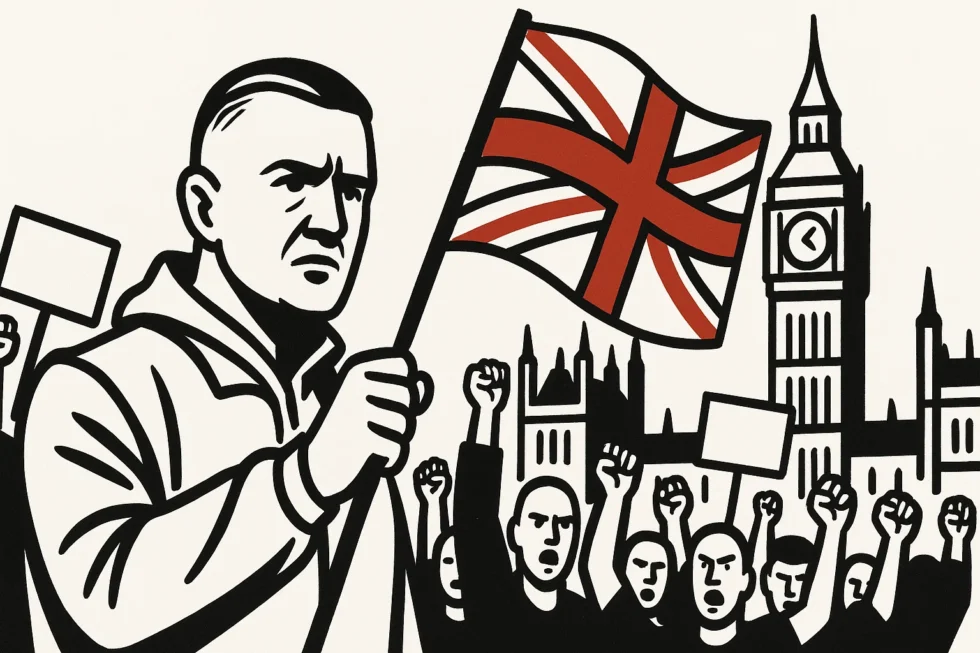
A Christmas-themed rally organised under the banner “Unite the Kingdom” got under way on Saturday afternoon at the north end of Whitehall in central London, drawing hundreds of supporters and triggering an enhanced police operation across Westminster during one of the busiest pre-Christmas shopping weekends of the year. Led by activist Tommy Robinson, the gathering took place alongside two other scheduled demonstrations in the area, placing additional pressure on public order and transport management — writes The WP Times, citing The Media Standard.
What happened first: the timeline
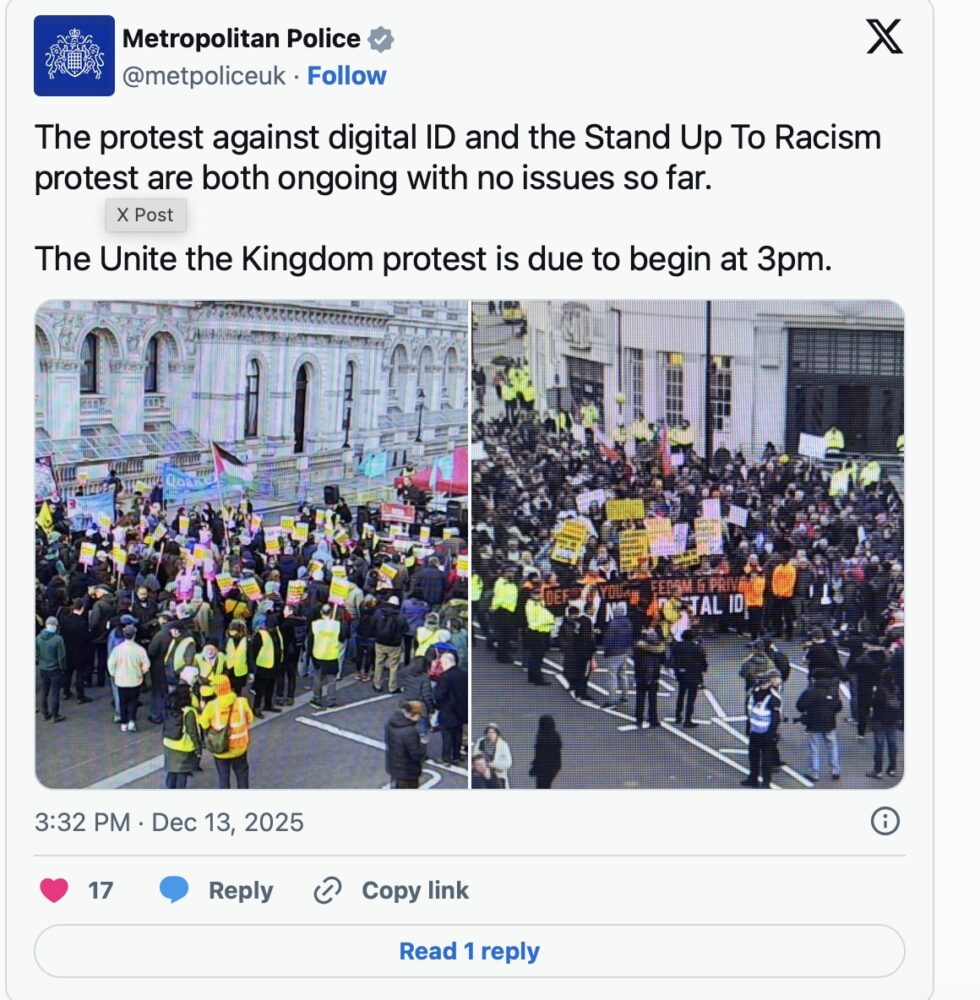
Police confirmed in advance that three separate demonstrations were scheduled in central London on the same afternoon.
At 1pm, a Stand Up To Racism counter-protest gathered at the southern end of Whitehall.
At 2pm, a separate anti–digital ID march set off from Portland Place, moving through Regent Street, Piccadilly Circus and Haymarket towards Westminster.
At 3pm, the Unite the Kingdom rally — described by organisers as a static, religious gathering — began at the north end of Whitehall.
What took place at the Unite the Kingdom rally
Supporters gathered wearing Christmas jumpers, Santa hats and Union Jack flags. Hymn sheets were distributed, Christmas carols were played and extracts from the Bible were read as daylight faded. Candles were lit among the crowd, giving the event the appearance of a Christmas service rather than a conventional political demonstration.
Tommy Robinson addressed supporters later in the afternoon, describing the rally as a celebration of the birth of Jesus Christ. He urged attendees to behave respectfully, avoid alcohol and refrain from face coverings. The event was live-streamed online, with Robinson telling supporters that the gathering was religious rather than political in nature.
Policing and public order
The Metropolitan Police deployed additional officers across Westminster, citing increased seasonal footfall and the risk of disruption in the run-up to Christmas. Barriers were erected to keep the Unite the Kingdom rally physically separated from the Stand Up To Racism counter-protest.
Commander Adam Slonecki, who led the policing operation, said officers had imposed Public Order Act conditions, including limits on locations and timings, to ensure public safety and reduce disruption for Londoners, shoppers and visitors.
Despite violence reported during earlier Unite the Kingdom events this year, police said Saturday’s demonstrations passed largely peacefully, with no major incidents reported.
Why the rally mattered
The Whitehall gathering underlined the challenges faced by London authorities during the festive season, when religiously framed events, political activism and counter-protests increasingly overlap in highly symbolic public spaces. While the rally concluded without serious disorder, it once again required extensive policing and coordination.
Who is Tommy Robinson
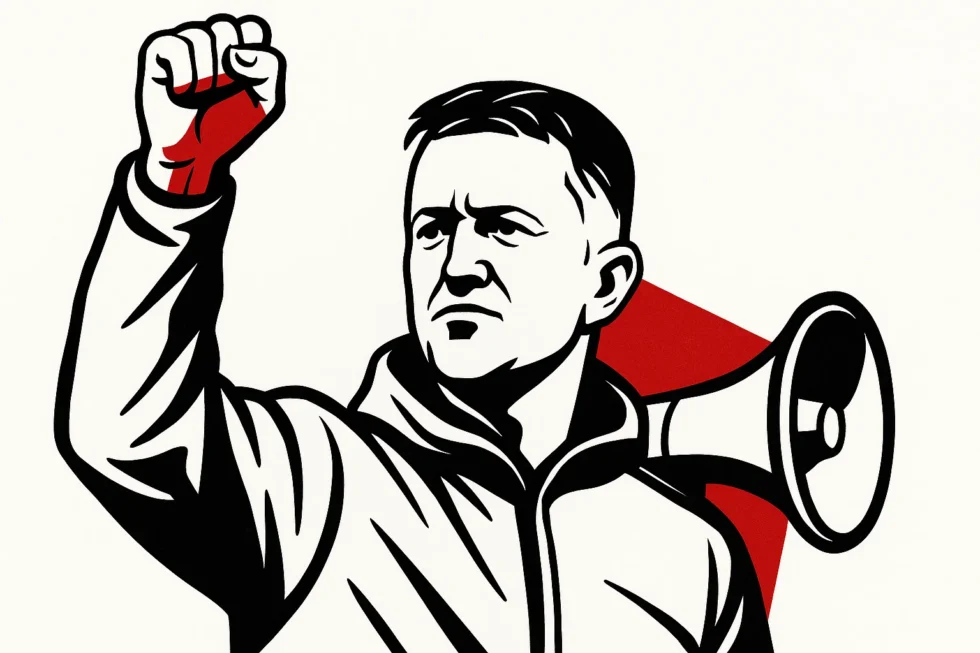
Tommy Robinson, whose real name is Stephen Yaxley-Lennon, is a British activist who rose to prominence in the late 2000s as a co-founder of the English Defence League (EDL), an anti-Islam street protest movement established in 2009. Robinson served as the group’s public figurehead before formally leaving the organisation in 2013, citing internal disagreements, though his public profile continued to be closely associated with street-level activism and protest politics.
Since then, Robinson has remained a highly controversial figure in UK public life, regularly organising demonstrations and speaking at rallies centred on issues including immigration, free speech, Islamism, national identity and the role of the state. His activities have consistently attracted both dedicated supporters and organised opposition, resulting in frequent counter-protests and large-scale police operations around his public appearances.
Robinson has been convicted of multiple offences, including public order offences, mortgage fraud and contempt of court, and has served several custodial sentences, most notably in connection with reporting restrictions during criminal trials. These convictions have played a central role in shaping his public image and media coverage, particularly around debates on press freedom and the limits of protest.
In recent years, Robinson has increasingly reframed some of his public events using religious and cultural language, especially around Christmas, presenting rallies as faith-based or heritage-focused gatherings rather than explicitly political protests. This shift has not reduced controversy but has added a new layer to the debate surrounding his role in British public discourse, as well as to policing decisions linked to crowd control and public order.
Read about the life of Westminster and Pimlico district, London and the world. 24/7 news with fresh and useful updates on culture, business, technology and city life: Why Hanukkah in London begins tonight and how the city marks it in public life