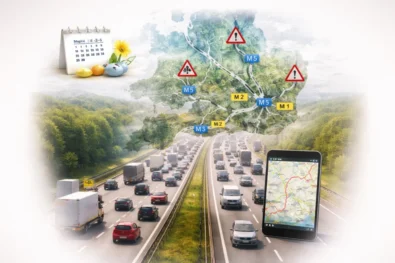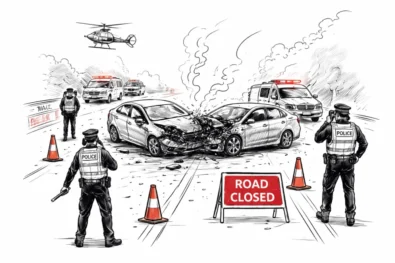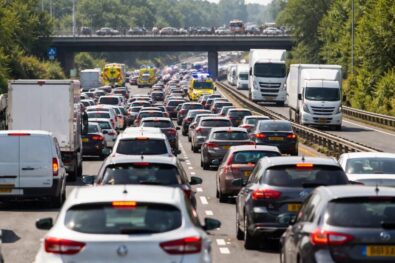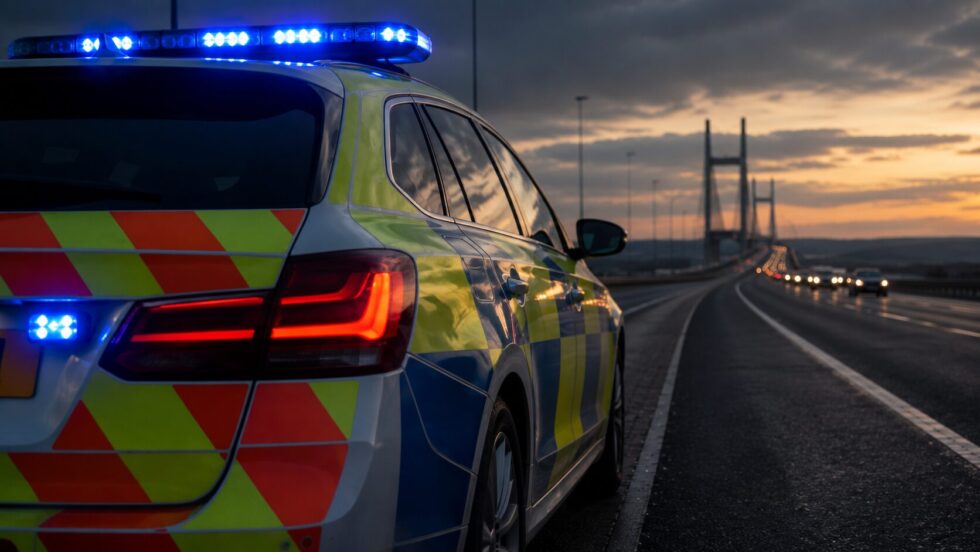
M5 traffic was heavily disrupted on Sunday evening, 14 June 2026, after a police-led incident near Avonmouth Bridge forced closures around Bristol, left drivers in long queues and triggered warnings to avoid the area while emergency services responded. The incident affected the stretch around Junction 19 for Portishead and Junction 18 for the M49, one of the most sensitive points on the South West motorway network, before later updates indicated the route had reopened with residual delays still expected, The WP Times reports.
The disruption came at a difficult time for motorists travelling between Bristol, North Somerset, Wales and the South West. Traffic data showed all lanes closed on parts of the M5 around Junction 18 and Junction 19, while congestion also spread to nearby approaches and slip roads. Police described the situation as linked to concern for the safety of a person, and drivers were urged not to add pressure to the area by joining the affected section. For anyone travelling on Sunday evening, the key message was simple: check live traffic before setting off, avoid the Avonmouth Bridge corridor where possible and expect delays even after reopening.
M5 traffic near Avonmouth Bridge: where the motorway was affected
The main disruption centred on the M5 around Avonmouth Bridge, between Junction 19 for Portishead and Gordano Services and Junction 18 for the M49 and Avonmouth. This section matters because it carries regional traffic between Bristol, North Somerset, the M4, South Wales and the wider South West. When a closure happens here, traffic does not simply stay on the motorway; it quickly pushes pressure onto local roads, including routes around Portishead, Avonmouth, Shirehampton, the Portway and approaches towards Bristol.
National Highways data published on Sunday evening showed several affected points on the M5, including closures connected with Junction 18, Junction 19, and northbound access points further south. The most serious alerts involved all lanes closed between Junction 19 and Junction 18 northbound, all lanes closed southbound between Junction 18 and Junction 19, and slip-road disruption around the M49 and Gordano Services. The expected return to normal traffic conditions was initially placed around 21:00 to 21:15, although that timing always depends on police control, safety checks and the pace of traffic recovery after reopening.
For readers, the practical geography is important. Junction 18 links the M5 with the M49, which is used by traffic heading towards the M4 and the Severn crossings. Junction 19 serves Portishead, Gordano Services and the A369. Avonmouth Bridge sits between these points and is already a known pinch point, meaning even a short closure can create long queues quickly.
Key affected points reported on Sunday evening
| Area | Reported impact | Why it mattered |
|---|---|---|
| M5 northbound J19 to J18 | All lanes closed during the incident | Main affected carriageway near Avonmouth Bridge |
| M5 southbound J18 to J19 | All lanes closed during the incident | Blocked traffic towards North Somerset and the South West |
| J18 southbound access from M49 | All lanes closed | Hit traffic joining from the M49 |
| J19 northbound access | All lanes closed | Affected traffic entering near Gordano Services |
| J20/J21 northbound access | Incident-related closures also shown | Added pressure on northbound movements further south |
What police said about the M5 closure and why details remain limited
Police-led motorway incidents are reported carefully because they often involve personal safety, public protection or operational decisions that cannot be fully explained while officers are still working at the scene. In this case, Avon and Somerset Police were reported as saying the closure was connected with concern for the safety of a person at Avonmouth Bridge. That wording matters because it is not the same as a standard crash report, a routine breakdown, or a planned roadworks closure.
For a serious news report, the correct approach is not to speculate about the person involved, the exact police tactics or what drivers may have seen from the queue. The verified public-interest facts are the closure, the location, the police-led nature of the response, the traffic consequences and the advice to avoid the area. Anything beyond that risks turning a welfare incident into unnecessary drama. The story is therefore about road disruption, emergency response and the safe management of a major motorway corridor.
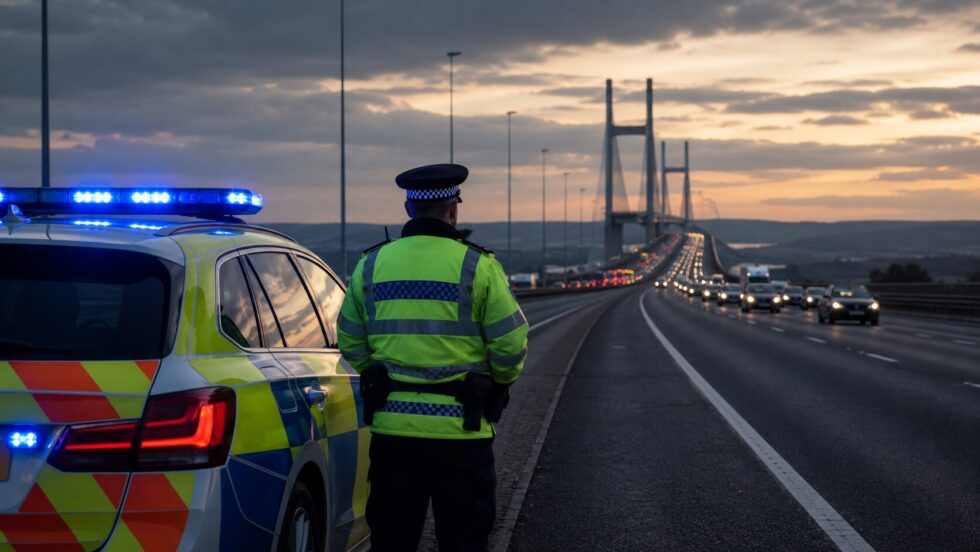
Drivers stuck in the queue reported a full standstill, with some people leaving their vehicles as traffic stopped for a prolonged period. That is a common reaction in long motorway closures, but it is also risky. Motorways remain dangerous even when traffic appears motionless, because emergency vehicles, traffic officers and recovery teams may still need access. Drivers should stay alert, keep the hard shoulder clear unless instructed otherwise and avoid reversing along the hard shoulder, which can block emergency access and create further danger.
Why “police-led incident” is important wording
A police-led incident means the motorway closure is being controlled primarily for safety and operational reasons rather than only for road repair or vehicle recovery. That can make reopening times harder to predict. Even when the immediate incident is resolved, the road may still need to be checked before all lanes reopen. Traffic then takes time to clear because thousands of vehicles have already been held in place or diverted.
M5 closed near Bristol: how long delays built up and why queues spread
The M5 is one of the most important north-south routes in western England, and the Avonmouth Bridge area is particularly vulnerable to disruption. A closure between Junction 18 and Junction 19 does not only affect local drivers; it affects holiday traffic, freight, airport journeys, Wales-bound routes and regional traffic moving between Bristol and the South West. On Sunday evening, that meant delays built quickly after the first reports of a police incident.
Traffic monitoring reports indicated that the incident began during the early evening and that queues had already formed within minutes. By the time all traffic was being held, drivers were reporting gridlock and very slow movement. Camera images and live road feeds showed a long stretch affected, with congestion building back from the closure point. The problem then became wider than the original police incident because vehicles already committed to the motorway had limited options.
This is why motorway closures often feel disproportionate to drivers. A short closed section can trap traffic behind it, block slip roads, overload nearby A-roads and disrupt services access. At Avonmouth Bridge, the problem is intensified by geography: the bridge crosses the River Avon, and alternative routes are not as simple as leaving at the next junction and driving around the obstruction. Once the network is saturated, recovery can take longer than the incident itself.
Practical advice for drivers after reopening
Drivers should not assume that “reopened” means “normal”. When a motorway has been closed for a police incident, the first stage is reopening lanes. The second stage is releasing held traffic. The third stage is clearing congestion on approach roads and local diversions. That final stage can take much longer than expected, especially on a Sunday evening when people are returning from weekends away.
Useful steps for motorists:
- Check live M5 traffic before joining at Junction 18, Junction 19, Junction 20 or Junction 21.
- Avoid unnecessary travel through the Avonmouth Bridge corridor until queues clear.
- Use official National Highways, Traffic England or police updates rather than relying only on map apps.
- Do not use the hard shoulder to reverse or leave the motorway unless directed by police or traffic officers.
- Keep fuel, phone battery and water in mind if already caught in a long queue.
- Allow extra time for Bristol, Portishead, Clevedon, Avonmouth and M49 routes.
M5 traffic latest: what the reopening means for Bristol and South West routes
Later updates indicated that the incident had been resolved and the M5 was back open, but that does not remove the effect immediately. Residual delays are normal after a full or partial motorway closure, particularly when traffic has been held on both approaches. Drivers heading north towards Bristol, the M4 and South Wales could still face slow sections, while southbound traffic towards North Somerset and the South West may also remain heavy.
For Bristol, the wider knock-on effect is often felt on routes that are not technically part of the closure. The Portway, Shirehampton roads, Avonmouth access roads, A369, A4 links and M49 approaches can all become busier as drivers try to avoid the motorway. Local traffic can then mix with diverted motorway traffic, slowing buses, taxis, commuters and airport-related journeys. That is why police advice to avoid the area is not just for people already on the M5; it is also for drivers considering local shortcuts.
The reopening also matters for freight and commercial traffic. The M5 around Avonmouth is close to major logistics, port and motorway links. Lorries delayed here can affect delivery schedules and onward journeys towards the Midlands, South Wales, Devon and Cornwall. Even after the road opens, heavy vehicles take longer to move through queues, so congestion may remain visible after car traffic starts to improve.
What drivers should check before travelling tonight
| Check | Why it matters |
|---|---|
| M5 J18–J19 live status | This was the core closure area |
| M49 access to M5 | Traffic joining from Wales/M4 may still be affected |
| Portishead and A369 routes | Local diversions can become overloaded |
| Bristol local roads | Knock-on congestion may remain after motorway reopening |
| National Highways alerts | Official feeds update expected recovery times |
| Fuel and battery | Long queues can last beyond the incident itself |
Why Avonmouth Bridge closures create severe M5 delays
Avonmouth Bridge is not just another bridge on the motorway. It carries the M5 over the River Avon and connects major traffic flows around Bristol, North Somerset, the M49 and the M4 corridor. When it is affected, there are fewer easy alternatives than drivers might expect. The geography of the river, port area and Bristol road network means displaced traffic is pushed into routes that are not designed to absorb a sudden motorway load.
That is why delays can appear both north and south of the incident zone. Northbound traffic can queue back from Junction 19, while southbound traffic can be held from Junction 18. If slip roads are also closed, drivers may be unable to join or leave at the normal points. If local routes then clog up, the effect spreads into Bristol and North Somerset.
This also explains why official reopening estimates can change. Police must first make the scene safe. National Highways and traffic officers then need to manage lane release, check road safety and restore traffic flow. Only after that can congestion begin to reduce. For drivers, the safest assumption is that a motorway corridor remains difficult for some time after a police-led closure ends.
Was this connected to planned M5 roadworks?
The Sunday evening police incident near Avonmouth Bridge should be treated separately from planned M5 maintenance schemes. National Highways has scheduled overnight resurfacing and maintenance work on parts of the M5 in the South West, including work around Junctions 23 to 25 from 14 June to 6 August 2026. Those works are planned overnight closures and are not the same as an emergency police-led closure around Junctions 18 and 19.
This distinction matters for readers searching M5 traffic updates. A driver may see “M5 closure” and assume it is roadworks, but a police incident can happen outside planned maintenance and may create a much more unpredictable traffic pattern. Planned works usually have signed diversions and published schedules. Police-led incidents depend on safety, emergency response and operational decisions at the scene.
For Sunday evening journeys, the urgent issue was the Avonmouth Bridge-area police incident and the resulting delays. For later overnight travel, drivers should also check whether separate planned maintenance affects other M5 sections. Both can matter on the same day, but they are not the same story.
What happens next for M5 traffic after the police incident
Once a police-led motorway incident is resolved, the next phase is recovery. National Highways traffic officers and police normally reopen lanes gradually, allow trapped traffic to move, and monitor whether congestion remains severe. Map apps may show the road as open before traffic has truly returned to normal, which can mislead drivers into joining a still-congested route. That is why official alerts and local traffic reports remain important even after the first reopening update.
Drivers already delayed should expect the slowest movement around the former closure points, especially between Junction 18 and Junction 19. Those approaching from the M49, Portishead, Clevedon, Avonmouth or central Bristol should allow extra time. If travelling longer distances, it may be better to pause before entering the motorway network rather than joining a recovering queue. For freight and coach operators, schedule adjustments may still be needed after the motorway has technically reopened.
The main verified conclusion is clear: M5 traffic was severely disrupted by a police-led incident near Avonmouth Bridge on Sunday evening, with closures around Junctions 18 and 19, long queues and wider delays across the Bristol area. The route later reopened, but residual congestion remained the key risk for drivers. Anyone using the M5 tonight should check live updates, avoid unnecessary travel through the affected corridor and treat reopening as the start of recovery, not the end of disruption.
FAQ: M5 traffic near Avonmouth Bridge
Why was M5 traffic delayed today?
M5 traffic was delayed because of a police-led incident near Avonmouth Bridge around Junctions 18 and 19. The closure affected both motorway directions and several access points, causing long queues and knock-on delays around Bristol and North Somerset.
Is the M5 open again near Avonmouth Bridge?
Later public updates indicated that the incident had been resolved and the M5 had reopened. However, residual delays were still expected because traffic needed time to clear after being held.
Which junctions were affected?
The main affected area was between Junction 19 for Portishead and Gordano Services and Junction 18 for the M49 and Avonmouth. Additional disruption was also shown around nearby access points and northbound routes further south.
Why do delays continue after a motorway reopens?
Traffic does not recover instantly after a full closure. Vehicles held in queues must move through the reopened section, local diversions remain busy, and traffic officers may still manage the flow while the network returns to normal.
What should drivers do now?
Drivers should check official live traffic updates before using the M5 around Bristol, avoid the Avonmouth Bridge corridor if possible, allow extra time and follow police or National Highways instructions.
Read about the life of Westminster and Pimlico district, London and the world. 24/7 news with fresh and useful updates on culture, business, technology and city life: England Driveway EV Charger Rules: What Homeowners, EV Drivers and Councils Need to Know in 2026